April 29, 2011

Talking About The Weather

Sun Through The Window

Boy, am I glad to see the sun! While I am extremely grateful we were not personally affected by the devastating storms and tornadoes that ripped through here this past week, my heart breaks seeing the destruction nearby. Magnificent trees were toppled down the road while whole towns were completely obliterated just south of here in Alabama. Incredible. Adding to our collective angst, this week marks the one year anniversary of the horrific, “500-year flood,” a disaster from which Nashville has still not completely recovered—and which left me fearful of rain, the giver of life. I swear: I’m suffering from post-traumatic stress disorder! And, sheesh, it seems to me we were only recently struggling with crazy, debilitating snowstorms…Is it just me, or has the weather become scarier over the past few years?

April 24, 2011

Sun Ra Sunday


VOICE OF THE TIMELESS SPIRIT

What can I do to help the world?
What could I do?
It is not my world.
Or at least I think it isn't.
Have I forgotten something?
Am I to blame?
Did I create this?
What did I do wrong?
What does the creation groan and suffer?
If I can help in any way
Should I?
We do not accept each other.
I have so much to offer them.
What do they have to offer me?
They are spiritually poor. I have sympathy
For them, they have no sympathy for me.
What can I do?
I do not wish that they should think or say
I am their god but if I help them - what would
They say?
They have been
Alone so long.

-- Sun Ra

+++

Sorry, folks, time got away from me this week. The next album in the queue is significant and requires more research to write about coherently. I'll have the review up next week (I hope).

April 23, 2011

Playlist Week of 04-23-11

Fleetwood Mac - Rumours

* Trevor Pinnock: Keyboard Music of 16th Century England (Pinnock) (Vanguard LP)
* De Machy: Pieces De Viole 1685 (Savall) (Telefunken LP)
* J.S. Bach: Inventions and Sinfonias (Leonhardt) (Seon/ABC LP)
* Sun Ra: Space Probe (side B) (Saturn LP>CDR)
* Sun Ra: Space Probe (Expanded Edition) (Saturn/Art Yard CD)
* Sun Ra: Disco 3000 (Saturn/Art Yard CD)
* Tom Rainey Trio: Pool School (Clean Feed CD)
* Ingrid Laubrock: Anti-House (Intakt CD)
* Myra Melford’s Be Bread: The Whole Tree Gone (Firehouse 12 CD)
* David Torn: Prezens (ECM CD)†
* Bill Laswell: City Of Light (Sub Rosa CD)
* War: The World Is A Ghetto (Avenue/Rhino CD)
* V/A: Saturday Night Fever (Soundtrack) (RSO 2LP)
* Sir Douglas Quintet: The Mono Singles ’68-’72 (Sundazed 2LP)
* Grateful Dead: Civic Center Arena, Springfield, MA 10-02-72 (SBD 4CDR)
* Grateful Dead; Reckoning (Deluxe Edition) (d.2) (GDP/Rhino 2CD)†/‡
* Fleetwood Mac: Fleetwood Mac (Reprise LP)
* Fleetwood Mac: Rumours (Reprise/Warner Bros. 2-45RPM/33RPM LP)
* Fleetwood Mac: Tusk (Warner Bros.—Japan 2LP)
* Boston: Boston (Epic LP)
* Pink Floyd: The Wall (Columbia 2LP)
* Joni Mitchell: Hejira (Asylum CD)†
* Rickie Lee Jones: Pirates (Warner Bros./MFSL SACD)
* Elvis Costello: My Aim Is True (Columbia / MFSL LP)
* Elvis Costello: This Year’s Model (Columbia / MFSL LP)
* Elvis Costello: Armed Forces (Columbia/ MFSL LP)
* U2: The Joshua Tree (Deluxe Edition) (Island/Universal 2CD)†/‡
* Pixies: Surfer Rosa (4AD/ MFSL SACD)
* The Feelies: The Good Earth (Coyote LP)
* Flaming Lips: The Soft Bulletin (Warner Bros. CD)†/‡
* Robert Pollard: Crickets: The Best Of The Fading Captain Series (Fading Captain 2CD)†/‡
* Robert Pollard: Moses On A Snail (GBV, Inc. CD)†/‡
* Lifeguards: Waving At The Astronauts (Serious Business CD)†/‡
* Mars Classroom: The New Theory Of Everything (Happy Jack Rock Records LP)
* Beck: Sea Change (Geffen/ MFSL 2LP)
* Radiohead: In Rainbows (TBD CD)†
* Radiohead: The King Of Limbs (TBD/Ticker Tape CD)†
* Animal Collective: Merriweather Post Pavilion (Domino CD)†/‡
* Broken Bells: Broken Bells (Columbia CD/LP) (†)
* Broken Bells: Meyrin Fields EP (Columbia EP)

†=iPod
‡=car

Commentary:

I was 13 years old when Fleetwood Mac’s Rumours came out on February 4, 1977. From thence forth, the album’s numerous singles were ubiquitous and remain staples of classic-rock radio to this very day. At the time, I was an obnoxious little classical/jazz snob and dismissed them as so much MOR fodder—even though I secretly liked some of those songs. In the privacy of my teenage bedroom, I wouldn’t change the dial when “Dreams” came on my dinky clock radio. Stevie Nicks’s voice made me feel all tingly… There was no reason to actually own the record—everyone seemed to have it—it always seemed to be playing somewhere, all the time. Rumours went on to sell nineteen-million copies (and counting) but, as time wore on, I got a more than a little sick of those songs and I grew up to be an even more obnoxious punk/jazz snob, actively disparaging such popular pop music as the opiate of the masses, the downfall of humanity. Fleetwood Mac epitomized all that was banal and slick and empty about our culture, etc.

Well, I grew older and realized all such snobbism is a waste of time and that “Dreams” is a great pop tune (Yo La Tengo's sublime deconstruction of the song back in 1986 only reinforced my shamefully hidden opinion). I found a relatively clean copy of Rumours on LP for a buck at a record show and despite some ticks and pops, I have enjoyed pulling it out once in a while and having a listen. I later picked up the DVD-Audio, just for high-rez kicks and it sounds great (although it’s a very different mix from the original LP) and I thought that was the ultimate version of this classic album. End of story.

But in 2006, it was revealed that the legendary mastering engineers, Steve Hoffman and Kevin Gray, were working on an LP-only reissue of Rumours, painstakingly reassembled from the original two-track analog tapes. It was going to be the ultimate version of this classic album! Pre-orders were available for sale then quietly canceled in 2007 and rumors [ahem] of its release periodically made the rounds over the years but nothing ever happened. Then a couple of months ago, another announcement came along regarding an impending release, only this time with a date certain: Record Store Day, April 16 2011. Moreover, it would be released as both a standard 180-gram LP and a super-limited edition two-45RPM edition, for the ultimate in audiophilia. At first, I didn’t believe it; but as the date approached—and the frenzy built among the audiophilic message boards, I decided to go ahead and pre-order the 45RPM edition from Music Direct, who delivered it to me on Monday. Boy, am I glad I took the plunge, since it immediately sold out everywhere and is already commanding top dollar on the secondary market. Not only a good investment (apparently), but it also sounds extraordinary, even on my modest system. Stevie Nicks’s voice still makes me feel all tingly…

If you missed out, never fear: the 33RPM version sounds almost as good and Warner Bros. claims this is an unlimited edition and is widely available. I found a copy at The Great Escape here in Nashville yesterday. All things considered—impeccable mastering, premier pressing at Pallas—it is very reasonably priced. If you love this album (even just a little bit) and have the ability to play LPs, by all means, do yourself a favor and check out this lovingly produced reissue. Your ears will thank you. If you think Fleetwood Mac represents the nadir of civilization, then this is just another golden nail in our collective coffin. As for me, I’m just going to enjoy that tingling sensation.

April 17, 2011

Sun Ra Sunday

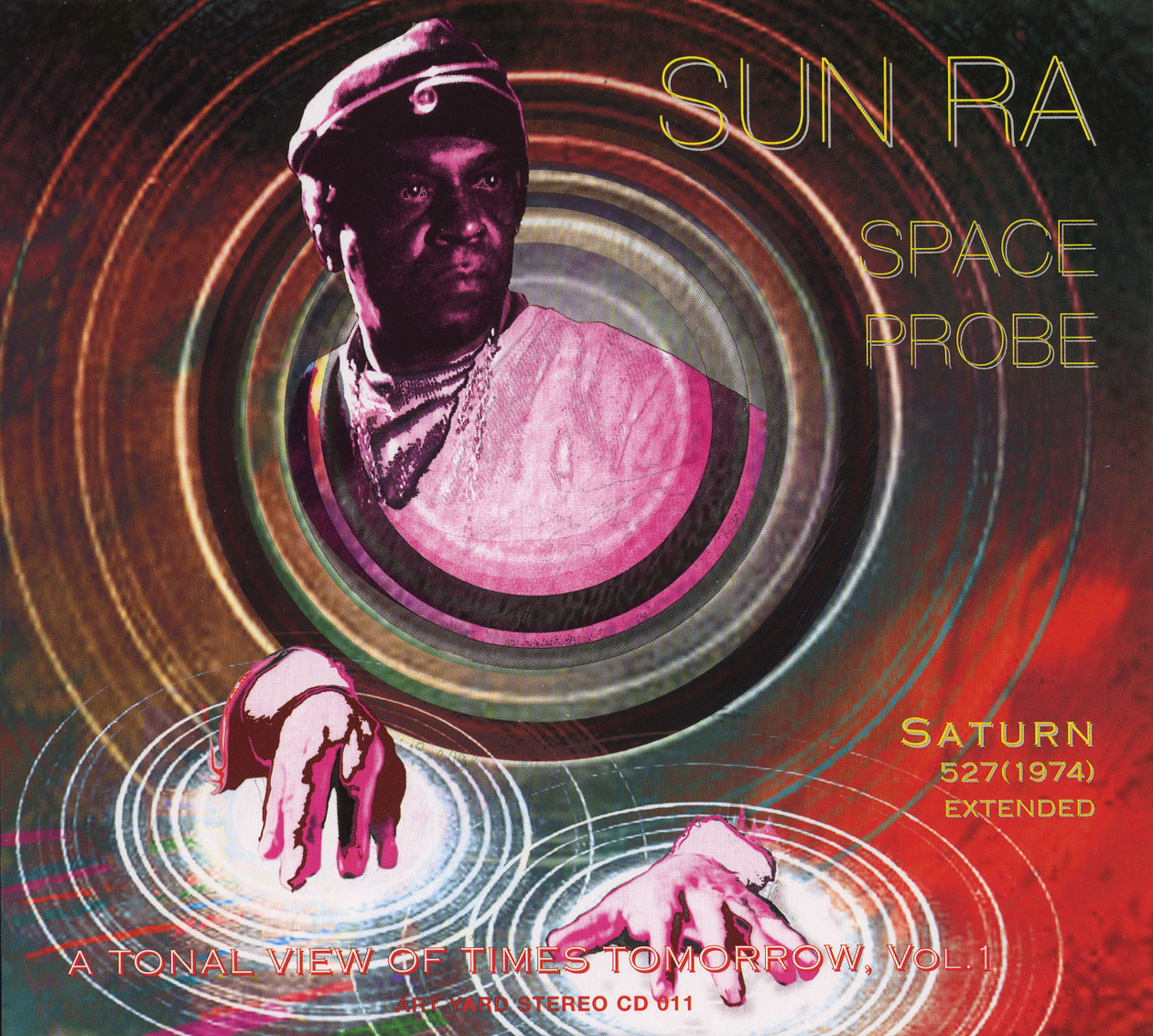
Sun Ra: Space Probe (Saturn 527/Art Yard CD 011)

Space Probe is another super-obscure Saturn release with a tortured history. Originally released in 1974, early discographies assigned a catalog number Saturn 527, although no known copies bear this number (See Campbell & Trent, p.107, 158). Instead, matrix numbers 14200A /14200B appear on most labels, although the sides are sometimes reversed (Id.). To make things even more confusing, the album was sometimes titled A Tonal View Of Times Tomorrow, Vol.1 (Saturn 527!) and, worse, there are numerous hybrid versions of Space Probe with a completely different B-Side (See, Id. for all the gory details). And that’s just the beginning of the discographical weirdness. So it goes with Sun Ra records! And that’s essentially why I feel compelled to write about this stuff—it’s the only way I can make sense of it all. Thankfully, the Art Yard label has recently reissued the original version of Space Probe in an expanded CD edition which includes unedited performances and several unissued outtakes from the era. Hooray!

The title track was recorded in August, 1969, shortly after Sun Ra purchased his first MiniMoogs, making it one of the first epic synthesizer solos he ever recorded. And it is truly epic: almost eighteen minutes of spaceship noises, cosmic bloops and bleeps and other electronic mayhem. While not as hair-raising as later live performances would be, it’s still an adventurous solar voyage and demonstrates his near-osmotic mastery of the complex technology. Michael D. Anderson, Executive Director of The Sun Ra Music Archive, makes an interesting (if somewhat garbled) statement about Ra’s electronic keyboards in his liner notes for this release:
Sunny was great in using the moog and other organs as an extension of himself reaching out into the outer spheres. This is why later in the mid 80’s when the Moog, Farfisa and the Yamaha organs were stolen in the [sic] Sunny began to strictly play piano and more standard music material. I knew that this unnoticed by others [sic] pained him. I would look at the expression on his face and you could see that he had so much more to say but was limited without the organs.
I had never heard Sun Ra’s keyboards had been stolen and Szwed makes no mention of it in his biography. I just figured he went digital like everyone else by the mid-80’s. In any event, it’s true: the big multi-keyboard freakouts were eventually abandoned by that time.

Side B of Space Probe goes in a completely different direction, consisting of two tracks recorded at the Choreographer’s Workshop in New York City on April 29, 1962. Originally, “Primitive” was just a couple of minutes of percussion jamming, but when Evidence was preparing the CD release of When Sun Comes Out, they discovered the rest of the track. Previously, I wrote:
When working with the master tape to prepare this CD in 1993, Evidence discovered an unreleased track running backwards in an unused stereo channel. On hearing the track for the first time in thirty years, John Gilmore gave it the title “Dimensions in Time” and it appears here as a bonus track. Echoing drums and tapping glass bottles underpin Gilmore’s seductively meandering bass clarinet. His tone is dark, rich and gorgeous as he weaves delightful melodies around the pitter-pattering percussion. Unfortunately, just as he reaches a climax, the track suddenly ends. As it turns out, the second part of this piece can be found on the 1974 Saturn LP entitled Space Probe. . .Entitled, “Primitive,” the track cuts in exactly where “Dimensions in Time” ends with the last few notes of Gilmore’s bass clarinet statement after which the percussion vamp continues for another couple minutes before fading out. As discrete fragments, these two pieces are a bit frustrating to listen to (despite Gilmore brilliant playing); someday I’d like to digitally rejoin these tracks to hear the complete piece in all its original glory.
Well, the engineers at Art Yard have done just that, retitling it, “Earth Primitive Earth,” and it’s sublime! The question remains: did Sun Ra deliberately edit out Gilmore’s solo, leaving only a percussion track? Or did the first half just go missing prior to 1974? If this track is compiled from the two known fragments, it is seamlessly well done—or is this the original, unedited master? Well, in my opinion, the inclusion of Gilmore’s rarely heard bass clarinet playing greatly improves the track and the album as a whole, whatever Sonny’s intentions were. Maybe he was mad at him that day…

More discographical mysteries: Originally titled, “The Conversion of J.P.”, Art Yard has retitled this track, “The Conversation of J.P.” Huh? I’m not sure if that’s a typo or if that is the real title but it certainly changes the meaning considerably! I previously wrote:
Plopping drums create a feel similar to “The Nile” with Marshall Allen’s expansive flute melody rising and falling amidst long spells of trance-inducing percussion. Then, at about the eight-minute mark, Ra enters with some incongruously gospel-ish piano chords. I guess this is the conversion happening! Ra then moves through a whole hymnal’s worth of plain, protestant harmonies before a final, insistently repeating cadence. Hallelujah! Now, who exactly is J.P? And how are we to take all this apparent proselytizing given Ra’s complicated, downright contentious relationship with the Christian church? Indeed, the tension between the pagan percussion/Pan-flute and the holy-rolling piano never quite comfortably resolves. Another curious thing about this track is that, at almost fourteen minutes, it is by far the longest stretch of continuous recorded music from this era.
Now if the real title is “The Conversation of J.P.”, well never mind. Either way, it’s a wonderful piece—but I think “The Conversion” is a more evocative and fitting title than “The Conversation.” And we still don’t know who “J.P.” is. Oh, and while the liner notes claim this version is “complete” and previously unreleased, it is actually the same as on the original album, except for perhaps a smoother fadeout at the end.

Art Yard generously fills out the rest of the CD with five previously unissued tracks recorded during the Choreographer’s Workshop period, circa. 1962-63. Two of them are mere fragments: a forty-seven second alternate take of “Circe” featuring Thea Barbara’s dramatic vocalizing and “Destiny”, thirty-three seconds of spacey piano and percussion bathed in Bugs Hunter’s reverb/echo device. The rest are more substantive: “Solar Symbols II” is an extended alternate take from When Sun Comes Out, featuring clankety cans and bottle percussion accompanying Ra’s dreamy, rhapsodic piano while “Dance Of The Wind” works in a similarly tensile, polyrhythmic fashion, with the plodding hand drums pushing and pulling against Ra’s increasingly enervated keyboarding. Finally, “Recollections of There” again features Thea Barbara, who wordlessly intones a modal melody with Sun Ra’s densely figured piano and sparse, eerie percussion. Ra is playing at an astonishing level of virtuosity here (albeit on a beat-up, out-of tune piano). At the core of the piece is a fleeting chord sequence which appears just as quickly dissolves into controlled abandon, Sonny tossing off spiky, ten-fingered polyphony across the entire range of the instrument. It’s quite a display and reminder that he was an extraordinarily gifted and visionary pianist.

Ultimately, Space Probe is something of a mixed bag—a fact that is reflected in its unstable discographical history. The title track is a wild synth space-out—but not something I want to listen to every day. However, the Choreographer’s Workshop stuff is where it’s at for me. There is a certain vibe to those recordings—the sound, the ambience, the relaxed, experimental approach—that was never quite replicated as the Arkestra became more professional and routinized. Those recordings are magical, even if they sometimes fail to cohere musically. Even the tiniest fragments offered on this expanded CD reissue are tantalizing to listen to, full of promise. So for me, this is an essential purchase (the complete “Primitive” and “The Conversion of J.P” are classic tracks, whatever the titles). But the merely curious should consider starting elsewhere and go from there.

April 16, 2011

Playlist Week of 4-16-11

Mark Snyder - Zeitgeist 2011-04-12c

* Hespèrion XXI (Savall): Le Royaume Oublié: La Tragédie Cathare (Alia Vox 3SACD)
* Holloway/Mortensen/ter Linden: Garrison Church, Copenhagen 4-08-08 (FM 2CDR)
* Mozart: Clarinet Concerto (Academy of Ancient Music/Hogwood) (L’Oiseau-Lyre LP)
* Joe Morris/John Voigt/Tom Plsek: MVP: LSD: The Graphic Scores of Lowell Skinner Davidson (Riti CD)
* Myra Melford + Be Bread: Saalfelden, Austria 8-27-10 (FM CDR)
* Sylvie Courvoisier/Mark Feldman Quartet: Nevers, France 11-12-10 (FM CDR)
* Material: Intonarumori (Axiom/Palm CD)†/‡
* Grateful Dead: County Coliseum, El Paso, TX 11-23-73 (SBD 4CDR)
* Grateful Dead: Music Hall, Cleveland, OH 3-03-81 (SBD 3CDR)†/‡
* Grateful Dead: Soldier Field, Chicago, IL 6-22-91 (SBD 3CDR)†/‡
* Bob Dylan: Time Out Of Mind (Columbia 2LP)
* Tom Waits: Foreign Affairs (Asylum LP)
* Big Star: #1 Record (Ardent/Classic LP)
* Steely Dan: Aja (ABC/Geffen/Cisco LP)
* Phil Collins: Face Value (Atlantic/Audio Fidelity CD)
* Steve Winwood: Arc Of A Diver (Island LP)
* Tears For Fears: The Hurting (Mercury LP)
* Tears For Fears: Songs From The Big Chair (Mercury LP)
* Minutemen: Double Nickels On The Dime (SST 2LP)
* Jim O’Rourke: Insignificance (Drag City LP)
* Pernice Brothers: World Won’t End (Ashmont CD)
* Pernice Brothers: Australia 2002 (Ashmont/Spunk CDEP)
* Those Bastard Souls: Debt & Departure (V2 CD)
* Stereolab: Emperor Tomato Ketchup (Elektra CD)
* Guided By Voices: Do The Collapse (TVT LP)
* Lifeguards: Waving At The Astronauts (Serious Business LP)
* Mars Classroom: The New Theory Of Everything (Happy Jack Rock Records LP)
* Radiohead: The King Of Limbs (TBD/Ticker Tape CD)
* Animal Collective: Spirit They’re Gone, Spirit They’ve Vanished (Fat Cat CD)
* Animal Collective: Campfire Songs (Paw Tracks CD)
* Animal Collective: Here Comes The Indian (Paw Tracks CD)
* Panda Bear: Person Pitch (Paw Tracks CD)
* Panda Bear: Tomboy (Paw Tracks CD)
* Broken Bells: Broken Bells (Columbia CD)
* Broken Bells: Meyrin Fields EP (Columbia CDEP)

†=iPod
‡=car


Commentary:

We so enjoyed last month’s Indeterminacies program at Zeitgesit Art Gallery, Lizzy and I decided to return on April 12 for another evening of electro-acoustic music, this time by University of North Alabama professor, Mark Snyder. An academically trained composer, classical instrumentalist—and former rock drummer—Mr. Snyder brings a wide-ranging musicality to what might be simplistically labeled “ambient music.” Lushly evocative electronic soundscapes were accompanied by long, slowly morphing, melodies played by Snyder himself on tuba, clarinet or accordion, humanizing the computer-generated textures. Reinforcing the immersive quality of the music, abstract—almost psychedelic—videos were projected against two walls of the gallery. But rather than merely creating a blissed-out, multi-media assemblage, all three elements (computer, instrument and video) were carefully arrayed to create enigmatic yet compellingly synergistic audio-visual narratives, demonstrating considerable compositional sophistication and skill. Moreover, the works were inextricably tied to their performance: a recording could not possibly capture the experience (although we did pick up the DVD, Alluvium).

Snyder himself was thoughtful and, at times, quite funny during the discussion portions (admirably led by local musician/critic, Jonathan Marx) and he was refreshingly frank regarding his musical inspirations and goals. Audience members were invited to ask questions and were effectively drawn out by Marx to describe their thoughts and feelings regarding each piece. It was fascinating to participate and listen to what people had to say—and a rare opportunity for concert attendees to express themselves and provide direct feedback to the artists. Interactivity and boundary-dissolving is a key part of what the Indeterminacies series seeks to accomplish and they succeed in creating a stimulating yet comfortable environment where the unexpected can happen. We’re definitely looking forward to next month’s program featuring Belmont University composer, Mark Volker.

+++

Today, of course, was Record Store Day but, sadly, I did not attend. It’s been a long week and, after ferocious storms rolled through yesterday, today was a cold, gray and rainy day and I just didn’t feel like going outside. Besides, I wasn’t really interested in any of the special, hyper-limited edition releases and figured it wasn’t worth getting up early and fighting the crowds of ravenous record collectors. Well, for me, every Tuesday is Record Store Day. That’s the day new releases come out, and I always make a point of checking out Grimey’s on my lunch hour or after work and, as regular readers of my playlist can plainly see, I buy a lot of records (this week was Panda Bear's long-awaited solo album, Tomboy, which prompted an Animal Collective orgy). Even so, Record Store Day 2011 was probably a fabulous party—despite the weather. Oh well, maybe next year.

+++

RE: the playlist. Lots of pop! What can I say? I needed comfort music this week.

April 10, 2011

Sun Ra Sunday


Sun-Day

This is my day
A sunny day
This is my day
With so much to give to all
Bright beams
Striking at the shadows impartially.
This is my day
I have so much to say

Out of the sun colors come
Like spores the rays strike the earth
And forms of being take shape to be
Being raises itself accordingly
To the vibration of the ray to which it synchronizes itself.

The invisible light is the ultra-light . . . . the darkness
The darkness is the cosmo-light . .
The all pervading all
Thus the cosmo-equation of the light
Is that the darkness is as the light
So distinguish the meaning of this
And ultra BE: an Ultra-being.

--Sun Ra

+++

I'll be back with more record reviews next week--I promise!

April 9, 2011

Playlist Week of 4-09-11

Memorial Flowers (2)


* Hespèrion XXI (Savall): Jérusalem: La Ville des deux Paix (Alia Vox 2SACD)
* Hespèrion XXI: Istanbul: Dimitrie Cantemir 1673-1723 (Alia Vox SACD)
* Hespèrion XXI (Savall): Francisco Javier 1506-1553: La Ruta de Oriente (Alia Vox 2SACD)
* Purcell: Fantasias For The Viols 1680 (Hesperion XX/Savall) (Alia Vox SACD)
* Bobby Hutcherson: “Mellow Vibes” (Blue Note mix CDR)†/‡
* Anthony Braxton: Three Orchestras (GTM) 1998 (New Braxton House FLAC>2CDR)
* Possession + African Dub: Off World One (SubMeta CD)
* Hank Williams: 40 Greatest Hits (Mercury/Polygram 2CD)
* Jim Reeves: The Best Of Jim Reeves (RCA-Victor LP)
* Johnny Cash: American Recordings (American CD)
* Johnny Cash: American Outtakes (Empire (boot) CD)
* Johnny Cash: Unchained (American CD)
* Johnny Cash: American III: Solitary Man (American CD)
* Emmylou Harris: Wrecking Ball (Elektra/Warner CD)
* Lucinda Williams: Blessed (Deluxe Edition) (d.1) (Lost Highway 2CD)
* Grateful Dead: Dream Bowl, Vallejo, CA 2-22-69 (SBD 2CDR)
* Grateful Dead: Music Hall, Cleveland, OH 3-02-81 (SBD 2CDR)
* Grateful Dead: Memorial Auditorium, Utica, NY 3-13-81 (set 1 excerpts) (SBD CDR)
* Grateful Dead: View From The Vault IV Soundtrack (July 1987) (GDP 4CD)‡
* Sir Douglas Quintet: The Mono Singles ’68-’72 (Sundazed 2LP)
* Van Morrison: The Healing Game (Polydor CD)
* Van Morrison: Days Like This (Polydor CD)
* Tom Waits: Blue Valentine (Asylum LP)
* Yes: The Yes Album (Atlantic/Mobile Fidelity Sound Lab CD)
* Yes: Fragile (Atlantic/Mobile Fidelity Sound Lab CD)
* King Crimson: The ConstruKction Of Light (Virgin CD)
* Robert Fripp: The Gates Of Paradise (DGM CD)
* Radiohead: The King Of Limbs (TBD/Ticker Tape CD)†/‡
* Wilco: Kicking Television (Nonesuch 2CD)†/‡
* Robert Pollard: Space City Kicks (GBV, Inc. LP)
* Circus Devils: Gringo (Happy Jack Rock Records LP)
* Lifeguards: Waving To The Astronauts (Serious Business LP)
* Mars Classroom: The New Theory Of Everything (Happy Jack Rock Records LP)
* Animal Collective: Merriweather Post Pavilion (Domino CD)†/‡
* Broken Bells: Broken Bells (Columbia)(†/‡)
* Broken Bells: Meyrin Fields EP (Columbia CDEP)

†=iPod
‡=car


Commentary:

On Friday, April 1, Lizzy and I drove out to Kansas City for Mom’s funeral and to help my sister clean out the apartment. It was agonizing—yet it was also a lovely visit with her family and a rare opportunity to see aunts and uncles and cousins from far-flung places. The memorial service on April 5 was perfect: beautiful, short and sweet—and standing room only. Not surprisingly, Mom had many admirers at the facility where she lived. Molly read a very moving letter to Mom she wrote in her final days and we all sang two verses of “Amazing Grace”— in the end, there was not a dry eye in the place. But it felt like we all came together not to mourn, but to celebrate Mom’s life. There were tears of sadness at our loss but also tears of laughter and joy in her remembrance.

Amazingly, on the morning of the service—and just down the road at the medical center where Mom spent so much miserable time these past years—my niece gave birth to her daughter, Mom’s great-granddaughter. Oh, she so much wanted to see that day—and she almost made it. Nevertheless, I could feel her presence in the hospital room as I held this tiny newborn in my arms: Mom and Dad were both smiling down upon us all, saying “all is as it should be.” Sure, it sounds like a clichéd movie scene, but the miraculous circle of life could not be so vividly manifested as in that moment. It was truly profound. Goodbye, Maxine—and welcome to family, Maebrynn (Brynn) Grace!

Maebrynn Lyon 2011-04-05a


And so what does any of this have to do with music? Again, nothing—and everything. Here’s one thing: singing “Amazing Grace” at the funeral was one of those rare times where “normal” people get to make music together—and it was an extraordinary experience. Oh, it was far from musical perfection but it was real expression of real emotions by real people. It occurred to me that the professionalism of music has deprived our culture of its natural creativity. I was reminded that music is not a “thing” but an “act.” It is not something that is done to you, it is something you do—even just by listening. Emotion in professional music is almost always ersatz. While community music-making might be unusual these days, it manages to survive in our most sacred religious rites, where its effect is most deeply felt and where people can feel comfortable as “amateurs.” In my humbled opinion, it would do our world a lot of good if people realized they are “producers” as well as “consumers” of music (and all the other arts) and would express themselves more freely and joyfully. In any event, these verses of “Amazing Grace” were by far the most enlightening musical event of the week.

And then there’s going on a long road trip, loading up the iPod with everything I could think of that seemed appropriate and listenable—and throwing in a couple of CDs just in case. Hey, we’re talking twenty-something hours of driving: I needed to be prepared! Of course, the Grateful Dead is great road music—it always reminds me of going “on tour” and a couple shows will get you clear across Missouri! But I also checked out a new band, Broken Bells, whose eponymous album was gifted to me on iTunes by my friend, Stan. We listened to it twice in the car and liked it more each time through. It’s kind of post-Radiohead electro-folk-rock, but with an unabashed pop sensibility. Heck, I liked it enough to make a trip to Grimey’s to pick up the CD (and the new Meyrin Fields EP) so I can blast it on the big stereo (it’s playing right now, for the second time tonight). While I had heard of them, I was unfamiliar with both Danger Mouse and The Shins (that’s how “out-of-it” I am!) but if Broken Bells is any indication, I need to check ‘em out. Good stuff.

Finally, after getting back home, I have been exploring the music of my parents, the country music of Hank Williams and “Gentleman” Jim Reeves, whose Best Of is one of the few records I remember my parents playing over and over. I can picture my Dad singing along (or whistling away in his own tuneless fashion) and doing carefully choreographed square-dance moves with my Mom in the living room as the platter spun on the old Dual turntable. When I was a kid, I turned up my nose at country music—but it was the Grateful Dead who brought me around. While my parents were alarmed at the drug-addled trappings (and their Satanic-sounding name), they could hear the country-western roots of the Dead’s music (their favorite song was “Ripple”) and I think that’s partly why they allowed me to drive Mom’s car to the Hartford Civic Center to see my first show in March, 1981, just a few months after my sixteenth birthday. They may have been terrified by the psychedelia of “Dark Star,” but our mutual respect for Johnny Cash’s “Big River” served to bridge the gap and now, as an adult, I can truly appreciate my southern, country roots. “The wheel is turning and you can’t slow it down; you can’t let go and you can’t stand still—if the thunder don’t get you then the lightning will!”

It has been hard to lose my Mom (and Dad)—I am now an orphan and “the last of the Colemans.” But our trip to Kansas was wonderful and I feel connected to my extended family in a way I have never previously known. The memorial service brought closure to a long, painful process and the simultaneous birth of her great-granddaughter brought hope for the future. I cannot imagine a better ending to a well-lived life. Rest in peace, Mom—everything will be OK.

April 2, 2011

Playlist Week of 4-02-11

The Heavens

* Hesperion XXI (Savall): Orient-Occident 1200-1700 (Alia Vox SACD)
* Hesperion XXI (Savall): Istanbul (Alia Vox SACD)
* Rebel: Violin Sonatas (Manze/Egarr/ter Linden) (Harmonia Mundi CD)†/‡
* J.S. Bach: Mass in B-Minor (Collegium Vocale Gent/Herreweghe) (Harmonia Mundi 2CD)
* J.S. Bach: St. Matthew Passion (Gabrieli Players/McCreesh) (Archiv Produktion 2CD)
* J.S. Bach: Sonatas & Partitas For Solo Violin (Podger) (Channel Classics 2CD)
* Feldman: Rothko Chapel/Why Patterns? (UC Berkeley Chamber Chorus, et al.) (New Albion CD)
* Feldman: For Bunita Marcus (Kleeb) (Hat ART CD)
* David S. Ware String Ensemble: Threads (Thirsty Ear CD)
* Marilyn Crispell: Vignettes (ECM CD)
* Spring Heel Jack: Songs & Themes (Thirsty Ear CD)
* Grateful Dead: Reckoning (Expanded Edition) (d.1) (Arista/GDP/Rhino 2CD)†/‡
* Grateful Dead: The Spectrum, Philadelphia, PA 8-30-80 (set 2) (SBD 2CDR)†/‡
* Derek & The Dominos: Layla And Other Assorted Love Songs (Polydor/Atco/MoFi CD)†/‡
* King Crimson: B’BOOM: Official Bootleg: Live In Argentina (DGM 2CD)
* Mayo Thompson: Corky’s Debt To His Father (Drag City CD)
* Big Star: Keep An Eye On The Sky (d.1) (Ardent/Rhino 4CD)†/‡
* Neil Young: Silver & Gold (Reprise CD)
* Lucinda Williams: West (Lost Highway CD)
* Emmylou Harris: Into Grace (Nonesuch CD)
* Patti Smith: Peace And Noise (Arista CD)
* The Fall: Hex Enduction Hour (Deluxe Edition) (Castle/Sanctuary 2CD)
* The Fall: The Wonderful And Frightening World Of… (Omnibus Edition) (d.1-3) (Beggars Banquet 4CD)
* U2: The Unforgettable Fire (Deluxe Edition) (Island 2CD) †/‡
* U2: The Joshua Tree (Deluxe Edition) (Island 2CD)
* Radiohead: The King Of Limbs (TBD/Tickertape CD)
* Yo La Tengo: Popular Songs (Matador CD)
* Beck: Midnite Vultures (Geffen CD)†/‡
* Beck: Sea Change (Geffen/Mobile Fidelity Sound Lab CD)†/‡
* Mars Classroom: New Theory Of Everything (Happy Jack Rock Records LP)
* Broken Bells: Broken Bells (Columbia)†/‡

†=iPod
‡=car


Commentary:

In heaven, everything is fine.

March 26, 2011

Playlist Week of 3-26-11

Death's Head


* Hildegard von Bingen: 11,000 Virgins (Anonymous 4) (Harmonia Mundi CD)
* Tallis: “Spem in Alium” (Tallis Scholars) (Gimell CD)
* Tudor Organ Music (Smith) (Naxos CD)
* Stan Getz & João Gilberto: Getz/Gilberto (Verve CD)
* Antonio Carlos Jobim: The Composer of Desafinado Plays (Verve CD)
* Andrew Hill: Passing Ships (Blue Note CD)
* Sun Ra: Space Probe (Expanded Edition) (Saturn/Art Yard CD)
* Sun Ra: The Paris Tapes: Live at Le Théâtre Du Châtelet 1971 (Art Yard/Kindred Spirits 2CD)
* Sun Ra: Disco 3000 (Saturn/Art Yard CD)
* Sun Ra: Beyond The Purple Star Zone/Oblique Parallax (Saturn/Art Yard CD)
* Evan Parker: Boustrophedon (ECM CD)
* Tortoise: TNT (Thrill Jockey CD)
* Paul McCartney: Wingspan: Hits & History (Capitol 2CD)
* Bob Dylan: The Bootleg Series Vol.4: Live 1966 (Columbia 2CD)
* Blind Faith: Blind Faith (Deluxe Edition) (Polydor/Universal 2CD)
* King Crimson: THRAK (DGM CD)
* Grateful Dead: Auditorium Theatre, Chicago, IL 6-27-76 (d.2) (SBD 3CDR)‡
* Grateful Dead: Auditorium Theatre, Chicago, IL 6-28-76 (SBD 2CDR)‡
* Grateful Dead: Road Trips, Vol.4 No.2: April Fool’s ’88 (GDP/Rhino 3CD)
* Lucinda Williams: Blessed (Lost Highway CD)†/‡)
* Robyn Hitchcock & The Egyptians: Element of Light (Yep Roc CD)
* Patti Smith: Gone Again (Arista CD)
* Ciccone Youth: The Whitey Album (Geffen CD)
* Sonic Youth: Made In USA (Soundtrack) (Rhino CD)
* Sonic Youth: Experimental Jet Set, Trash And No Star (Geffen CD)
* Sonic Youth, et al.: Demonlover (Soundtrack) (Labels/EMI CD)
* Sonic Youth, et al.: All Tomorrow’s Parties 1.1 LA (ATP CD)
* Sonic Youth: The Eternal (Matador 2LP)
* Sonic Youth: Simon Werner A Disparu (Soundtrack) (SYR-9 LP)
* Thurston Moore: Psychic Hearts (Geffen 2LP)
* Thurston Moore: Trees Outside The Academy (Ecstatic Peace! CD)
* Tool: 10,000 Days (Volcano CD) †/‡
* Lifeguards: Waving At The Astronauts (Serious Business LP)

†=iPod
‡=car

Commentary:

Astonishingly, Mom continues to linger…She has not taken any nourishment—not even water—for nine days now. We’ve been repeatedly told by the hospice nurse that her death is “imminent”—yet she keeps on going, unconscious, but hanging on. This has been an agonizing week of intensely complicated emotions. Every time the phone rings, I think it’s going to be “The Call” and my heart jumps. As the days drag on, I can feel my heart becoming calloused—and that is a terrible feeling.

It has been suggested Mom has some “unfinished business” here on earth she wishes to complete, but at this point, it’s impossible to know what it might be. Life is messy; not every loose end can be gathered in the time we’re allotted. And she is definitely a worrier—she worries about anything and everything and cannot be consoled by facts and reason. Then again, it could also simply be Mom has a cast-iron constitution and an indomitable will to live. She certainly can be stubborn—she had to be just to survive. After losing her father as a child and growing up during the Great Depression, she and my dad worked tirelessly to escape poverty and achieve the “American Dream.” She was—is—a remarkable woman.

But witnessing her slow-motion demise is just unbelievably wrenching, especially from such a great distance. I like to think it would be easier if I could see her every day. Then again, I’m selfishly glad my last memory of Mom will be of a happy and vibrant person—I’m not sure I could stand to see her in the state she is in now. My sister has shown admirable strength taking care of her these last years and I am forever grateful for that—and not a little guilt-ridden.

Life is messy and death is a mystery. There is a rare, awful beauty to old age and death by “natural causes”—so many people are killed by senseless violence or cataclysmic disease. I’m forced to contemplate my own mortality and I wonder how it would feel to be eighty-two years old and facing the end of life. It's almost too horrible to think about. Mom has been remarkably brave during this whole process and I hope she finds peace—soon.

What does any of this have to do with music? Nothing—and everything. Music and art communicate the inexpressible and aspire to immortality. Listening to music can (sometimes) let me get out of myself and glimpse larger truths. This week, Sonic Youth really hit the nerve, particularly some of their later albums and experimental film soundtrack work. This is a band I’ve loved since the mid-1980s and it has been gratifying to watch them grow older and develop into a universally revered avant-rock institution. Their beautifully clangorous guitars and elliptical vocals were just what I needed this week. Sure, maybe they should change their name to “Sonic Seniors,” but so what? Youth is overrated—maturity is life fully lived. I look forward to hearing what they do next—it gives me hope for this horrible world.

UPDATE: My mother passed away at 7:15PM. Rest in peace, Mom.

March 20, 2011

Sun Ra Sunday

Sun Ra & His Mythic Science Arkestra:
The Paris Tapes: Live at Le Théâtre Du Châtelet 1971 (Art Yard/Kindred Spirits 2CD)

Before moving on to 1974, I need to catch up a bit and comment on The Paris Tapes: Live at Le Théâtre Du Châtelet 1971, recently released by Art Yard (in collaboration with the Dutch label, Kindred Spirits). This nicely packaged two-CD set officially came out last fall, but has been somewhat difficult to find here in the States. I’m not sure why that is, but it’s worth making the effort to track down. As we know, this concert from November 29, 1971 was broadcast by French radio and a horribly degraded tape fragment circulates amongst collectors. Therefore, this upgraded and expanded edition is a most welcome addition to the official discography. Even so, don’t be throwing away that crummy-sounding bootleg just yet—some very interesting and unique music has been edited out of this otherwise excellent release! Mastered from what appear to be the pre-broadcast reels, the sound quality is superb with spacious ambience and startling instrumental clarity. But according to producer, Peter Dennett, about an hour of music was omitted due to technical problems with the tapes and to limit the release to a more economical two CDs. That is completely understandable, if unfortunate for us crazy completists, who would love to hear every note, sonic warts and all.

What we do get is very good indeed, with an extra-generous serving of Sun Ra’s incredibly outrageous electronic keyboard playing. Right from the start, Sonny is shooting laser beams and cracking whips with his MiniMoogs, summoning up torrential storms of noise and distortion, pounding out thundering low-register grumbles on the organ, or stringing delicate and wobbly portamentos against thick, dissonant tone clusters. That's just the "Introduction!" Then he turns in a groovy, blues-inflected electric piano solo on a “pre-mitotic” version of “Discipline 27” while the hypnotic, dark metallic funk of his organ comping dominates an extended version of “Love In Outer Space.” The rarely-heard “Third Planet” also features a tasty, reedy Rocksichord excursion a la Night Of The Purple Moon while Ra’s space-age barbeque organ makes an appearance on “Discipline Number Unknown.” And, finally, the album concludes with an astonishing tour de force of Sun Ra’s patented, mad-scientist-style mayhem: fifteen minutes of spooky murmuring, shrieking sirens and bursting bombs, all culminating in the arrival and departure of the alien spaceship to take us back to Saturn. Wow! This is truly one the all-time great Sun Ra epics! If there was ever any doubt of Ra’s visionary genius and sheer instrumental prowess, this release should put that notion to rest for good.

In between, there’s the usual thing—yet the vocal numbers such as “Somebody Else’s Idea,” and “Space Is The Place” as well as the dance/drums workout, “Watusi” greatly benefit from the luxurious sound quality and tightly focused performances (notorious drummer, Clifford Jordan, exhibits remarkable restraint throughout). A meandering “Angels and Demons At Play” is perhaps overlong, but Marshall Allen’s evocative flute periodically adds interest to the percussion jamming. Particularly noteworthy is the discovery of yet another never-before-heard “Discipline” composition on disc two wherein characteristically interlocking horn riffs are cast upon an enchantingly off-kilter space-groove in seven. During a series of solos (Kwami Hadi on trumpet, Ra on BBQ organ and Eloe Omoe on bass clarinet), the arrangement gradually morphs into a wild group improvisation for massed saxophones and skittering, clattering polyrhythms. Pretty exciting stuff!

So, what’s missing? The “Enlightenment” after the opening improvisation has been cut and while that in itself is no great loss, the following unknown “Discipline” piece has also been omitted. Now, that’s a real shame as this is the only known performance of one of Ra’s most strikingly beautiful compositions (and the bootleg tape appears to be incomplete). Moreover, there are no big John Gilmore solos on either of these two discs, which feels wrong given his usual prominence in the Arkestra—I suspect “The Shadow World” made an appearance at this concert and no doubt Gilmore did his thing there (and elsewhere). So, that’s a little frustrating. Regardless of any technical anomalies, I, for one, would love to hear the rest of the tapes from this gig and would have gladly paid extra for a complete, three-CD set. Oh well. Perhaps, if this sells well, a volume two will be forthcoming.

But I quibble. Art Yard and Kindred Spirits have done a fabulous job with The Paris Tapes and it is an essential purchase for any self-respecting Sun Ra fan (if you can find it). Despite the absence of certain crucial material, Sun Ra’s performance here more than makes up for the loss with amazing displays of keyboard pyrotechnics. And the overall sumptuous sound quality will gratify even the most casual of listeners, making this a most highly recommended release.

March 19, 2011

Playlist Week of 3-19-11

Zeitgeist 2011-03-15a

* Vivaldi: La Stravaganza: 12 Violin Concertos (Arte Dei Suonatori/Podger) (Channel Classics 2SACD)
* Maderna: Quadrivium, etc. (Sinf. des Norddeutschen Rundfunks/Sinopoli) (DG CD)
* Stan Link: In Amber Shadows: Electro-Acoustic Music (Albany CD)
* Andrew Hill: Grass Roots (Blue Note CD)
* Andrew Hill: Dance With Death (Blue Note CD)
* Sun Ra: The Paris Tapes: Live at Le Théâtre Du Châtelet 1971 (Art Yard/Kindred Spirits 2CD)
* Henry Threadgill & Zooid: Stadtgarten, Köln, Germany 11-04-08 (FM CDR)
* Matthew Shipp String Trio: By The Law Of Music (Hat ART CD)
* Matthew Shipp String Trio: Expansion, Power, Release (Hat ART CD)
* John Zorn: The Big Gundown: John Zorn Plays the Music of Ennio Morricone (Nonesuch LP)
* George Harrison: Live In Japan (Capitol 2SACD)
* George Harrison: Brainwashed (Capitol CD)
* Grateful Dead: Auditorium Theatre, Chicago, IL 10-26-71 (SBD 2CDR)‡
* Grateful Dead: Tower Theatre, Upper Darby, PA 6-21-76 (SBD 3CDR)‡
* Grateful Dead: Tower Theatre, Upper Darby, PA 6-22-76 (SBD 3CDR)
* Grateful Dead: Auditorium Theatre, Chicago, IL 6-27-76 (d.1) (SBD 3CDR)
* Love: Forever Changes (Elektra/Rhino CD)
* King Crimson: Discipline (DGM CD)
* King Crimson: Beat (DGM CD)
* King Crimson: Three Of A Perfect Pair (DGM CD)
* R.E.M.: Out Of Time (Warner Bros. CD)
* R.E.M.: Automatic For The People (Warner Bros. CD)
* R.E.M.: Monster (Warner Bros. CD)
* Flaming Lips: Yoshimi Battles The Pink Robots 5.1 (stereo) (Warner Bros. CD/DVD-A)
* Beck: Odelay (Geffen CD)
* Lifeguards: Waving At The Astronauts (Serious Business LP/CD)
* Tool: 10,000 Days (Volcano CD)‡

†=iPod
‡=car

Commentary:

On Tuesday night, Lizzy and I went to Zeitgeist Gallery to hear a program of electro-acoustic music by our friend, composer Stan Link, who would be there to participate in a discussion session with local critic David Maddox. Although we are notorious homebodies, this was an event not to be missed! The contemporary art gallery is an appropriate venue for Stan’s kind of cutting-edge music and it was a unique opportunity to hear him talk about his work.

The first piece, “In Ida’s Mirror,” for alto flute and tape, was particularly moving. Stan talked about how the title was inspired by seeing Ivan Albright’s painting, “Into The World Came a Soul Called Ida” at the Art Institute of Chicago, and further informed by the video work of Bill Viola and Ridley Scott’s film, Blade Runner. A clip was shown where, just before he dies, the replicant says: “I’ve seen things you people wouldn’t believe…All those moments will be lost in time like tears in the rain.” This quotation, explained Stan, was the key to understanding the work’s meaning—and, perhaps, his own personal cosmology. Very interesting…

Sandra Cox (photo) navigated the labyrinthine score with ease, plumbing the mournful depths of the almost atonal melodies. It was an incredibly affecting performance: her warm, breathy tone on the rarely heard alto flute a sensuous, primordial sound projected against the vast cinematic soundscape of voices and electronics. “In Ida’s Mirror” is a profoundly discomfiting meditation on birth, life, death, time and eternity—just the thing I needed to hear during this difficult time, as my mother lay slowly dying a thousand miles away from me—and tragedy unfolds in Japan, where my brother in law is living with his wife and child—and I ponder the meaning of it all. Thank you, Stan, for reminding of the redemptive power of art, its power to express the ineffable.

An excellent CD of Stan Link’s electro-acoustic music is available on Albany Records entitled, In Amber Shadows, which came out in 2006. While “In Ida’s Mirror” is not contained therein, it is still highly recommended as an introduction to this fascinating composer.

More photos from the event can be found here and on my Flickr Photostream (click on the photo above).

March 13, 2011

Sun Ra Sunday

THE NAME OF SOUND

The name can be music
Played by infinite instruments
The name can lift nothingness
From nothing to reality
And keep the myth parable apparent.

Like once silent voices burst into song
The name strikes the ear
And the sound of it
Rushes like a wild thing
To take its place
As the core
Of the music, the infinite instruments
And the vital vibration
Of the meaning
Of the name.

--Sun Ra

March 12, 2011

Playlist Week of 3-12-11

Anthony Braxton Septet (Pittsburgh) 2008

* Biber: The Rosary Sonatas (Manze/Egarr) (Harmonia Mundi 2CD)†
* J.S. Bach: Goldberg Variations (Hewitt): Royal Festival Hall, London 4-29-09 (FM CDR)
* J.S. Bach: Solo & Double Violin Concertos (AAM/Manze/Podger) (Harmonia Mundi SACD)
* Antheil: Ballet Mécanique, etc. (Philadelphia Virtuosi Chamber Orch.) (Naxos CD)
* Poulenc: Works for Piano (Parkin) (d.2) (Chandos 3CD)
* Sun Ra with Wilbur Ware: House of Ra, Philadelphia, PA 1973 (AUD>FM CDR)
* Sun Ra & His Mythic Science Arkestra: The Paris Tapes 1971 (Art Yard/Kindred Spirits 2CD)
* Anthony Braxton: Sextet (Philadelphia) 2005 (New Braxton House FLAC>2CDR)
* Anthony Braxton: Septet (Pittsburgh) 2008 (New Braxton House FLAC>CDR)
* Anthony Braxton Diamond Curtain Wall Trio: hr-Sendesaal, Frankfurt, Germany 10-30-08 (FM CDR)
* Henry Threadgill & Zooid: Folkets Hus, Umea, Sweden 10-25-08 (FM CDR)
* William Parker/In Order To Survive: The Peach Orchard (AUM Fidelity 2CD)
* Matthew Shipp: Art Of The Improviser (Thirsty Ear 2CD)
* Mat Maneri: Blue Deco (Thirsty Ear CD)
* Weasel Walter/Mary Halvorson/Peter Evans: Electric Fruit (Thirsty Ear CD)
* Herbie Hancock/Future 2 Future: Columbia Halle, Berlin, Germany 11-27-01 (FM 2CDR)
* Tortoise: Beacons of Ancestorship (Thrill Jockey)†/‡
* Scanner with The Post Modern Jazz Quartet: Blink of An Eye (Thirsty Ear CD)
* Marvin Gaye: What’s Going On (Motown/Mobile Fidelity Sound Lab SACD)
* Marvin Gaye: Let’s Get It On (Motown/Mobile Fidelity Sound Lab SACD)
* Parliament: Live: P. Funk Earth Tour (Casablanca CD)
* P. Funk All Stars: Urban Dancefloor Guerillas (CBS CD)
* The Beatles: The Beatles [a/k/a The White Album] (2009 stereo) (Apple/EMI 2CD)
* Grateful Dead: Music Hall, Boston, MA 12-01-73 (SBD 4CDR)
* David Crosby: If I Could Only Remember My Name… (Atlantic DVD-A)
* Chicago: VIII (Columbia LP)
* Chicago: X (Columbia LP)
* Chicago: XI (Columbia LP)
* U2: The Joshua Tree (Deluxe Edition) (d.1) (Island 2CD)†/‡
* Beck: Sea Change (Geffen/Mobile Fidelity Sound Labs CD)†/‡
* Robert Pollard: Space City Kicks (GBV, Inc. LP)
* Lifeguards: Waving At The Astronauts (Serious Business LP)
* Tool: Lateralus: (Volcano CD)†
* A Perfect Circle: Mer De Noms (Virgin CD)
* A Perfect Circle: Thirteenth Step (Virgin CD)

†=iPod
‡=car

Commentary:

I know I’m an African-American, and I know I play the saxophone, but I’m not a jazz musician. I’m not a classical musician either. My music is like my life: It’s in between these worlds.
–Anthony Braxton
Anthony Braxton is, in my estimation, America’s greatest living composer—and the most underappreciated and misunderstood. As he acknowledges above, part of the problem is that he is black man who plays the saxophone. In the cultural hierarchy we inhabit, he is ipso facto a “jazz musician,” with every negative stereotype the term entails. This not only reflects the deep-seated racism of our culture, but also a concomitant disdain for the instrument itself, a late-19th Century invention which has always been treated as a bastard “band instrument” by the classical music establishment ever since. Of course, Mr. Braxton plays the entire family of saxophone instruments, from contrabass to sopranino and anyone who has listened to more than a handful of his records will have to acknowledge that his music, for the most part, has more to do with so-called “classical” music than what is commonly thought of as “jazz.” But, as a black man with a bunch of saxophones, his work has never been taken seriously as “Art Music” by the classical music establishment, who narrowly defines the term. Of course, Mr. Braxton does not make it easy to understand what he’s up to. While he has written about his music extensively in liner notes, essays, and multi-volume monographs, he insists on opaque, hyper-academic linguistic constructions and inscrutable graphic representations which only serve to obscure his meaning from casual observers. This is, of course, intentional and part of its appeal to initiates, who aspire (or pretend) to understand. There is an element of willful Sun Ra-esque absurdity about his public persona that will forever prevent over-serious people from ever taking it seriously. And that’s too bad, because the proof is in the music itself, which is always at least interesting and often profoundly moving in a way that neither “jazz” nor “classical” music ever could be within their culturally-imposed restrictions. Braxton is an important composer because he occupies a place outside those arbitrary limitations and makes music that is, like he says, like life itself, “in between.”

While Braxton has made hundreds of recordings over the course of his five-decade career, most are on tiny labels produced in vanishingly small editions, making them almost impossible to find and further marginalizing him from mainstream culture. However, all this is about to be remedied with the ambitious launch of the Tri-Centric Foundation website, considerably raising Mr. Braxton’s online profile and making his music widely available to any “friendly experiencers” who might be interested. Hooray! The long out-of-print Braxton House recordings from the 1990s are available there for download in FLAC and MP3 formats and the New Braxton House label promises two releases per month of previously unreleased music. To celebrate the unveiling, they are offering a FREE download of Septet (Pittsburgh) 2008 for a limited time, just for setting up an account. A magnificent live recording of Braxton’s recent “Accelerated Ghost Trance Music,” it features his core group of devoted young musicians: Taylor Ho Bynum on trumpet and other brass instruments; Mary Halvorson on electric guitar; Jessica Pavone on violin, viola and electric bass; Jay Rozen on tuba; Carl Testa on acoustic bass and bass clarinet; and Aaron Siegel on drums, percussion and vibraphone. Impossible to describe, Braxton’s late-period music is unlike any other you're ever heard and rewards repeated, concentrated listens. I highly recommend everyone reading this post to immediately grab this gem and have a listen for themselves. You won’t regret it! And it just might change your life!

The price per download is a little on the high side, in my opinion, but subscriptions can be purchased for $12+1 per month (afficianadoes will appreciate the humor) which entitles you to two free downloads and 10% off on catalog items, a reasonably good deal; moreover, it all goes to support a very worthy cause. Of course, I’ve gleefully signed up and am digging Sextet (Philadelphia) 2005, another fantastic live recording from this most fertile era in Braxton’s long career. Future releases will include: Three Orchestras (GTM) 1998; Solo (Allentown) 1990; Composition 19 (For 100 Tubas) 2006; and Sextet (Boston) 2005. I can’t wait. Just to sweeten the deal, they’ve also set up a “bootleg page,” offering FREE downloads of various verité recordings which have circulated in hardcore collector’s circles. Naturally, I have most of these already, but I applaud the Tri-Centric Foundation for making them available to casual listeners. Of those available so far, I would heartily recommend Quartet (New York) 1993, an excellent soundboard recording from The Knitting Factory of the so-called “classic quartet” with Marilyn Crispell on piano, Mark Dresser on bass and Gerry Hemingway on drums. This would be an excellent place for the merely curious to begin investigating Mr. Braxton’s oeuvre.

There’s also a long video segment from Braxton’s first Sonic Genome Project at Wesleyan University in 2003, an eight-hour, hundred-musician extravaganza that must be seen to be believed. The site also promises to make available more videos and writings to round out the experience. My dearest hope is they will eventually upload scores and composition notes to the site, to enable the fullest possible understanding of Braxton’s work. Regardless, the Tri-Centric Foundation is providing a long-overdue and most welcome service and is worthy of support. Due to unexpectedly high traffic, the site was experiencing a number of technical difficulties in its first week of operation, but that's a good thing and all seems to be working smoothly now. So, by all means, go check it out!

March 6, 2011

Sun Ra Sunday

Sun Ra Arkestra with Wilbur Ware: House of Ra, Philadelphia, PA 1973 (CDR)

In 1987, Columbia University's WKCR-FM embarked on a “Sun Ra Festival,” broadcasting 116 straight hours of music and interviews with members of the Arkestra, including the man himself, who brought with him several never-before-heard recordings for the occasion. A tape of this broadcast circulates widely amongst collectors and contains a wealth of interesting material, including this twelve-and-a-half minute piece recorded at The House of Ra in 1973 with bassist, Wilbur Ware. Born in 1923, Ware had worked with Sonny briefly back in Chicago and can be heard on one of Ra’s earliest known recordings as a leader (see Campbell & Trent p.43). Ware was well-regarded for his bebop skills, playing with folks like Stuff Smith, Sonny Stitt, Roy Eldridge and Art Blakey but he was probably best known for his work with Thelonious Monk in the late-1950s. By 1973, however, his career was at a standstill due to a combination of health issues and drug abuse and he had relocated to Philaldephia, where he hooked up with the Arkestra for this impromptu jam. “It’s quite different, you know, to hear him play what you might call avant-garde,” Sonny remarks during the interview. “It sounds very nice.”

Actually, it’s more than just a jam and while it would appear that Ware is leading the way, it is actually Sun Ra who guides the Arkestra through the improvisation, cueing entrances and exits and various changes in feel in his own inimitable way. Despite Ware's personal difficulties during this time, he sounds great here, playing with supreme confidence and big-eared sensitivity, exploring the entire compass of the instrument and even pulling out the bow for a short interlude. Rarely do all eight musicians play at the same time, giving this piece an austere, modern chamber music quality while Ra moves from slippery synthesizer to a wobbly, wah-wah organ, emphasizing a rising portamento which is echoed by the bass throughout. Soloists include John Gilmore, who introduces a long-breathed melody and multiphonic variations on tenor saxophone; blurry trumpet from Akh Tal Ebah (later joined by Marshall Allen and Danny Davis on alto saxophones); and Eloe Omoe on bass clarinet. Sometimes the horns drop out altogether, leaving Ware to duet with Sun Ra’s keyboards; at other times they engage in fleeting bouts of group improv. Drummer Lex Humphries makes only a brief appearance mid-way through only to conclude the piece with a solo of his own. Amazingly, Ware keeps things going with strong yet supple support, no matter what’s going on around him.

It’s tempting to speculate this was a sort of audition for Ware, since the bass chair was often empty due to the comings and goings of the brilliant Ronnie Boykins (who would leave the band for good after 1974). From the evidence, it seems like Ware would have been a good fit for the Arkestra. Although he was rooted in the language of bop, Ware was obviously a good listener. As Sonny points out in his interview, the ability to listen is the most valuable skill a musician can possess and key part of his cosmo-philosophy:

Every band has something to say. The good part about it is that you have men together, who are not in the army to destroy people, they—it’s something to have men working together for beauty, and for precision and discipline. It’s wonderful. It’s the most wonderful thing about the planet that you do have men who are in the armed forces—who have to be in there—but you have some more who are doing some other things that’s not destructive, with unification and discipline. Because they have to be disciplined to play music. If they’re in a band, they got to listen to somebody and that’s what all men ought to learn, that they need to listen to somebody. Because you take the basketball players, they got to listen. Prizefighters got to listen. Actors got to listen to a director. So I would say every individual person needs to listen to somebody because successful people are those who listen to somebody and do as they’re told. Or try to.

Sadly, Ware withdrew from the music scene altogether and died of emphysema in 1979. This tape presents an opportunity to hear this underappreciated musician in an unusual context and, for that reason alone, is worth checking out. (Photo of Wilbur Ware by Francis Wolff/Blue Note Records.)

March 5, 2011

Playlist Week of 3-05-11

Lucinda Williams - Blessed (Deluxe Edition)


* Hesperion XXI (Savall): “St. Paul Sunday,” MPR Radio Studios, St. Paul, MN 3-10-01 (FM CDR)
* Accademia Bizantina (Dantone/Scholl): Schauspielhaus, Dresden 6-12-08 (FM CDR)
* Bach: Cantatas, BWV35, etc. (Accademia Bizantina/Dantone/Scholl): Schwarzenberg 6-18-06 (FM CDR)
* Sun Ra: Flushing Meadow Park, Queens, NY 7-04-73 (Pre-FM CDR)
* Sun Ra w/Wilbur Ware: House of Ra, Philadelphia, PA 1973 (AUD>FM CDR)
* Sun Ra: Out Beyond The Kingdom Of (Saturn LP>CDR)
* Albert Ayler, et al.: New York Eye and Ear Control (ESP-Disk’ CD)
* Sunny Murray: Sunshine/An Even Break (Never Give a Sucker) (BYG/Actuel/Fuel 2000 CD)
* Henry Threadgill’s Zooid: Teatro Communale, Cormòns, Gorzia, Italy 10-23-08 (FM CDR)
* Anthony Braxton: Septet (Pittsburgh) 2008 (New Braxton House FLAC>CDR)
* Evan Parker Quartet + Frut: Teatro alle Tese, Venezia 9-26-10 (FM CDR)
* Matthew Shipp: Art of The Improviser (Thirsty Ear 2CD)
* Mary Halvorson & Joe McFee: WKCR-FM Studios, New York, NY 12-15-10 (FM CDR)
* Joelle Leandre & Mephista: The Stone, New York, NY 6-25-10 (AUD CDR)
* Praxis: Profanation (Preparation for a Cosmic Darkness) (M.O.D. Technologies CD)
* Deltron: Deltron 3030 (75 Ark CD)†/‡
* DJ Shadow: Endtroducing… (MoWax CD)
* Muddy Waters: The Woodstock Album (Chess/MCA CD)
* Elvis Presley: Command Performances: The Essential ‘60s Masters II (RCA 2CD)
* George Harrison: Living In The Material World (Capitol CD)
* Bob Dylan: Bootleg Series Vol.8: Tell Tale Signs: Rare & Unreleased 1989-2006 (Columbia 2CD)
* Grateful Dead: Uptown Theatre, Chicago, IL 12-05-79 (SBD 3CDR)
* Tom Waits: Small Change (Asylum LP)
* Big Star: Keep An Eye On The Sky (d.1-3) (Ardent/Rhino 4CD)†/‡
* Lucinda Williams: West (Lost Highway CD)
* Lucinda Williams: Little Honey (Lost Highway CD)
* Lucinda Williams: Blessed (Deluxe Edition) (Lost Highway 1+1CD)
* Die Kreuzen: October File (Touch & Go LP)
* Die Kreuzen: Century Days (Touch & Go LP)
* Tool: Lateralus (Volcano CD)†/‡
* Robert Pollard: Moses On A Snail (GBV, Inc.)†/‡

†=iPod
‡=car

Commentary:

On 2008’s Little Honey, Lucinda Williams sounded like she was, for the first time in her life, genuinely happy. But this newfound happiness made for an uneven album, her usual eloquent songwriting padded out with giddy schoolgirl love-songs, comedy routines and a winking cover of AC/DC’s “It’s a Long Way to The Top.” Thankfully, the Poetess of Pain is back on her new album, Blessed, but with a broader, deeper and more mature perspective. The opening track, “Buttercup,” is a bitter kiss-off like only Lucinda can sing—which might lead you to believe she’s just up to her old tricks. But as the album progresses, the songs begin to take on a cumulative weight as big themes emerge: not just love and heartache, but also death, suicide, the horrors of war and the salvation of friendship, community, family, faith—in other words, the search for meaning in a world full of endless toil and senseless strife. Just what I want from a Lucinda Williams record—especially these days.

Legendary producer Don Was frames Lucinda’s vocals in a warm, naturalistic space, every note perfectly placed, slickly polished yet still organic and pure. This is certainly one of her best-sounding records ever (so much so I’m seriously tempted to pick up the 2-LP vinyl edition). The L.A. session pros deliver just the right balance of chops and taste with Greg Leisz’s weeping pedal steel adding a suitably country-ish atmosphere where needed and Elvis Costello (of all people) contributing some searing electric guitar on three tracks. Lucinda’s voice has ripened with age and she sounds better than ever here, singing with a passionate intensity yet always in pitch-perfect control. I’m a long-time fan, but I have to admit this is probably her best album in a decade—so good it makes me think it’s just the first in a series of mature masterpieces. Seems to me she is just getting started. A limited “Deluxe Edition” (with eight (!) different covers) comes with a bonus CD called, The Kitchen Tapes, containing demos of all twelve songs recorded at her kitchen table, a fascinating, intimate glimpse into her songwriting process and well-worth seeking out. Either way, the appropriately titled Blessed is soul-nourishing music in these difficult times and most highly recommended.

February 27, 2011

Sun Ra Sunday

Sun Ra: Flushing Meadow Park, Queens, NY, July 4, 1973 (CDR)

As it turns out, I was mistaken in my review of What Planet Is This?: Not only did a copy of the July 6, 1973 Carnegie Hall concert circulate amongst collectors prior to its release by Leo Records, but this “bootleg” edition also included Sun Ra’s appearance at the memorial tribute to Louis Armstrong held in Flushing Meadow Park in Queens, New York on the afternoon of July 4. In fact, I used to have a copy, but threw it away after purchasing What Planet Is This?, not realizing this track was missing on the official release. Oh well—just goes to show I should never get rid of anything without more careful consideration! Big thank you to the Sun Ra fans who pointed out my error and kindly provided me with a copy.

Like the Carnegie Hall concert, this was recorded by Voice of America but never broadcast, the tapes deposited into the Library of Congress and promptly forgotten (see Campbell & Trent p.199). It’s a curious fragment, about six minutes of music played by a small band consisting of Ra on electric piano, John Gilmore on tenor sax, Ronnie Boykins on bass and Beaver Harris on drums, in his only known appearance with the Arkestra. The whole thing has a very impromptu, ad hoc feel to it, as if it had been organized at the last possible minute. The announcer is harried and clueless, first introducing the bassist as Reggie Workman and then, after the band corrects him, calling him “Ronnie Barkin” (and, later, “Ronnie Bodkin”) Sheesh! Sonny gingerly fingers a Fender Rhodes piano, an instrument he was not associated with at this time, and its politely chiming, bell-like tone clearly displeases him. So, he starts to work it, cranking up the gain, making it distort, adding skittering, polyphonic voices while Boykins and Harris set up a churning, free-jazz groove. Now Ra is really going for it, attacking the keyboard with two-fisted fury—but the engineer freaks out and turns down Sonny’s volume, greatly reducing the effect. Argh! Gilmore enters with what sounds like a pre-composed, modal theme and a set of full-throated, late-Coltrane-style variations. Despite the wonky sound, this is pretty exciting stuff! Harris gets maybe a little too excited and starts to overplay while Boykins tries his best to rein him in. Suddenly, Harris gets the message and drops out altogether, leaving Gilmore to solo a cappella, continuing in an atonal, post-bop vein, peppered with bluesy call and response effects and concluding with a dramatic flourish. Although brief, this is yet another incredible Gilmore solo!

In the aftermath of Gilmore's stunning display, piano filigrees float up from the stillness and Boykins picks up the bow, accompanied by softly tinkling cymbals. Ra sets the mood with celeste-like chording to surround the pleading, arco bass solo while Harris starts to turn up the heat. Then Boykins plays alone for a minute before the full band returns with a bashing storm of dissonant wailing. Sadly, the mix is horribly unbalanced by this point, with Ra’s dense figurations appearing way off in the distance while the tumultuous drums and squealing saxophone are way up front. The intended texture is obviously thick and rich, but is rendered thin and incoherent on tape (maybe it sounded better in person). Eventually, even Gilmore wanders off-mic, leaving Ra to bring it all to an end with a huge, harsh tone cluster. Our hapless M.C. rushes back to the microphone to defend this outburst of avant-garde mayhem to an audience that was perhaps expecting to hear a more traditional-sounding tribute to “Satchmo”: “I know a lot of you are thinking…well, you know...but it’s the energy that Louis had and all musicians have which comes out in a little bit different form, and yet a very valid thing as far as these men are concerned.” Well, he gets that right!

Too bad Leo declined to include this track on What Planet Is This? since it would have easily fit (and dodgy sound quality has never prevented them from releasing stuff in the past). It’s an interesting if not altogether successful piece, marred somewhat by Harris, who while a fine drummer, does not quite fit into Sun Ra’s cosmic equation here. And it’s really a shame Sun Ra’s Fender Rhodes assault is mixed so far back, as a more balanced recording would have made this a much more powerful and effective listening experience. Even so, the diminutive, four-piece Arkestra packs a lot of music into a short amount of time, Boykins holding it all together with his sure-footed bass playing while Gilmore is his typically brilliant self. Not essential by any means, but if you’re a Sun Ra fan, this little artifact is definitely worth seeking out—and holding onto.

February 26, 2011

Playlist Week of 2-26-11

Vinyl Obsession


* Collegium Vocale Gent (Herreweghe): Église des Minimes, Brussels, Belgium 6-09-09 (FM CDR)
* Collegium Vocale Gent (Herreweghe): Église des Minimes, Brussels, Belgium 2-09-10 (FM CDR)
* Cage: Complete Piano Music Vol.8: Hommage à Satie (Schleiermacher) (MDG CD)
* Jimmy Giuffre 3: 1961 (Fusion/Thesis) (Verve/ECM 2CD)
* Matthew Shipp: The Art of the Improviser (Thirsty Ear 2CD)
* John Lee Hooker: Chill Out (Pointblank CD)
* Parliament: Mothership Connection (Casablanca CD)
* Parliament: Funkytelechy vs. The Placebo Syndrome (Casablanca CD)
* Parliament: The Clones of Dr. Funkenstein (Casablanca CD)
* Elvis Presley: Memories: The ’68 Comeback Special (RCA 2CD)
* Grateful Dead: Dream Bowl, Vallejo, CA 2-21-69 (SBD 2CDR)
* Grateful Dead: Capitol Theatre, Port Chester, NY 2-18-71 (SBD 2CDR)
* Grateful Dead: Hofheinz Pavilion, Houston, TX 10-14-77 (selections) (SBD 3CDR)‡
* The Band: Music From Big Pink (Capitol/MoFi SACD)
* Neil Young & Crazy Horse: Weld (Reprise 2CD)
* Chicago: Chicago Transit Authority (Rhino 2LP)
* Chicago: Chicago [a/k/a II] (Rhino 2LP)
* Chicago: III (Columbia 2LP)
* Chicago: V (Columbia LP)
* Chicago: VI (Columbia LP)
* Chicago: VII (Columbia 2LP)
* Fleetwood Mac: Rumours (Warner Bros. DVD-A)
* Steely Dan: Gaucho (Warner Bros. DVD-A)
* Tom Waits: The Heart Of A Saturday Night (Asylum LP)
* Lucinda Williams: West (Lost Highway CD)†/‡
* The Police: Ghost In The Machine (A&M SACD)
* Yo La Tengo: And Then Nothing Turned Itself Inside-Out (Matador CD)
* Yo La Tengo: Danelectro (Matador CDEP)
* Spiritualized: Lazer Guided Melodies (RCA/BMG CD)
* Robert Pollard: Space City Kicks (GBV, Inc. CD)
* Lifeguards: Waving At Astronauts (Serious Business LP/CD)
* Beck: Mellow Gold (Geffen CD)
* Tool: Ænima (Zoo/Volcano CD)†/‡
* Animal Collective: Strawberry Jam (Domino CD)
* Animal Collective: “Peace Bone” (Domino CDEP)
* Animal Collective: Merriweather Post Pavilion (Domino CD)

†=iPod
‡=car

Commentary:

I told a friend recently that I no longer feel so guilty about my guilty pleasures. That’s right: I’m proud to admit I still enjoy Fleetwood Mac’s Rumours, no matter how many billions of times I’ve heard it. And I’m not ashamed to have listened to Chicago’s first six studio albums this week, indulging in an orgy of nostalgic, feel-good music. Heck, I threw in some Elvis Presley to boot, just ‘cuz The King always cheers me up. And then Lizzy and I danced around the house to some Parliament/Funkadelic last night. And the Police are cranking as I write. What can I say? I love super-modern, hyper-intense music as much as the next guy, but I also like pop music of all kinds—I always have. It moves me.

Sure, music can be “Art” but it can also be utilitarian, simultaneously. One of the most amazing things about music is that it can make us feel better—physically and emotionally better—just by listening to it. Over the years, I’ve continually discovered that being a snob only serves to deny me access to the most fundamental thing music does. Music makes you feel something profound and ineffable, impossible to explain. But it’s real. And it doesn’t really matter how or why it happens; as long as you’re moved then, wow! Isn’t that amazing? I love literature, movies, painting and sculpture and the other arts, but let’s face it: they don’t do what music does. Music is primal, you know what I mean? Who am I to say what’s good or bad music? As the kids say, it’s all good.

I’ve always considered the connoisseur more interesting and useful than the critic. I might have strong opinions about what I personally think is better or worse music, but except for some obvious and extreme examples, I cannot say with absolute certainty that any particular iteration is objectively “bad.” What’s interesting is that it exists at all! A connoisseur is more interested in knowledge for its own sake. Of course, the more you know, the better equipped you will be to distinguish good from bad—but the connoisseur will quickly notice that technique alone does not guarantee artistic greatness. Connoisseurs acknowledge that some of the finer things in life are an “acquired taste” which requires effort to appreciate and will revel in that work rather than glibly disparage what they don’t understand. Unlike the critic, the connoisseur seeks to gather and share information rather than issue dubious commandments. I like to think of myself as a connoisseur, not a critic.

So I tend to write about music I like rather than music I don’t like. But that doesn’t mean I’m some sort of Pollyanna. Sometimes, I think about trying to generate blog traffic by being intentionally controversial and writing about my own personal musical antipathies. Well, let’s see…here’s one: (ahem) Wynton Marsalis has assumed an overlarge and extremely pernicious influence on the culture of jazz, doing more damage to the art form than any of the myriad “heretics” he condemns in his revisionist history (as canonized in Ken Burns’s Jazz documentary and institutionalized by Jazz At Lincoln Center). How’s that for a strong opinion? Then again, I think, well, maybe someone might hear the music for themselves, be moved by it, learn more—and rightly conclude his opinions are just so much egomaniacal blather. Wynton is an OK trumpet player, but a terrible musicologist. Does this make his music “bad” music? Maybe. But so what? There was a time, long ago, when all this seemed to matter but now I just want to enjoy music rather than criticize it. Unless someone starts paying me to do so, I’m not going to waste my time listening to and writing about music I actively dislike. For the right price, I would gleefully crank out heated rants by the yard. But on my personal blog, I’ll continue to write about what I like, what I love—even if it’s cheesy pop music. Perhaps that makes my blog boring to read; I don’t care.

February 21, 2011

Has Spring Arrived?

Dandelion 2011-02-21

It's been unseasonably warm the past few days here in Middle Tennessee and the first dandelions have popped up out of the ground. Does this mean spring is here? Or does it just mean my lawn has weeds?