November 8, 2009

Sun Ra Sunday

Sun Ra: The Red Garter, New York City circa. July, 1970 (AUD CDR)

According to photographer Lee Santa, Sun Ra’s Arkestra played a three-night engagement at The Red Garter (now known as The Bottom Line) in Greenwich Village in early July, 1970. The nightclub’s “obtrusive Gay ‘90s décor” can be seen in Santa’s photograph (above) which appeared on the original cover of The Solar Myth Approach, Vol.1. Santa recalled that “the first night featured six hours of continuous music; the second and third nights slacked off to a mere five hours, without a break” (see Campbell & Trent, p.161-162). It must have been something to behold.

Fortunately, an intrepid fan surreptitiously recorded a seventy-five minute segment one night utilizing a very primitive recording device and, while the sound quality is typically horrid, the music itself is terrific. How bad does it sound? Well, the volume levels fluctuate wildly while consistently retaining a significant amount of distortion; there’s some serious wow and flutter issues; and the monophonic, single-microphone recording is boomy, muddy, and generally indistinct. It doesn’t sound quite as bad as the 1969 Newport Jazz Festival recording, but it also doesn’t sound nearly as good as the 1968 Electric Circus tape. Let’s face it: your cell phone could make a far better-sounding recording. Nevertheless, the large-ish ensemble sounds particularly well-rehearsed (perhaps in preparation for their upcoming trip to France) and the free-wheeling performance goes to some very interesting places. For the hardcore Ra fanatic, this is well worth hearing as a rare historical document but most people will be understandably repulsed.

Caveats aside, the performance captured on this amateur recording is really quite stunning, beginning with a long unidentified title that alternates between a spacey, mellow groove and full-blast assaults of New Thing-styled energy music. Solos by John Gilmore on tenor sax and Ra on mad-scientist organ keep things interesting, ending with Danny Davis’s woody alto clarinet interweaving with the Arkestra’s antiphonal calls and responses. “Love in Outer Space” follows: a loping bassline holds down the jaunty groove while the entire Akestra gleefully bangs on myriad percussion instruments, with Ra stating the simple, joyful melody and soloing on electric organ. After a brief pause, Ra segues into a quiet, spooky organ improvisation accompanied by Alan Silva’s distinctive cello. After about five minutes, the horns enter with a curiously old fashioned, rubato ballad composition (title unknown) that eventually settles into a gentle swing. Kwame Hadi takes an adventurous turn on trumpet, with Ra rumbling away on organ. Pat Patrick follows with a typically ferocious bari-sax solo while the rhythm heats up and shifting horn sections provide riffing punctuation. After settling back down, the horns return with the old-timey ballad to end. Interesting.

What follows is one of the strangest bits of musical-theater in all of Ra’s discography. John Gilmore recalled the title as “Ladies and Gentlemules” (Id. p.162) and, while the recording is incomplete, the piece appears to be structured like a sanctified church service, with Ra fervently imploring the “gentlemules” to heed his message. The Arkestra plays some bluesy swing and ecstatically chants, but much of the preaching and carrying on is difficult to hear. However, the loud, unison refrain of “another jackass is going to take your place” is clear enough to get the point across. After about six minutes of holy-rolling chaos, the tape abruptly cuts off. Up next is “Somewhere Else,” a then-recent composition which would appear on the studio recording, My Brother the Wind Vol. II, in 1971. Not much happens beyond several repetitions of the lurching, block-chord melody over a gospel-ish vamp, but the effect is hypnotizing. After a brief organ and synthesizer solo (with some barely audible spoken incantations), Ra launches into the nineteen-twenties-era chestnut, “Sometimes I’m Happy.” The Arkestra sounds a little tentative in the ensembles, but Gilmore’s sure-footed tenor solo demonstrates his unique synthesis of pre-war swing, hard bop grit, and avant-garde extended techniques.

The tape concludes with a spectacular, thirteen-minute rendition of another My Brother the Wind Vol. II composition, “Pleasant Twilight,” According to Campbell and Trent, there are no other known live performances of this piece, which is unsurprising given its subtle complexity. Ra begins with a rhapsodic, rubato introduction on organ before the Arkestra enters with the brightly swinging composition. The tempo then slows down by half and, while the ensemble gently rocks back and forth between two lushly sustained chords, Gilmore peals off a starkly contrasting, barn-burner of a solo on tenor sax. Holy smokes! The Arkestra plays their parts with incredible restraint while Gilmore wails away with a terrifying fury. After a honking, emphatic conclusion, Gilmore leads the Arkestra through a half-time run through of the head before returning the original tempo for a high-spirited trumpet solo from Akh Tal Ebah. The Arkestra adds complementary horn riffs and, as the intensity builds, the tempo speeds up again for an enervated reprise and a big finish. Whew! The much abbreviated studio recording, while sparklingly polished, ultimately sounds downright staid compared to this expansive and inspired live performance. It’s a shame this tune fell out of the repertoire.

Given the atrocious sound quality, I cannot recommend that anyone but the most fanatical seek this recording out. But given the exceptionally high quality of the performance and the sheer rarity of tracks like “Pleasant Twilight,” it is nevertheless worth hearing. As the seventies wore on, live recordings would become more and more plentiful and one might pick and choose without missing too much. But given the paucity of material from this particular time period, this one is worth having for that reason alone.

November 7, 2009

Playlist 11-7-09

* Hesperion XXI (Savall): La Folia 1490-1701 (Alia Vox SACD)
* Hesperion XXI (Savall): Altre Follie 1500-1750 (Alia Vox SACD)
* Biber: The Rosary Sonatas (Manze/Egarr) (Harmonia Mundi 2CD)
* Corelli: 12 Concerti Grossi, Op.6 (English Concert/Pinnock) (Archiv Produktion 2CD)
* J.S. Bach: Brandenburg Concertos (AAM/Egarr) (Harmonia Mundi 2SACD)
* J.S. Bach: Sonatas for Viola da Gamba (Pandolfo/Alessandrini) (Harmonia Mundi CD)
* Nono: La lontananza nostalgica utopica futura (Kremer) (Deutsche Grammophon CD)
* Nono (London Sinfonietta, et al.): Queen Elizabeth Hall, London 4-27-08 (FM 2CDR)
* Sun Ra & His Arkestra: Newport Jazz Festival 7-3-69 (AUD CDR)
* Sun Ra & His Arkestra: The Red Garter, New York City July, 1970 (AUD CDR)
* Keith Jarrett: The Köln Concert (ECM – W. Germany 2LP)
* Wayne Shorter Quintet: Jazzhus Montmartre, Copenhagen 7-10-90 (FM 2CDR)
* John Abercrombie/Miroslav Vitous: Sala del Congressi, Muralto 4-27-06 (FM CDR)
* Anthony Braxton Diamond Curtain Wall Trio: hr-Sendsaal, Frankfurt 10-30-09 (FM CDR)
* Tortoise: Ampere, München 8-20-09 (FM CDR)
* The Beatles: Beatles for Sale (mono) (Apple/EMI CD)
* The Beatles: Rubber Soul (mono) (Apple/EMI CD)
* Nick Drake: Fruit Tree (Island 3CD+DVD)
* Pink Floyd: The Wall (Columbia (wlp) 2LP)
* Big Star: Keep An Eye on the Sky (d.1-2) (Rhino 4CD)
* Grateful Dead: Nassau Coliseum, Uniondale, Long Island 11-1-79 (SBD 3CDR)
* Emmylou Harris & Spyboy: The Bottom Line, New York City 12-6-98 (FM CDR)
* Genesis: The Empire Pool, Wembley, London 4-15-75 (Pre-FM CDR/DVDR-A)
* Cocteau Twins: Echoes in a Shallow Bay (Capitol CDEP)
* Cocteau Twins: Tiny Dynamine (Capitol CDEP)
* Cocteau Twins: Sunburst and Snowblind (Capitol CDEP)
* My Bloody Valentine: Loveless (Plain LP)
* Aphex Twin: Drukqs (Warp/Sire 2CD)
* Sonic Youth/Jim O’Rourke: Invito al Ĉielo (SYR LP)
* Guided By Voices: Daredevil Stamp Collector (Do the Collapse B-Sides) (FCS LP)
* Guided By Voices: Briefcase (Suitcase Abridged: Drinks and Deliveries) (FCS LP)
* Guided By Voices: Briefcase 2 (Suitcase 2 Abridged: The Return of Milk O’Waif) (FCS LP)
* Guided By Voices: Briefcase 3: Cuddling Bozo’s Octopus (GBV, Inc. LP)
* Flaming Lips: Embryonic (Warner Bros. DVD-A)

Commentary:

I have profoundly mixed feelings about Keith Jarrett’s music — and his sometimes abrasive personality doesn’t make me feel any better about it. Even so, there can be no denying his genius: when he is good, he is very, very good. But after making the move from the electric Miles Davis band to the American/European Quartets Jarrett very self-consciously re-asserted the piano as his primary instrument and vehemently disavowed his (brilliant) work with Miles while generally disparaging electric instruments (and their players) in the press. Frankly, his vehemence always struck me as myopic, mean-spirited and counterproductive. When Jarrett launched a solo-piano career in the nineteen seventies, this was universally seen an intensely provocative move. “Jazz” is, for the most part, a “group” activity, if only because of the usefulness of a rhythm section. Sure, solo “jazz” piano had always been around, epitomized by the “cocktail piano” stereotype, but what Jarrett was proffering was something totally different: long, rhapsodic, “free” improvisations played on the finest concert grand pianos on the world’s most prestigious stages, essentially placing his work on the same pedestal as the classical music recital. At the height of “jazz fusion’s” commercial appeal, this was quite a bold claim for even the most ambitious “jazz” musician! Given this context, The Köln Concert (1975) was surprisingly successful in every respect. From proto-New Age contemplation to raucous, gospel-infused elation, Jarrett conjures up a truly sublime hour of music, demonstrating breathtaking control of his musical resources, from the thoughtful, seemingly through-composed construction to the detailed, multipart voice leading featuring astonishing ten-fingered independence and virtuosic pedal effects. When side three concludes with five-plus minutes of unedited applause, it feels simultaneously vain and indubitably well-deserved. (Side four’s encores are just icing on the cake.) The albums that followed in its wake were sometimes overly self-indulgent and boring, but this performance is nearly perfect. It is no wonder this album has never been out of print and remains Jarrett’s best-selling record. My original West German vinyl pressing is super-smooth, richly detailed and delicious, as only a well-made, all-analog LP can be. But the CD would be nice to have in order to retain the music’s fluid continuity — perhaps I should pick it up. And perhaps I should pull out my copy of the 10-LP Sun Bear Concerts again; maybe it is not as self indulgent and boring as I remember! Jarrett has apparently returned to this kind of solo-piano music after a long stint with his “standards” trio (with Gary Peacock and Jack DeJohnette) and a quirky, less-than-totally convincing stab at the classical repertoire. I’m sure his new discs are worth hearing – at least once. I've placed them on my ever-expanding want list.

+++

Grateful Dead 11-1-79: best “Scarlet>Fire” EVAH!! By the way, this mind-blowing sequence is “officially” available (albeit with the channels inexplicably reversed) on Dick’s Picks Thirteen (GDCD 4033) as a “hidden” bonus track on disc two: just let the CD keep playing after “Saint of Circumstance.” It starts after a minute or so of silence. Pure bliss.

+++

I’ve been saying this for years and yet another academic study proves my point: Illegal Downloaders Spend the Most on Music. According to this report from the UK, such people spend a whopping 75% more on music than people who do not participate in such alleged “illegal” downloading. It seems to me the music industry should embrace their best customers, rather than prosecuting them. HELLO?!?

November 1, 2009

Sun Ra Sunday


Sun Ra & His Arkestra: Newport Jazz Festival, Newport, RI 7-3-69 (AUD CDR)

The Arkestra’s transformation from obscure, local oddballs into the restlessly world-touring juggernaut it eventually became was a long time coming. From the mid-fifties until 1961, Sun Ra was known (if at all) only in around Chicago and a doomed excursion to Montreal left the Arkestra stranded in New York City, impoverished and almost virtually unknown. Yet Sonny persevered with the small group of musicians that remained, rehearsing, recording, and picking up gigs here and there around the city, barely eking out a precarious existence. It really wasn’t until ESP-Disk’ released Heliocentric Worlds Vol.1 in 1965 that Ra’s reputation slowly began to spread beyond the confines of New York (and Chicago) and allowed for larger ensembles and the growth of his homegrown Saturn record label, which would proceed to document a lot of previously unheard music. Heliocentric Worlds Vol.2 appeared in 1966, followed by a brief tour of New York State colleges (which yielded Nothing Is, released in 1969). Significantly, the Arkestra began a long-term Monday night residency at Slug’s Saloon in 1966 and the regular paying work attracted fresh young musicians to Sun Ra’s interplanetary big-band concept. With an enlarged band of more or less dedicated musicians with which to work, Ra began to develop his unique stage show, which he dubbed, “The Cosmo Drama” or “Myth-Ritual.”

Ra believed music could change the people of Earth and that myth was “something greater than truth” (quoted in Szwed, p.256). The truth is something too horrible to contemplate; but through myths about the future told with music, Ra hoped to demonstrate that the impossible could become possible. Szwed sums up Ra’s musico-philosophy thusly: “The future that people talk about is no good; we need to do the impossible, for everything possible has been tried and failed. Truth (the possible) equals death; myth (the impossible) equals immortality…Music could be used to coordinate minds. It could touch the unknown part of the person, awaken the part of them that we’re not able to talk to, the spirit” (Id.) The Cosmo Drama would often begin with the “thunder drum” alone with the staggered entry of the ensemble, dancing and banging on percussion instruments, leading into a group improvisation before Ra himself would make his dramatic appearance. Various original compositions, conducted improvisations, big-band rave-ups, solos and duos, space chants and oracular proclamations would proceed across sometimes vast expanses of time, ending with an extended, dancing exit, everyone joyfully singing “We Travel the Spaceways.” While the overall structure of the Cosmo Drama would remain relatively fixed, the sequence of events was finely tailored to the venue and audience vibe: according to Danny Thompson, the Arkestra had “as many as fifteen different arrangements of the same piece – such as “El is the Sound of Joy” – and any one might be used. It was adjusted to the time, the city, to what people need to hear” (quoted in Szwed, p.259). The astounding, wide-ranging music, the musician’s outrageous theatricality and fanciful costumes, combined with colorful stage lights, films, and slideshows could make for an over-stimulated, multisensory “happening” that suited the times.

By 1968, the United States found itself suffering from violent convulsions as the civil rights and anti-war movements gathered momentum and self-styled intellectuals, college students, Black Nationalists, hippies, and Yippies alike were all drawn to Ra’s spaced-out mysticism, the Arkestra’s high-spirited musicianship, and the accompanying quasi-psychedelic spectacle, although the mainstream “jazz” community remained mystified and dismissive. Sun Ra made his Carnegie Hall debut in April and The New Yorker dismissed it out of hand: “It wasn’t a good movie, and it wasn’t a good concert, and it wasn’t good Dadism. It wasn’t even adept put-on” (quoted in Szwed, p.254). Despite such withering condescension, Sonny was finding his audience. In June, the activist/agitator John Sinclair brought the Arkestra to Detroit to open for the radical, proto-punk rock band, MC5, at Wayne State University. The MC5 so revered Sun Ra, they co-credited “Starship” with him on their debut album, Kick Out the Jams (Elektra). In August, the Arkestra was invited to Washington, D.C. to perform in the atrium of the Corcoran Gallery where The Washington Post ambivalently described Sun Ra as “a kind of black John Cage” but not "pitiful and dull" (quoted in Szwed, p.255).

Singer/dancer June Tyson had joined the Arkestra by the fall of 1968 and in December, the Arkestra made its first trip to California, playing concerts at the College of Marin, San Jose State College, the Oakland Auditorium Theatre, and the San Francisco Art Institute. They made a second, more successful, journey to west coast in April, 1969 where they appeared at the University of Santa Clara, two nights at Dorsey High School in Los Angeles, U.C. Davis, and the suspiciously named Maryjane Coffeehouse in Sacramento. However, on their way back east the Arkestra’s van overturned on Route 80 between Fernely and Lovelock, Nevada. Thankfully no one was injured, but most of the fragile Strange Strings instruments were completely destroyed. Sinclair again hosted the Arkestra for the Detroit Rock and Roll Revival at the Michigan State Fairgrounds in May, where they shared a bill with MC-5, The Stooges, Ted Nugent, The Amboy Dukes, and Chuck Berry.

In a measure of the Arkestra’s new-found prestige, they were invited to appear before four thousand people at the famed Newport Jazz Festival on July 3, 1969. However, the Arkestra’s interplanetary extravaganza must have seemed comically out of place amidst the staid conventionality of Phil Woods and Kenny Burrell, with whom they shared the bill. It also didn’t help that it rained all day at the outdoor festival and the audience’s reaction to Ra’s performance was lukewarm at best. However, a thirty-six minute audience tape survives and shows the Arkestra in full flight, making no concessions whatsoever to the elitist, patrician atmosphere. To be sure, the sound quality is pretty dreadful, but an approximation of the music can be discerned amidst the murk.

The tape opens in the middle of one of those roiling dark funk jams with piercing shards of dissonant organ and braying horns. Suddenly, the ensemble plays a sweet-sounding sectional right out of the nineteen-forties — until the ending fermatas swell into universe-shattering space chords. This is a very interesting composition (whose title is presently unknown); perhaps it is a precursor to the famous “Discipline” series of compositions Ra would begin in the nineteen-seventies (see Campbell & Trent, p.151). Ra then wrestles the band into a blistering rendition of the fiendishly complicated “Shadow World” which quickly segues into a gospelish space chant, “Prepare for the Journey to Other Worlds,” which quotes liberally from “Swing Low, Sweet Chariot.” A crazed keyboard intro summons up a quick rendition of “Velvet,” with Ra’s distorted organ sound adding a grating, industrial texture to this otherwise swinging, big-band number, which elicits some rather tepid applause at the end. June Tyson then sings “Outer Space (Is a Pleasant Place)” in a pure, soulful tone over a skittering, atonal accompaniment. Soon, however, the instruments take over with some raging sonic chaos which gives way to a mad-scientist organ solo. Ra then introduces the loping groove of “Exotic Forest,” a vehicle for Marshall Allen’s intensely scurrying oboe and Ra’s apocalyptic organ. A quick blast through the fanfare and percussion fest of “Watusi” leads to the cartoony group sing-along, “Enlightenment” and the Tyson-led space chant, “Somebody Else’s Idea,” which cuts off after a minute and forty-eight seconds. This tape is a fascinating glimpse of one of the Arkestra’s first high-profile gigs, but the atrocious sound quality will repel everyone but the most committed fan.

Besides their continued intermittent residency at Slug’s, a few gigs at the Red Garter, and their infamous Carnegie Hall debut, the Arkestra played some of the more luxurious New York venues in 1968 and 1969, including a month-long run at the Garrick Theatre, a stint at the Squat Theater, and even a performance at the Brooklyn Academy of Music’s Opera House. No matter what the establishment critics and jazz traditionalists thought about Sun Ra, it was becoming apparent that he knew how to put on a show and could draw a paying audience. The Arkestra would be on the road constantly from this time forward and would make their first trip to Europe in 1970, beginning an era of non-stop traveling of the world, bringing the Cosmo Drama and Myth Rituals to the people of the Earth. After a period of scant documentation, the discography begins to overflow with live albums, radio broadcasts, and, yes, audience recordings. Sorting out the seventies is the task ahead here on Sun Ra Sunday.

October 31, 2009

Playlist 10-31-09

* Handel: Trio Sonatas, Op.2 & Op.5 (AAM/Egarr) (Harmonia Mundi 2CD)
* Handel: Concerti Grossi, Op.3 (AMM/Egarr) (Harmonia Mundi SACD)
* Handel: Organ Concertos, Op.4 (AAM/Egarr) (Harmonia Mundi SACD)
* Venice Baroque Orchestra: Victoria Hall, Genève 2-28-08 (FM 2CDR)
* Wayne Shorter: Night Dreamer (Blue Note CD)
* Andrew Hill: Mosaic Select 23 (d.1-2) (Mosaic 3CD)
* Sun Ra & His Arkestra: Newport Jazz Festival 7-3-69 (AUD CDR)
* Sun Ra: Nuits de la Fondation Maeght, Vol.1 (Universe CD)
* Sun Ra: Nuits de la Fondation Maeght, Vol.2 (Universe CD)
* Charlie Haden Quartet West: The Art of the Song (Verve CD)
* John Abercrombie Quartet: Class Trip (ECM CD)
* Matthew Shipp: “Marian McPartland’s Piano Jazz” 3-7-06 (FM CDR)
* Thurston Moore/Evan Parker/Walter Prati: The Promise (Materiali Sonori CD)
* Thurston Moore/Walter Prati/Giancarlo Schiaffini: Three Incredible Ideas (Auditorium CD)
* Simon & Garfunkel: Old Friends (d.3) (Columbia 3CD)
* Grateful Dead: Road Trips: Vol. 2, No.2: Carousel 2-14-68 (GD/Rhino 2+1CD)
* Jerry Garcia & Merle Saunders: The Keystone, Berkeley 9-1-74 (Pure Jerry 3CD)
* Jerry Garcia Band: The Keystone, Palo Alto 2-5-82 IIx (SBD CDR)
* New Order: Power, Corruption, and Lies (Deluxe Ed.) (d.2) (London/Rhino 2CD)
* Aphex Twin: Windowlicker (Warp/Sire CDEP)
* Aphex Twin: Come to Daddy (Warp/Sire CDEP)
* Butthole Surfers: Rembrandt Pussyhorse/Cream Corn from the Socket… (Touch & Go CD)
* Guided By Voices: Suitcase 3: Up We Go Now (GBV, Inc. 4CD)
* Guided By Voices: Briefcase 3: Cuddling Bozo’s Octopus (GBV, Inc. LP)
* Circus Devils: Gringo (Happy Jack Rock Records LP)
* Sigur Rós: Ágætis Byrjun (PIAS America CD)
* Wilco: The Pageant, St. Louis, MO 5-16-08 (SBD/AUD matrix 2CDR)
* Yo La Tengo: Popular Songs (Matador CD)
* Jim O’Rourke: The Visitor (Drag City LP)
* Flaming Lips: KCRW “Morning Becomes Eclectic” 10-16-09 (FM CDR)
* Flaming Lips: Embryonic (Warner Bros. DVD-A)

Commentary:

We don’t get any trick-or-treaters anymore since our neighbors’ kids grew up and while there is generally very little vehicular traffic, we live on a hilly, winding road that is not at all pedestrian-friendly; definitely not a good neighborhood for kids to be wandering around in the dark. But every year we do get a little bit of candy just in case someone shows up and just wind up eating it ourselves. That’s OK. We’re also looking forward to making a pie out of the pumpkin (photograph). Happy Halloween!

+++

Believe it or not, Robert Pollard has packed up yet another Suitcase full of one hundred songs across four CDs (along with a limited edition Briefcase 3 LP collecting some of the strongest tracks). Thankfully, GBV, Inc. has radically reduced the footprint and price of Suitcase 3 making for a real bargain for the hardcore fan. I’ll be the first to admit that Pollard’s output is completely overwhelming – but damn if there aren’t some totally great songs on Suitcase 3! At this point, there can be no question, the guy is super-human. Nevertheless, I am a little disappointed that while two of the Happy Jack Rock Records Singles Series B-sides (“Sixland” and “Piss Along You Bird”) are found here, the rest are omitted. These include some of Pollard’s best songs of the last few years, such as “Met Her at a Séance” and “Coast to Coast Carpet of Love” (which was inexplicably omitted from the Merge album of the same name). It really would have been nice to have these songs on CD, but oh well. Of course, the seven-inch 45s are still available for the vinyl-enabled and I have my needle-drop CDRs of same, so that will have to do. Check out free MP3s of “Janet Wait” and “100 Colors” here.

+++

Amongst the many free-improv discs that Sonic Youth’s Thurston Moore has released over the years, his turn-of-the-century collaborations with Evan Parker and members of his Electro-Acoustic Ensemble remain some of the most completely satisfying. Perhaps that is attributable to the impeccable pedigree of his band-mates, but Thurston holds his own, playing with a confident sensitivity that goes way beyond the kind jazz/rock/noise collision you might expect. It had been a long time since I pulled these records out and I was pleasantly surprised how much I enjoyed them. Good stuff!

+++

I love, love, love the new Yo La Tengo album. Better grab the LP before it disappears.

+++

Blogger tells me this is my 300th post! How about that...

October 26, 2009

Common Birds at the Feeder: Northern Mockingbird


The Northern Mockingbird (Mimus polyglottos) is the Tennessee State Bird, which is appropriate since it is abundant year round and is the most musical of birds. In the spring, the Mockingbird will sing for hours, imitating dozens of other birds in endless variations and has been known to imitate cellphones, car alarms and other human noises in its songs. She may not be much to look at, but this bird can sing!

October 25, 2009

Sun Ra Sunday

I’m still conducting research for the next installment of Sun Ra Sunday, so I’ll have to be brief.

The news is that Atavistic’s reissue of the classic Saturn album, Continuation, is scheduled to be released on Tuesday, November 6th. Mark your calendars!

In the meantime, here is a cool two-part documentary courtesy of ESP-Disk’:


October 24, 2009

Playlist 10-24-09

* J.S. Bach: Suites for Cello (Jaap ter Linden) (Harmonia Mundi 2CD)
* Handel: Organ Concertos, Op.7 (AAM/Manze) (Harmonia Mundi 2SACD)
* Handel: Water Music (Le Concert des Nations/Savall) (Alia Vox SACD)
* Hesperion XXI (Savall): MPR St. Paul Sunday 3-10-02 (FM CDR)
* Jordi Savall/Rolf Lislevand: Cadogan Hall, London 8-18-08 (FM CDR)
* Christin Plubeau/Arnaud Pumir: Église Saint Nicolas, La Hulpe 3-20-09 (FM CDR)
* Django Reinhardt: The Classic Early Recordings, Vol.2 (JSP CD)
* Sun Ra: Nuits de la Fondation Maeght, Vol.2 (Universe CD)
* Ornette Coleman: Beauty is a Rare Thing (d.3) (Rhino 6CD)
* Anthony Braxton: Quartet (GTM) 2006 (Important 4CD)
* Marilyn Crispell: Vignettes (ECM CD)
* Matthew Shipp: One (Thirsty Ear CD)
* Matthew Shipp: Piano Vortex (Thirsty Ear CD)
* Barre Phillips: Three Day Moon (ECM LP)
* John Lee Hooker: Chill Out (Pointblank/Virgin CD)
* Aretha Franklin: Lady Soul/Aretha Now (MFSL CD)
* Van Morrison: Avalon Sunset (Mercury CD)
* George Harrison: Brainwashed (Capitol CD)
* Big Star: Keep Your Eye on the Sky (Rhino 4CD)
* Chris Bell: I Am the Cosmos (Deluxe Edition) (Rhino Handmade 2CD)
* Grateful Dead: Road Trips: Vol.2, No.4: Cal Expo ’93 (GD/Rhino 2+bonus CD)
* Cocteau Twins: Iceblink Luck (Capitol CDEP)
* Sonic Youth: Goo (MFSL LP)
* Beck: Sea Change (MFSL CD)
* Robert Pollard: Elephant Jokes (GBV, Inc. LP)
* Yo La Tengo: Popular Songs (Matador CD)
* Wilco: The Palladium Ballroom, Dallas, TX 10-9-09 (SBD 2CDR)

Commentary:

Sure, the Beatles remasters are big news. But what I’m really excited about these days is the new Big Star box set (Rhino). Holy smokes, this music has never sounded better! In fact, I am truly shocked how much better this material sounds than on the 2004 Stax/Fantasy SACD, which I used to think was the ultimate representation of their first two albums. This box set, along with the recent Mobile Fidelity Sound Labs edition of Beck’s Sea Change, conclusively demonstrates that a 16-bit CD can sound very, very good — if done right. Sadly, it rarely is. (MP3? Fahgettabouttit!) If you love Big Star (and if you even know who they were, I’m sure you do), this box set is a mandatory purchase worth every dear penny. Unfortunately for me, its odd, eight-inch-square shape presents dire shelving problems, but that is nothing new (see photograph).

Equally revelatory is the deluxe edition of Chris Bell’s I Am the Cosmos (on the mail-order only Rhino Handmade), with vastly improved sound quality over the 1992 Ryko CD (or the 4 Men With Beards LP) plus a second disc of alternate mixes and other exquisite rarities. To further drain one’s wallet, Classic Records has reissued Big Star’s first two albums on super-deluxe two-hundred gram LPs while Concord has them available on standard, lightweight vinyl for a third of the price. I have not heard either of these (yet). And, finally, Bruce Eaton’s fine (if poorly copy-edited) exegesis of Radio City for Continuum’s 33.3 series is another indicator that 2009 is the year that Big Star finally gets its due, almost forty years after its brief, tragically ill-fated career. Not just highly recommended, fervently proselytized!

October 19, 2009

Uncommon Birds at the Feeder: Yellow-rumped (“Myrtle”) Warbler

Myrtle Warblers are another harbinger of the changing seasons as they seem to show up as soon as the leaves change color. My Audubon Guide tells me this is one of the only warblers that will regularly spend the winter in the northern United States. We look forward seeing them around — and if I can catch one perching in sunlight, I’ll take another photograph!

October 18, 2009

Sun Ra Sunday

Sun Ra & His Arkestra: The Electric Circus, New York, NY, April 1968 (AUD 2CDR)

I do not intend to write very much about the myriad audience or soundboard tapes, FM broadcasts, videos or other bootleg-type material which circulates amongst Ra collectors because, for one thing, I do not have it all and, for another, I do not really want it all! Let’s face it, I'm already feeling overwhelmed by Ra’s official discography! And so while such recordings (and I do have quite a few) are sometimes of extremely high quality, they are simply outside the scope of what I’m trying to do with Sun Ra Sunday. Be that as it may, this ninety-minute concert fragment is worth a mention here.

The Electric Circus was a hippie hang-out located on St. Mark’s Place in New York City and the Arkestra’s appearance at this venue (and the fact that some unknown fan decided to make this audience recording) demonstrates how Ra’s music and its audience were changing during this period. Recorded in mono, likely with a single microphone to a reel-to-reel machine, the sound quality is not too bad, all things considered, and it provides a singular glimpse into an Arkestra in transition circa. April 1968.

The tape fades in with “Lights on a Satellite,” already in progress. Horns and flute choir play the sing-song-ing melody a few times over the sensuous rhumba rhythms before giving way to a frenetically twanging and clanging clavinet solo by Ra — his attack is so ferocious, the instrument's delicate tines quickly drift out of tune. Nevertheless, Ra charges into the bouncing ostinato of “Friendly Galaxy.” The largish Arkestra sounds a bit tentative on the twisting, asymmetrical ensemble section, but once a solid groove is established, a lengthy sequence of solos and percussion jams is absolutely mesmerizing withAlan Silva’s cello giving this section an eerie, almost “Strange Strings” feeling. After bringing things to a full boil, Ra reintroduces the up-and-down bassline while the Arkestra gracefully elides the slip-sliding melodies ending with an exquisite, extended ritardando. After some polite applause, Ra introduces “The Satellites Are Spinning” and the Arkestra takes up the chant over a slinky groove. Sadly, it fades out after only a couple of minutes.

An untitled improvisation follows, fading up mid-oboe solo, sailing over throbbing African percussion, Silva’s cello singing along with Ronnie Boykins’s bowed bass. The piece moves through various moods and instrumental groupings (notably more oboes and French horn, of all things), climaxing with an aggressively apocalyptic organ solo by Ra. As the sonic fallout subsides, a child’s wailing and screaming perfectly blends with the moaning and sighing horns. Unfortunately, the tape cuts off just as things start to heat up again. With a hearty chant of “Calling Planet Earth!,” the Arkestra rips into some full-bore group-improv energy-music which, unfortunately, gives way to an overlong drum solo from Clifford Jarvis. Oh well. Next up, an early version of “Somebody Else’s Idea” is chanted rather than sung by an unidentified female vocalist —definitely not June Tyson. This is very interesting as it suggests that Ra was looking to add a female vocalist to the Arkestra prior to Tyson’s appearance on the scene later that summer/fall. After choogling along for several minutes, Ra signals the ending with some emphatic, churchy organ chords that lead into the gentle “space ballad,” “Spontaneous Simplicity,” a vehicle for Marshall Allen’s mellifluous flute. But as the percussion gets heavier and Ra’s organ gets more dissonant and distorted, the music verges on the kind of dark funk Miles Davis would get to later on the nineteen-seventies. And from there it disintegrates into a caustic noise fest that brings to mind primal Sonic Youth before returning to the burbling exotica of the theme. Incredible! Then Ra’s quivering organ tones introduce the whacked-out big-band number, “Space Aura” wherein John Gilmore is finally given an opportunity to shine on tenor saxophone, engaging in a fiery duo with Jarvis a la Interstellar Space before launching into an astonishingly virtuosic a cappella solo which elicits some enthusiastic cheering from the audience. Ra then re-enters with the theme just as the tape begins to fade out.

Despite the sometimes rough sound quality and some unfortunate edits, this “bootleg” tape is definitely worth seeking out for the opportunity to hear an expanded Arkestra performing at one of New York’s grooviest nightclubs at the height of the psychedelic sixties. Here is the blueprint for the wildly expansive “Cosmo Drama” that would expand and evolve throughout the nineteen-seventies. Fascinating stuff!

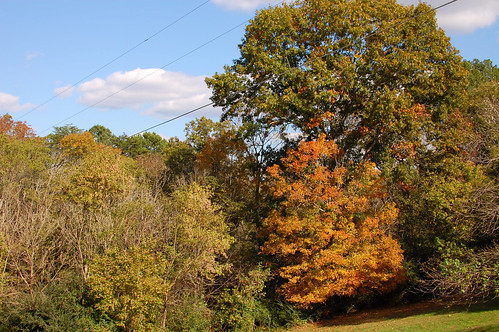
Autumn Colors


Autumn Trees 01, originally uploaded by rgcoleman9.

Beautiful day today. I took advantage of the sunlight and took some photos of the fall foliage.

October 17, 2009

Playlist 10-17-09

* J.S. Bach: Sonaten für Violine & Cembalo (Kuijken/Leonhardt) (Harmonia Mundi 2CD)
* LeClair: Violin Sonatas (Holloway/ter Linden/Mortensen) (ECM CD)
* Arte dei Suonatori: Persona Grata Festival, Warszawa 6-26-09 (FM 2CDR)
* AMM: AMMusic (ReRec/Matchless CD)
* Ornette Coleman: Beauty is a Rare Thing (d.1-2) (Rhino 6CD)
* Evan Parker/Matthew Shipp: Abbey Road Duos (Treader CD)
* J Spaceman & Matthew Shipp: SpaceShipp (Treader CD)
* Ginger Baker Trio: Going Back Home (Atlantic CD)
* David Torn: Clouds Above Mercury (ECM CD)
* Aretha Franklin: I Never Loved a Man the Way I Love You (MFSL CD)
* Simon & Garfunkel: Old Friends (d.1-2) (Columbia 3CD)
* Chris Bell: I Am the Cosmos (Deluxe Edition) (Rhino Handmade 2CD)
* Grateful Dead: Winterland June 1977: The Complete Recordings (d.7-9) (Rhino/GD 9CD)
* Grateful Dead: Civic Center, Augusta, ME 10-12-84 (SBD 2CDR)
* Can: Ege Bamyasi (Spoon SACD)
* New Order: Power, Corruption & Lies (Deluxe Edition) (d.1) (Rhino 2CD)
* Boston Spaceships: Zero to 99 (GBV, Inc. LP)
* Sonic Youth: The Eternal (Matador 2LP)
* Thurston Moore: Trees Outside the Academy (Ecstatic Peace CD)
* Jim O’Rourke: The Visitor (Drag City LP)
* Yo La Tengo: Popular Songs (Matador CD)
* Beck & Flaming Lips: Austin City Limits 11-11-02 (CATV CDR)
* Flaming Lips: In a Priest Driven Ambulance (Restless CD)
* Flaming Lips: Embryonic (Warner Bros. 2CD+DVD-A)

Commentary:

The new Flaming Lips record (photograph) sounds every bit as weird as it looks. After their last few albums of gorgeous, orchestral pop music, I was not expecting this sprawling, experimental “double-album” full of crude electronic noises, skronky guitar, and bad-acid-trip paranoia. At first I was confused, but after three listens now it’s starting to grow on me. I’m still not sure if it’s a brilliant triumph or a self-indulgent mess – or both. Either way, it’s definitely not for the feint of heart.

October 13, 2009

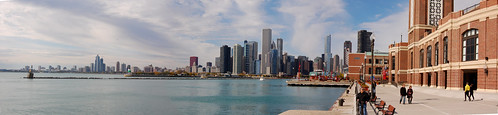
Chicago Photographs Are Now on Flickr!


Navy Pier 01, originally uploaded by rgcoleman9.

I decided to open a Flickr account. Check out the photographs from Chicago over there.

October 12, 2009

Playlist 10-10-09

* Vivaldi: “Manchester” Sonatas (Romanesca/Manze) (Harmonia Mundi 2CD)
* Stravinsky: Music for Piano (1911-42) (Aleck Karis) (Bridge CD)
* Ars Antigua (w/Rachel Barton Pine): WFMT, Chicago 4-30-07 (FM CDR)
* Venice Baroque Orchestra (Marcon/Carmignola): Mandel Hall, Chicago 10-17-02 (FM 2CDR)
* Chicago Symphony Orchestra (Boulez): Severance Hall, Chicago 4-30-05 (FM CDR)
* Sun Ra: Supersonic Jazz (Saturn/Evidence CD)
* Sun Ra: Sun Song (Delmark CD)
* Sun Ra: Sound of Joy (Delmark CD)
* Sun Ra: Sound Sun Pleasure (Evidence CD)
* Sun Ra & His Arkestra: The Electric Circus, New York City 1968 (AUD 2CDR)
* Art Ensemble of Chicago: Reese and the Smooth Ones (Fuel 2000 CD)
* Art Ensemble of Chicago: Bap-Tizum (4 Men With Beards LP)
* Art Ensemble of Chicago: Fanfare for the Warriors (4 Men With Beards LP)
* Anthony Braxton: Performance (Quartet) 1979 (hatOLOGY CD)
* Matana Roberts: The Chicago Project (Central Control CD)
* Junior Wells’ Chicago Blues Band: Hoodoo Man Blues (Delmark/Analogue Productions LP)
* Buddy Guy: I Was Walking Through the Woods (MCA “Heavy Vinyl” LP)
* Wilco: The Riviera, Chicago 2-19-08 (FM 3CDR)
* Stereolab: Sound-Dust (Elektra CD)
* Stereolab: “Captain Easychord” (Elektra CDEP)
* Tortoise: TNT (Thrill Jockey 2LP)
* Tortoise: Beacons of Ancestorship (Thrill Jockey LP)
* Jim O’Rourke: The Visitor (Drag City LP)
* Yo La Tengo: Popular Songs (Matador CD)

Commentary:

Do you detect a theme in this week’s (belatedly-posted) playlist?

Liz and I took a quick trip up to Chicago this weekend to see Cy Twombly: The Natural World (Selected Works 2000-2007) at The Art Institute. We didn’t get to hear much music while we were there, but I did make it over to the legendary Jazz Record Mart, a record collector’s dream come true. Since we had never been to Chicago before, we were gung-ho tourists: we went to the Shedd Aquarium, took a water taxi to Navy Pier, went on an architecture river cruise, toured the Museum of Contemporary Art and the Smith Museum of Stained Glass — we even went up to the John Hancock Tower Observatory (photograph). We also had some amazing meals and stayed at the fabulous Sofitel Water Tower. It was so much fun! Chicago is a beautiful city – but, damn, it was COLD!

I’ll be blogging about the trip in coming days.

October 4, 2009

Sun Ra Sunday

Sun Ra: Janus (1201 Music CD)

Janus was apparently conceived by Sun Ra as a self-contained album around 1970, but it was never issued. In 1971, the tapes were sold (along with a bunch of other recordings) to Alan Bates, but Black Lion also failed to release any of this material. Eventually, some of these tracks were scattered across various obscure Saturn LPs of the seventies and eighties, such as Invisible Shield and Space Probe and only on exceptionally hard to find, hybridized pressings at that. Thankfully, 1201 Music rescued this long neglected album, releasing it essentially as Ra originally conceived it on this 1999 CD, complete with insightful liner notes from Prof. Robert L. Campbell himself. The music was mostly recorded around 1967 to 1970, although there is a tantalizing expanse of music from the magical Choreographer’s Workshop period tacked onto the title track – a precocious bit of editing that demonstrates Ra’s skills with a razor blade and splicing tape. Despite their variable sound quality and sometimes haphazard packaging, Sun Ra constructed his albums with great care and considered the LP as something more than mere documentation of his work, but as works of art in and of themselves. Janus is an excellent example of his craftsmanship.

In his liner notes, Campbell aptly describes “Island in the Sun” as “one of those relaxed, flowing compositions with mildly exotic rhythms that are much beloved by Ra fans.” Indeed, it is beautiful example of what I call Ra’s “space ballads.” Marshall Allen’s flute harmonizes so nicely with Danny Davis’s alto clarinet on the lilting, sing-song-ing melody while Ronnie Boykins lays down a loping bass line atop the cheerfully pitter-pattering hand drums. Sonny enters with a sparse solo consisting of floating piano chords before Allen returns to lead into the final, peaceful refrain. What a lovely way to begin the album.

Despite the label text, the CD combines “The Invisible Shield” and “Janus” into one thirteen-minute-long track, which makes sense in a way, since these two tracks are constructed from three different performances and the one segues directly into the other. (Still, I’d rather have each title separately indexed and the label is misleading.) Recorded live in 1970, “The Invisible Shield” opens with an outrageous alto saxophone solo by Marshall Allen, accompanied by Danny Ray Thompson on the ghostly Neptunian Libflecto (a bassoon with French Horn mouthpiece) but Ra soon takes over with a two-fisted organ/synthesizer solo that sounds like a mad scientist conjuring up doomsday. Right at the apocalyptic climax, a tape edit slams us into “Janus,” the first thirty-five seconds of which are from a Sun Studio recording circa. 1967 or ‘68 with Ra on clavinet or gongs (or both), heavily amplified and distorted, creating ominous thunderclouds and sonic lightning. Then another quick edit splices in a very spacey improvisation recorded at the Choreographer’s Workshop circa. 1963, full of Tommy Hunter’s over-the-top reverb and echo effects along with Allen’s piccolo and Art Jenkins’s eerie “space voice.” A final edit ends the piece with quietly chiming bell sounds. Ra’s sequencing of this wildly disparate material into a satisfying whole is a perfect example of his visionary, DIY approach to record-making.

The album closes with two live recordings from early 1968. “Velvet” is a swinging, big-band bop number that dates back to 1959’s Jazz in Silhouette (Saturn 5786/Evidence ECD 22014). The ensemble sections are a little shaky, but Pat Patrick turns in an exemplary performance with his rumbling baritone sax solo, Robert Northern provides a couple of choruses on the rarely heard French horn, and Ra delivers a typically terse statement on piano before the reprise. “Joy” is a conducted improvisation that begins with dissonant, braying horns over Ra’s cascading piano clusters and pounding drums and percussion. The ensemble eventually drops out leaving Danny Davis to extemporize a cappella on the alto sax before the rhythm sections returns to provide frenzied support. After a while, the full ensemble resumes its scattering of contrary lines, honks, and squeals and Ra plays rippling, romantic chords on piano along with pure-toned whines on the Clavioline. The music gets slowly quieter while Jarvis takes over with a typically manic drum solo that abruptly cuts off after a minute or so. Did the tape run out? Or is this another deliberate edit? Either way, I’m grateful; there is no doubt Jarvis went on and on for several more minutes! Certainly, it is an odd ending to an otherwise very interesting piece of music.

Janus not only contains precious documentation of a crucial period in Sun Ra’s music, but it is also a supremely well-crafted album in its own right. Covering a wide range of material in a mere thirty-five minutes, it would make an excellent introduction to Ra’s sixties era music for the novice; for the connoisseur, it is absolutely essential.

October 3, 2009

Playlist 10-3-09

* Le Sieur de Machy: Pièces de Viole (Savall) (Telefunken LP)
* Veracini: Sonatas (Holloway/ter Linden/Mortensen) (ECM CD)
* Handel: 12 Solo Sonatas, Op.1 (AAM/Egarr) (Harmonia Mundi 2CD)
* Leonhardt-Consort: Consortmusik auf Originalinstrumenten (Telefunken LP)
* Gustav Leonhardt: Festkonzert des Barock (Telefunken LP)
* Venice Baroque Orchestra (Carmignola/Marcon): Victoria Hall, Genéve 2-28-08 (FM 2CDR)
* Berio: Voci (Kashashian/Radio Symphonieorchester Wien/Davies (ECM CD)
* Andrew Hill Quinet: Auditorium Canneti, Vicenza, Italy 5-15-06 (FM CDR)
* Andrew Hill Sextet: Berlin 10-31-02 + Lausanne 11-1-02 (FM CDR)
* Cecil Taylor Unit: Philharmonie, Berlin 11-6-69 (FM CDR)
* Taylor Ho Bynum Sextet: Asphalt Flowers Forking Paths (hatOLOGY CD)
* Mary Halvorson/Reuben Radding/Nate Wooley: Crackleknob (hatOLOGY CD)
* Henry Threadgill’s Very Very Circus: Too Much Sugar for a Dime (Axiom CD)
* Grateful Dead: Winterland June 1977: The Complete Recordings (d.1-6) (GD/Rhino 9(+1)CD)
* Dylan & The Dead: Sullivan Stadium, Foxboro, MA 7/4/87 (SBD 3CDR)
* Dylan & The Dead: JFK Stadium, Philadelphia, PA 7/10/87 (SBD 3CDR)
* Crosby – Nash: Another Stoney Evening (DTS DVD-A)
* Neil Young: On the Beach (Reprise/Warner Bros. DVD-A)
* Tom Waits: Blood Money (Anti LP) * Big Star: #1 Record/Radio City (Stax SACD)
* Big Star: 3rd (4 Men With Beards LP)
* Chris Bell: I Am the Cosmos (4 Men With Beards LP)
* The Replacements: Pleased to Meet Me (Sire LP)
* Cocteau Twins: Love’s Easy Tears (Capitol CDEP)
* Cocteau Twins: Iceblink Luck (Capitol CDEP)
* Yo La Tengo: Popular Songs (Matador CD)
* Robert Pollard: Elephant Jokes (GBV, Inc. LP/CD)
* Boredoms: Super Roots 3 (Vice CD)

Commentary:

The big event around here this week is the arrival of the Grateful Dead: Winterland June 1977 box set (pictured), which is just as lavish as last year’s Winterland 1973 box. This caps another year packed full of new releases from the Dead’s vault, including Rocking the Cradle: Egypt 1978; To Terrapin: Hartford 1977; and four volumes of the Road Trips series totaling 22 CDs, 1 DVD (plus 6 bonus CDs) of Grateful Dead Music (not to mention the two new Pure Jerry releases: Garcia & Kahn: Marin Veteran’s Memorial Auditorium 2-28-1986 (1 CD) and Jerry Garcia Band: Bay Area 1978 (2 CDs)) all released in the past twelve months. This raises the age-old question: is it possible to have too much of a good thing? The answer is, of course: “too much of everything is just enough!” As is to be expected, super-picky Deadheads are carping about this being yet another spring ‘77 release which already circulates widely within the hardcore trading community but, believe me, these CDs sound way better than any of those “bootlegs.” Sure, it’s kinda pricy, but it is consummately well done – and the limited edition “bonus disc” contains a tasty excerpt from the Auditorium Theatre in Chicago on 5-12-77, a show which does not circulate amongst the fanatical. Only available directly from Dead.net.

+++

Speaking of Rhino, the news that Warner Brothers laid off most of the label’s staff is just another sign of the end of records and record collecting. The press release suggests that Rhino will no longer be producing physical product and instead, its skeleton crew will focus on “global digital catalog initiatives” and “name and likeness representation for legendary artists.” What this means for the Grateful Dead (or anyone else) and their relationship with Rhino and/or Warner Brothers remains to be seen. One thing is for sure: I need to pick up the new Big Star box set before it disappears forever. By the way, Warner Brothers, if you think I’m going to pay anything like CD prices for digital files (especially lossy MP3s), you are very, very wrong.

+++

Speaking of the Grateful Dead, the Dylan & The Dead tour in 1987 was indubitably a musical trainwreck, but it was a whole lot of fun to be there (a friend and I went to the Foxboro, Philadelphia, and Giants Stadium shows). Out of nowhere, “Touch of Grey” was suddenly a hit single and the Dead themselves were at a rare peak of polish and professionalism; their sets were perhaps a bit short on improvisatory exploration but the playing and singing was reinvigorated and exciting. Despite – or because of – high expectations, Dylan is a mess: out of synch with the rest of the band and desperately shouting out his songs. Nevertheless, the experience had a profoundly rejuvenating effect: soon thereafter, The Never Ending Tour began (which continues to this day), wherein Dylan explores the nooks and crannies of his songbook with the support of a crack band – sorta like the Grateful Dead.

September 30, 2009

Little Enid Coleslaw

I’ve been a big fan of Dan Clowes ever since I came across Lloyd Llewellyn (Fantagraphics) around 1985 or 1986. His next ongoing comic book, Eightball, was much more flexible and open-ended, allowing Clowes an opportunity to experiment and grow as an artist, resulting in several excellent “graphic novels,” most notably Ghost World which was serialized in Eightball nos.11-18. In 1997, it was published as a monograph and was both a critical and commercial success, leading to the development of the Ghost World movie in 2001. Director Terry Zwigoff encouraged Clowes himself to write the screenplay (which was nominated for an Academy Award), allowing the film to stay fairly true to Clowes’s original vision. It is very good and boasts a fine cast, including Thora Birch, Scarlett Johansson as Enid and Rebecca, with Steve Buscemi as Seymour, the creepy record collector guy. They manage to capture the look and feel of the book although I ultimately think the book is more nuanced and richly detailed. Anyway, during all the hoopla surrounding the movie, the Japanese toy company, Presspop, commissioned Clowes to design a “Little Enid” figure depicting Enid Coleslaw as a cartoony child and it is delightfully weird — the green hair makes things especially bizarre. My lovely wife gave this to me way back then and it is one of my most cherished possessions.