Showing posts with label art. Show all posts

April 20, 2013

Playlist Week of 2013-04-20

Playing With Light 2013-04-19

* Nono: La lontananza nostalgia utopica futura, etc. (Kremer/Gridenko) (DG CD)
* Nono: Variazioni canonische, etc. (Sinf. Des Südwestfunks/Gielen) (Montaigne/Naïve CD)
* Charles Mingus: Mingus Plays Piano (Impulse! CD)
* Sun Ra: Sound Sun Pleasure! (Saturn LP)
* Sun Ra: Fate In A Pleasant Mood (Saturn LP)
* Sun Ra: Bad And Beautiful (Saturn LP)
* Sun Ra: Atlantis (Saturn LP)
* Sun Ra: Taking A Chance On Chances (Saturn LP>CDR)
* Sun Ra: Piano Recital, Teatro La Fenice, Venezia (Leo/Golden Years CD)
* Anthony Braxton: Trio (NYC) 2011 (New Braxton House FLAC)
* Anthony Braxton: Quartet/Quintet (NYC) 2011 (New Braxton House FLAC)
* Anthony Braxton Falling River Quintet: Institute Française, Berlin 2012-10-10 (AUD  FLAC)
* Pat Metheny Group: Bürgerzentrum, Bremen, W. Germany 1978-03-13 (FM FLAC)
* Secret Keeper (Stephan Crump/Mary Halvorson): Super Eight (Intakt CD)
* Ches Smith & These Arches: Hammered (Clean Feed CD)
* Living By Lanterns: New Myth/Old Science (Cuneiform CD)
* Frank Ocean: Channel Orange (Island/Def Jam CD)
* John Fahey: Vol.1: Blind Joe Death (Takoma/4MWB LP)
* John Fahey: Vol.2: Death Chants, Breakdowns & Military Waltzes (Takoma/4MWB LP)
* John Fahey: Vol.3: Dance Of Death & Other Plantation Favorites (Takoma/4MWB LP)
* Grateful Dead: Road Trips Vol.4 No.4: Spectrum 4-6-82 (selections) (GDP/Rhino 3HDCD)
* Grateful Dead: Formerly The Warlocks: Hampton 1989 (selections) (GDP/Rhino 6HDCD)
* Pink Floyd: The Dark Side Of The Moon (Capitol SACD)
* Pink Floyd: Wish You Were Here (PinkFloyd/Analogue Productions SACD)
* Deep Purple: In Rock (Warner Bros. LP)
* Yo La Tengo: Fade (Matador CD)
* Flaming Lips: Embryonic (Warner Bros. 2CD/DVD)
* Flaming Lips: The Terror (Warner Bros. CD)
* Circus Devils: Five (Fading Captain LP)
* Wilco: A Ghost Is Born (Nonesuch/Rhino 2LP)
* Wilco: Sky Blue Sky (Nonesuch 2LP)
* Earth: Angels Of Darkness, Demons Of Light I (Southern Lord CD)†
* Earth: Angels Of Darkness, Demons Of Light II (Southern Lord CD)†
* Steven Wilson: The Raven That Refused To Sing (KScope BD)
* Opeth: Watershed (Roadrunner CD/DVD)†/‡
* Opeth: Heritage (Roadrunner CD/DVD)†
* Opeth: Hultsfred Folkets Park, Hultsfred, Sweden 2003-06-12 (FM CDR)
* Opeth: Jazz Club Nefertiti, Gothenburg, Sweden 2012-12-02 (AUD FLAC)
* Mastodon: Crack The Skye (Reprise 2-45RPM LP)†
* Baroness: Yellow & Green (Relapse 2CD)
* Agalloch: Ashes Against The Grain (The End CD)†
* Animal Collective: Merriweather Post Pavilion (Domino 2LP)
* Animal Collective: Centipede Hz (Domino 2LP/24/96 FLAC)
* Ghost B.C.: Infestissumam  (Loma Vista/UMG CD)

†=iPod
‡=car

Commentary:

Today is 4/20 – Record Store Day 2013. Heh. Apparently folks started lining up at Grimey’s beginning at 4:00 yesterday afternoon, intending to camp out overnight in the sub-freezing cold. Good grief! That is insane. I love records but I can’t compete with that. Just imagine what a scene it was when they finally opened the doors at 10:00 this morning! Needless to say, I stayed far, far away from that madness. Besides, for me every Tuesday is Record Store day.

And, you know, it has occurred to me that perhaps I already have way too many records. I’ve been contemplating selling some of them on eBay (or Discogs.org) so I invested in some studio lights and a light tent in order to take high-quality photographs of my, um, merchandise.

Would you buy this record? Take a look: it’s a rare white label promo!

Deep Purple - In Rock (wlp)

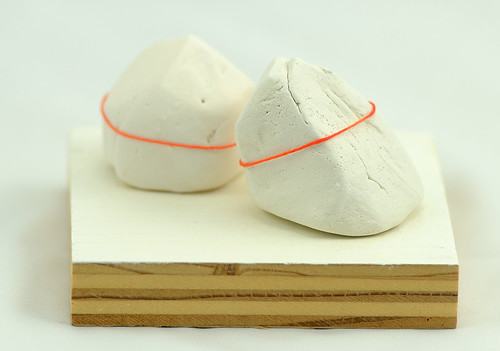
I also pulled out the 85mm micro lens and took some pictures of very small items like this sculpture by Jodi Hays, “All Together Now” (2012). I think it looks pretty darn good for a first attempt at this kind of photography—but, please be advised: the artwork is not for sale.

Jodi Hays - "All Together Now" (2012)
+++

SHAMELESS PLUG DEPT.

Like records? Please consider checking out my CD: Rodger Coleman & Sam Byrd: Indeterminate (Improvisations for Piano and Drums). It's an explosive set of intense free improv, recorded live at "Indeterminacies" at Zeitgeist Gallery on September 6, 2012. Packaged in a deluxe 6-panel digipack with a 12-page booklet, it is made by record collectors for record collectors to savor and enjoy for years to come.

Rodger Coleman: Indeterminate (Improvisations for Piano and Drums)

November 17, 2012

Playlist Week of 11-17-12

Clyfford Still Museum 2012-11-11d

* J.S. Bach: Cello Suites (ter Linden) (selections) (Brilliant Classics 2CD)
* Bill Evans Trio: The Complete Village Vanguard Sessions 1961  (Riverside 3CD)
* Bobby Hutcherson: Head On (Blue Note CD)
* John Abercrombie: The Third Quartet (ECM CD)†/‡
* John Abercrombie Quartet: Wait Till You See Her (ECM CD)
* Terje Rypdal: Odyssey: In Studio & In Concert (ECM 3CD)
* Mary Halvorson Trio: Dragon’s Head (Firehouse 12 CD)
* Mary Halvorson Quintet: Saturn Sings (Firehouse 12 CD)
* Grateful Dead: World Music Theatre, Tinley Park, IL 7-21-90 (SBD 3CDR)
* Grateful Dead: World Music Theatre, Tinley Park, IL 7-22-90 (selections) (SBD 3CDR)
* Camel: Moonmadness (Decca/EMI CD)
* Camel: Rain Dances (Decca/EMI CD)
* Camel: Breathless (Arista LP)
* Sonic Youth: Smart Bar, Chicago 1985 (Goofin’ CD)
* Bad Brains: Into The Future (Megaforce LP)
* Opeth: Blackwater Park (Music For Nations/Sony CD/DVD)†
* Baroness: Yellow & Green (Relapse 2CD)†(‡)
* Grails: Burning Off Impurities (Temporary Residence 2LP)
* Grails: Deep Politics (Temporary Residence CD/2LP)(†)
* The Black Keys: Brothers (Nonesuch CD)†/‡

†=iPod
‡=car

Commentary:

Short list this week.

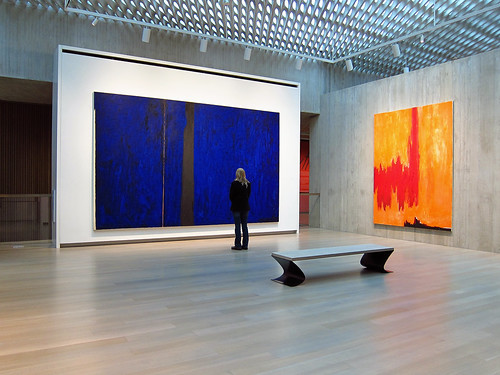
Actually, we were in Colorado visiting Lizzy's family – folks I haven’t seen in many, many years (or in the case of my three-year-old nephew, Tobin, ever). It was so great to (re)connect with these lovely people! Being the art mavens we are, we also insisted on an excursion into downtown Denver to see the “Becoming Van Gogh” exhibit at the Denver Art Museum, which was ridiculously crowded but totally worth it. But what really blew us away was the Clyfford Still Museum next door, which was, not surprisingly, mostly devoid of visitors.

Still is obviously nowhere near as well-known as Willem De Kooning, Jackson Pollack, and Mark Rothko, but he was arguably the progenitor of the entire Abstract Expressionist movement. His low profile was partly self-inflicted since he withdrew from the commercial gallery scene at the height of his fame in the early 1950s in order to make his art in solitude. He left New York City in 1960 for rural Maryland, where he lived until his death in 1980. He rarely sold or exhibited any of his work during this period and seemed destined to become a footnote in the annals of history.

But Still believed in his art and his one-page will contained an audacious bequest: 
I give and bequeath all the remaining works of art executed by me in my collection to an American City that will agree to build or assign and maintain permanent quarters exclusively for these works of art and assure their physical survival with the explicit requirement that none of these works will be sold, given, or exchanged but are to be retained in the place described above exclusively assigned to them in perpetuity for exhibition and study (see Sobel & Anfam, Clyfford Still: The Artist’s Museum, p.17).

For almost thirty years, this collection—825 paintings and 1575 works on paper (or an astonishing 94% of the artist’s entire output)—languished in storage while negotiations with various cities and institutions failed to effectuate these simple yet stringent terms. Finally, the city of Denver (through a private foundation) committed to building the museum as part of the city’s expanding arts district. Designed by Brad Cloepfil and Allied Works Architecture, the Clyfford Still Museum broke ground in 2009 and was opened to the public on November 18, 2011.

The building is a state-of-the-art facility and the inaugural exhibit a total revelation. Early works show an innate fluency that only De Kooning could match at that age, but in an already radically American style. And by 1942, Still was making wholly abstract paintings while his contemporaries were still flirting with surrealism. But as he insisted: “The figure stands behind it all.” This may at first seem incongruous, but moving chronologically through the galleries it becomes immediately apparent as his mature work evolves seamlessly from everything that came before. I had seen some of Still’s mature work at MOMA, the Met and the San Francisco Museum of Modern Art, but his paintings always seemed to me forbiddingly austere compared to the exuberant Pollacks or the sensuous and contemplative Rothkos hanging nearby. I knew he was important, but didn’t really understand why. A visit to the Clyfford Still Museum makes it unmistakably clear. Still once wrote: “They are not paintings in the usual sense; they are life and death merging in a fearful union.” That may sound like modernist hyperbole but, to be sure, confronting an entire museum filled with his art is indeed a wholly unique and terrifically moving experience.

The galleries are beautifully lit with both artificial and cleverly diffused natural light and are perfectly scaled to the oftentimes monumental-sized paintings. Smaller, dimmer galleries contain a number of works on paper and three sculptures, almost none of it ever before seen.  In fact, the collection is so vast it will take thirty or more years to display it all—which means we will enjoy going back again and again.  If you find yourself in Denver, the Clyfford Still Museum is well worth the modest admission fee. You may not have heard of him, but you will come away convinced he was one of the greatest artists of the 20th Century. You can see more of my photographs of the museum and the rest of trip here.

+++

It was also our birthday on the 15th. Yes, my wife and I have the same birthday. Isn't that amazing? Happy birthday to us!

+++

Given all of the above, I only managed a blurb for “List Inconsequential” this week. The topic this time is “Bad Songs on Good Albums.” My choice? “Cans and Brahms” from Yes’s classic Fragile album—gawd, it’s horrible.

November 3, 2012

Playlist Week of 11-03-12

Monk Hand

* Marais: Suitte d’un Goût Etranger: Pièces de Viole du IV Livre, 1717 (Savall, et al.) (Alia Vox 2SACD)
* Laurie Spiegel: The Expanding Universe (selections) (Unseen Worlds MP3)
* Terje Rypdal – Miroslav Vitous – Jack DeJohnette (ECM LP)
* John Abercrombie: Night (ECM LP)
* DJ Spooky: Optometry (Thirsty Ear CD)
* Bob Dylan: The Naked Empire (selections) (boot CDR)
* Bob Dylan: Knocked Out Loaded (Columbia LP)
* Grateful Dead: Dave’s Picks Vol.4: Williamsburg, VA 9-24-76 (GDP/Rhino 3GDCD)
* Neil Young & Crazy Horse: Psychedelic Pill (Reprise 2HDCD)
* The Band: Rock Of Ages (Capitol/Mobile Fidelity 2LP)
* Joni Mitchell: Don Juan’s Reckless Daughter (Asylum HDCD)
* Yes: The Yes Album (Atlantic/Mobile Fidelity CD)
* Yes: Fragile (Atlantic/Mobile Fidelity CD)
* Mission of Burma: Vs. (Ace of Hearts/Matador LP/EP/DVD)
* Guided By Voices: The Bears For Lunch (GBV, Inc. LP)
* Converge: All We Love We Leave Behind (Epitaph MP3)†
* Neurosis: Honor Found In Decay (Neurot MP3)†
* Porcupine Tree: Stupid Dream (KScope CD/DVD)
* Porcupine Tree: Lightbulb Sun (KScope CD/DVD)
* Porcupine Tree: Recordings (KScope CD)†
* Porcupine Tree: In Absentia (Lava/Atlantic CD)†
* Porcupine Tree: Deadwing (Lava/Atlantic CD)†
* Opeth: Damnation (Music For Nations/KOCH CD)†
* Opeth: Heritage (Roadrunner CD/DVD)†
* Mastodon: Crack The Skye (Reprise CD)†
* Mastodon: The Hunter (Reprise CD)†
* Grails: Burning Off Impurities (Temporary Residence 2LP)
* Grails: Taking Refuge In Clean Living (Important CD)†/‡
* Grails: Doomsdayer’s Holiday (Temporary Residence CD)†
* Grails: Deep Politics (Temporary Residence CD/2LP)
* Blut Aus Nord: 777 – Sect(s) (Debemur Morti CD)
* Blut Aus Nord: 777 – The Desanctification (Debemur Morti CD)
* Blut Aus Nord: 777 –Cosmosophy (Debemur Morti CD)(†)
* Alcest: Les Voyages de l’Âme (Prophecy CD)†
* Broken Bells: Broken Bells (Columbia CD)†/‡
* Pineapple Explode: Pineapple Explode (Pineapple Explode CDR)†
* Pineapple Explode: A Bushel & A Barrel (Pineapple Explode CDR)†

†=iPod
‡=car

Commentary:

[none]

October 9, 2011

NuVoid Interview With Indeterminacies Co-Curators, Lesley Beeman & Lain York

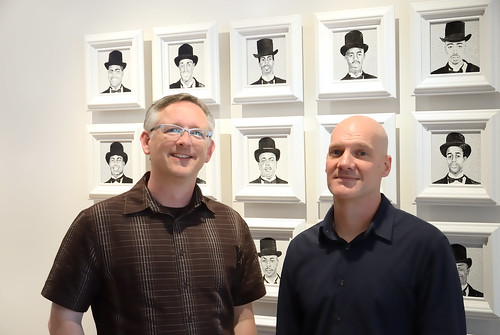
Lesley Beeman and Lain York with Kurt Wagner’s “Beautiful Millionaire,” Zeitgeist Gallery, Nashville, TN October 4 2011

Lesley Beeman and Lain York with Kurt Wagner’s “Beautiful Millionaire 2000,” Zeitgeist Gallery, Nashville, TN October 4, 2011


In this year’s “Best Of Nashville” issue, the Nashville Scene just recently awarded Indeterminacies “Best Contemporary Classical Series” and I wholeheartedly agree with their assessment! Indeterminacies is the brainchild of architect Lesley Beeman and visual artists Lain York, based at the Zeitgeist Gallery, which shares its space with Manuel Zeitlin Architects in picturesque Hillsboro Village. The storefront gallery shows contemporary work from local and international artists while the firm is responsible for some of the most beautifully modern buildings in Nashville. A synergetic dialogue between fine art, architecture and design has been the defining principle of Zeitgeist/MZA since its opening in 1994 and has increasingly utilized the gallery as a venue for cutting edge music, dance and experimental performance art. The series derives its name from John Cage’s idea of “indeterminacy,” art as “processes whose outcome is not predetermined” and, to that end, audience participation is actively encouraged. In an interview with Theatre Intangible, Lain York stated their artistic “goal is to push someone else into carrying the conversation further” while Lesley Beeman spoke of the desire to build a “library of criticism for new music” through “a critical dialogue” between composers, performers and listeners. As you can see, Indeterminacies is much more than a mere concert series.

On Tuesday October 11, Indeterminacies continues with a program of music by Andrew Raffo Dewar performed by Pulse New Music Ensemble and guitarist, Brady Sharp, who will play “Box With Strings” (2003) a composition of prepared electric guitar (!). Your humble blogger will be moderating the discussion and I’m very pleased (and surprised!) to have been asked to participate. The music is certainly right up my alley: Mr. Dewar studied with Anthony Braxton, one of my biggest heroes, and plays (woodwinds) on some of my all-time favorite records, including Braxton’s mammoth 9 Compositions (Iridium) 2006 box set (Firehouse 12) and 12+1tet (Victoriaville) 2007 (Victo) as well as Bill Dixon’s final magnum opus, 17 Musicians In Search Of A Sound: Darfur (AUM Fidelity). But he’s also a respected composer in his own right as well as an ethnomusicologist and Assistant Professor of Interdisciplinary Arts at The New College & School of Music at the University of Alabama. There is wonderful CD of his music entitled, Six Lines of Transformation, available on Porter Records, and is highly recommended. The works presented on October 11 are exquisite examples of “ergodic notation,” graphic scores which transcend the confines of traditional notation and require the musician’s own imagination and creativity to interpret. It is not exactly improvisation—the instructions are quite explicit—but the result is, well, indeterminate. It is sure to be scintillating evening of music and, hopefully, enlightening discussion.

I recently had an opportunity to chat with Lesley Beeman and Lain York about the Indeterminacies series and they graciously allowed their words (and image) to be published on the blog:

+++

RC: This season’s Indeterminacies line-up is suitably eclectic: On September 13, the Portara Ensemble performed David Lang’s Pulitzer prize-winning vocal piece, “The Little Match Girl Passion”; on October 11, Andrew Raffo Dewar presents some of his “ergodic” scores performed by the Pulse Ensemble and Brady Sharp; and on November 8, the season concludes with a program featuring theorist/composer John Latartara. Can you tell me a little about how you came up with this year’s schedule of events?

Lesley: This is the fourth year we've been doing events like this in the gallery, although they've had different titles. It seems that each year's concept grows from something in the year before. This year's series grew out of a program we did about critical thinking with Jonathan Neufeld and Matt Walker [director of ALIAS Chamber Ensemble]. Long story short-er, short-ish, this year we set out to try to build a library of criticism of new music. So, we combine new music by local composers with critics to engage us in a rigorous discussion of the music. The first person we contacted was John Latartara whose striking electronic music introduced me to an exciting new genre of music.

Lain: Conversations outside institutional confines overwhelmingly indicate that folks want to talk and be more engaged; they want more focused conversation and are not short on opinions. It seems, however, that when a platform for these conversations is presented it takes some doing to get people (a) to the venue and (b) get them sharing. In 2006, “dialogues” related to visual art group shows sought to “confront” a studio community that was frustrated on a number of levels. Results were mixed but at least we were all set on a trajectory. Not sure if it is that we are in the South but shoes are still a bit too tight. Hopefully this year’s Indeterminacies will continue to see the conversations that folks say they want to see tabled. Would love to see more area outfits playing with formats that will induce “sharing” in both physical and virtual space.

RC: You have taken a step in that direction, with last month’s program being streamed from Indeterminacies Facebook page and I assume that will continue in the future. In the interview with Theatre Intangible, Lain described the Indeterminacies program as a “dialogue” and an attempt to “push the conversation further.” To that end, the presence of a moderator and an audience participation segment is an integral part of each event and I’m honored to have been asked to host the Andrew Raffo Dewar program. I understand it is something more than just a Q&A with the composer, yet audiences (and composers and musicians) can be difficult to draw out. How do you envision the ultimate Indeterminacies program? Where does the “conversation” go from here?

Lesley: Art, architecture, music, design fundamentally search for something new or a new way of looking at something familiar. Conversation is a critical part of this enterprise. The ultimate Indeterminacies program would engage the presenters and the audience in that search.

RC: Well, I’m happy to do my part! For me, one of the things that is so refreshing about the Indeterminacies events is hearing serious, cutting edge music is presented in a contemporary art gallery space. One of my bailiwicks is that most people—including many musicians—do not consider music to be “art.” The proof is in their general contempt of modernism when it comes to music. Nobody who wants to be taken seriously in the fine art world would be caught dead making jokes about, say, Cy Twombly, yet John Cage is still grossly misunderstood and forever controversial in the “classical music” world. Painting, sculpture, theatre, film, architecture have all canonized and cannibalized their modernist heroes and moved on; meanwhile so-called “classical music” is confined to the narrow confines of a misconstrued 19th Century. Is music in an art gallery different from music in a concert hall? Is music art?

Lain: First of all, I have always felt that John Cage is a painfully underrated visual artist. Love hearing him mentioned in the same breath as Twombly (Twombly being Kingboss as far as I’m concerned). If “art” is a vehicle for expression, association, and conversation I certainly think of music (writing, film making, choreography/dance, skateboarding, etc.) as art. The gallery has always been interested in curatorial projects by artists. The idea of exhibitions in a physical, institutional gallery space for viewing visual art critiquing and deconstructing institutional gallery spaces for viewing visual art is, I believe, very timely. Through curated exhibitions and performances, the space plays with the idea of “programming” making the shows and the space itself a nexus for showcasing particular studio practices, networking the shows themselves, and for visual artists working in particular media. It’s there to deconstruct and define in new ways the nature of these physical spaces and the influences they have on what was shown on the walls (and vice versa)and should directly affect how these works are translated into more formal/traditional venues. In the age of virtual space, people gathering in physical spaces has new meanings and in a relatively small cultural market traditionally lacking in institutional support such as Nashville, this can be a lot of fun.

We have all been seeing artists/musicians/writers/film makers, etc. interacting in interesting ways for years and the argument for/against compartmentalizing and specializing is taking on new meanings. The tools available now on the internet for individual expression and sharing are making these very exciting times. Museums, concert halls, cinemas, etc. (and the canons they reflect) are all having to absorb new vocabularies introduced on the periphery. Kicking and screaming in some instances.

RC: I, for one, very much appreciate the work you’re doing to push things forward! When Theatre Intangible asked who some of your influences are in your own art, Lesley replied: “John Cage’s book ‘Silence’ is the best book on architecture ever written.” Well, that statement sort of blew my mind! Discovering that book while at the Conservatory changed my life forever! I’ve re-read it many times and it is certainly one of the best books about music ever written. Can you elaborate on how it influenced your practice as an architect? Can you give an example where music directly impacted a building you designed?

Lesley: For me "Silence" is a book primarily about creating spaces that enhance a connection to the present, in Cage's sense a musical space but can also be an architectural space. It's about a stillness or an anchoring to a place in space or a place in time. Cage asks us to be still and listen to what is happening around us. Great architecture asks us to be still and be aware of our surroundings. The two are exactly the same. I'm not sure I can point to a building I've worked on that explicitly demonstrates this quality, but it is how I try to think about making architecture. It's a struggle and I'm certainly not always successful, but I hope to think more about space, experience and stillness than about making a "building."

RC: That makes a lot of sense and helps to explain why architecture can, like music, be the catalyst for a profoundly moving experience. Cage was truly a renaissance man: musician, philosopher and also a fine visual artist. Lain, can you describe his influence on your work?

Lain: I believe he cuts right across genres, disciplines, whatever you have. I see him as a strategist and philosopher, much like Duchamp, using drawing, printmaking, sound, etc. as a vehicle for his line of inquiry. I see creative process as using a particular or broad based skill set to flesh out associations related to particular ideas. His skill set definitely proved more broad and articulate than most. With that in mind, his approach to drawing has been most intriguing: the most immediate response to the most complex ideas.

RC: Works by artists Wayne White and Kurt Wagner (leader of the legendary alt-country band, Lambchop) are currently showing at Zeitgeist Gallery. Did the schedule of art openings influence your programming for Indeterminacies?

Lain: Janice [Zeitlin] and I do not consciously curate with the performances in mind; there’s something already in the water. Kurt is an internationally recognized musician and friend who we’ve wanted to show for ages. I spoke at length with Kurt about the Indeterminacies programming and he was super supportive. He’s familiar with Lang and loves the idea of the gallery as an interdisciplinary platform. Kurt was hoping to find some young bluegrass musicians, some that were just starting out to play at the reception with Wayne. Wayne also plays banjo and the thought of these relative novice players with pure intent was definitely appealing. Could not get that together, though.

RC: That would have been fun! Can you tell you me about future exhibitions?

Lain: The November gallery show will feature Ward Schumaker who is San Francisco-based. His background is in illustration and design but I find him to be a phenomenal painter and is currently getting picked up by galleries in LA, New York, and Shanghai. Upon initially meeting him, we somehow launched into a discussion on La Monte Young. Ward’s San Francisco gallery recently began hosting performances.

RC: That’s definitely a trend I like to see. What’s on the horizon for Indeterminacies in 2012?

Lesley: I have absolutely no idea, but it will doubtless involve something unexpected. Any suggestions?

RC: Well, I’d love to see more of Braxton’s progeny such as Mary Halvorson, Taylor Ho Bynum and Jessica Pavone be given the opportunity to play in Nashville since they so gleefully transcend the boundaries of composition and improvisation, “classical” and “jazz,” while developing a highly personalized voice on their respective instruments—but I don’t know how feasible it would be! Thank you both so much for taking the time to offer such thoughtful responses to my questions and for inviting me to participate on Tuesday!

+++

With beautiful fall weather we’re having, Tuesday’s event will take place outdoors, in the courtyard behind Retropolitan and Cotten Music Center, located just a few doors down from Zeitgeist at 1813 21st Avenue South. The program starts at 6:00pm and is free and open to the public, so I hope to see you there! In the meantime, go to Theatre Intangible and download these high-quality podcasts of previous events by composers Stan Link, Mark Snyder and Mark Volker. Good stuff!

July 6, 2011

Cy Twombly R.I.P.

Twombly 02


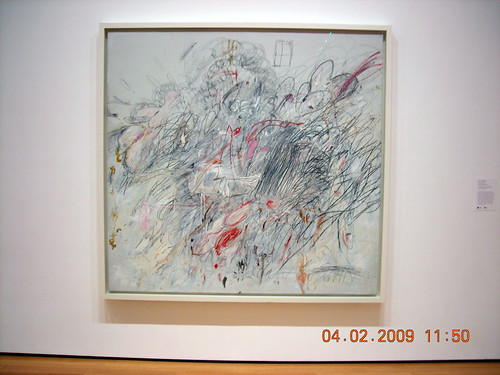
I first encountered Cy Twombly's work back in the late-'80s when a friend of mine showed me a monograph of his paintings. Now, I considered myself pretty sophisticated when it came to art so when my response was the stereotypical, "a three-year old could do that!", well, I was shocked. I loved the AbEx giants like Jackson Pollock and Willem DeKooning, but this was something else altogether. After chuckling at my reaction, this friend of mine (who was himself a painter) politiely informed me Twombly was one of the finest draughtsmen in modern art and proceeded to point out putative examples in the book. I was flabbergasted. But I respected his opinion enough to take him at his word and I checked a number of books out of the library.

As it turns out, it is extremely difficult to scribble like a child once you are an adult -- especially if you have any sort of "training," which rewards representation (or imitation) over expression very early on. Indeed, Twombly turned down a solo exhibit early in his career and, instead, spent some time drawing in the dark so as to lose the habits of his schooling. From there, he went on to develop his inimitable signature style, marrying a prodigious formal technique to seemingly childlike mark-making.

To make a long story short, I learned to love Cy Twombly; in fact, he is probably my most favorite artist of all time, partly because of the very difficulty I had to overcome in order to appreciate his work. Part of the difficulty is the fact that his paintings and drawings do not reproduce well, deflating their often monumental scale and obscuring subtle details in the process. In person, his works are all-engulfing and powerfully expressive of ineffable truths about freedom, desire, frailty. At least to me. I feel fortunate to have attended the 1994 retrospective at MOMA and visited the Cy Twombly Gallery at the Menil Collection in Houston, Texas.

So, I was sad to learn of his passing yesterday. He was 83 -- the same age as my Mom. He had lost his wife last year and was suffering from cancer, so it was probably a blessing. But it is hard to say goodbye to our heroes (and our family); fortunately for us, their works remain behind. Thank you, Mr. Twombly, for enriching my life. May you rest in peace.

The New York Times obituary is here.

Peter Plagens's comments here.

An extensive online gallery of Twombly's works can be found here.

June 19, 2011

Sun Ra Sunday


THE OTHER SIDE OF MUSIC

Some music is of specialized interpretation.
Some music is of synchronization precision.
Every light is a vibrational sight and sound:
It is rhythm in harmony with beam/rays/intensification
and projection visibility.
Music is light and darkness . . . precedent
of vitality . . . stimulation extraordinary
Equational harmonic differential pause prelude
to the sound that is on its way . . .
EVERY PLACE THERE IS, IS MUSIC, CHAOS
IS MUSIC AND HARMONIOUS PEACE IS MUSIC
What direction does it: decides the way until . . .

Silence is music.
There are different kinds of silences:
each silence is
A world all its own.
In a lesser but not least important sense,
Silence is an integral part of all music:
in a fractional sense,
When judged metrically.

We must not forget transposition.
Transposition always results in a
change of color.
Behold the vastness of music,
It is as vast as the greater allness
and the greater neverness . . .
And too music in its meta-phases
must not be ignored.

Are you thinking of metaphysics
alone? Well, don’t.
In the future (and even as of Now),
you will have to contend with and
recognize METAMENTAL and METASPIRIT:
also you will come face to face with
oblique METATHESIS.

--Sun Ra (1972)

May 14, 2011

Playlist Week of 5-14-11

Pulse Ensemble - Zeitgeist 2011-05-10a

* Il Suonar Parlante (Ghielmi): Eglise des Minimes, Brussels 4-22-11 (FM CDR)
* J.S. Bach: Four Cantatas (Collegium Vocale Gent/Herreweghe): Leipzig 6-12-10 (FM 2CDR)
* Mozart: Violinkonzerte (Mozart Ens. Amsterdam/Bruggen/Schröder) (d.1) (Seon/Philips 2LP)
* Mark Volker: Elemental Forces (Centaur CD)
* Duke Ellington: Money Jungle (Blue Note CD)
* Sonny Clark: Cool Struttin’ (Blue Note/Classic LP)
* Sonny Clark: The 45 Sessions (Blue Note—Japan CD)
* Sun Ra: The Antique Blacks (Saturn/Art Yard CD)
* Sun Ra: Sub-Underground (Saturn LP>CDR)
* Henry Threadgill’s Zooid: This Brings Us To, Volume I (Pi CD)
* Henry Threadgill’s Zooid: This Brings Us To, Volume II (Pi CD)
* Tom Rainey Trio: Firehouse 12, New Haven, CT 5-06-11 (AUD 2CDR)
* Herbie Hancock: Headhunters (Columbia/Legacy CD)
* Herbie Hancock: Thrust (Columbia/Legacy CD)
* Herbie Hancock: Man-Child (Columbia/MoFi CD)
* Massacre: Killing Time (Celluloid/OAO LP)
* Massacre: Funny Valentine (Tzadik CD)
* Spring Heel Jack: Million Shades…… (Island CD)
* Tortoise: It’s All Around You (Thrill Jockey LP)
* Grateful Dead: Curtis Hixon Convention Hall, Tampa, FL 12-18-73 (SBD 3CDR)
* Grateful Dead: Nassau Coliseum, Uniondale, LI, NY 11-01-79 (selections) (SBD 3CDR)(‡)
* Grateful Dead: West High Auditorium, Anchorage, AK 6-20-80 (SBD 3CDR)‡
* Grateful Dead: West High Auditorium, Anchorage, AK 6-21-80 (SBD 3CDR)‡
* The Soft Machine: The Soft Machine (ABC/Probe/Sundazed LP)
* The Soft Machine: Volume Two (ABC/Probe/Sundazed LP)
* Red Krayola: Amor And Language (Drag City LP)
* Red Krayola: Hazel (Drag City LP)
* Steely Dan: Decade of Steely Dan (MCA CD)†/‡
* Elvis Costello: My Aim Is True (Columbia/MoFi LP)
* Elvis Costello: This Year’s Model (Columbia/MoFi LP)
* Elvis Costello: Armed Forces (Columbia/MoFi LP)
* Pavement: Crooked Rain, Crooked Rain (LA’s Desert Origins) (Matador 2CD)
* Robert Pollard: Space City Kicks (GBV, Inc. LP)
* Lifeguards: Waving At The Astronauts (Serious Business LP)
* Radiohead: In Rainbows (TBD CD)†
* Jim O’Rourke: The Visitor (Drag City LP)
* Broken Bells: Broken Bells (Columbia LP)
* Broken Bells: Meyrin Fields EP (Columbia EP)

†=iPod
‡=car

Commentary:

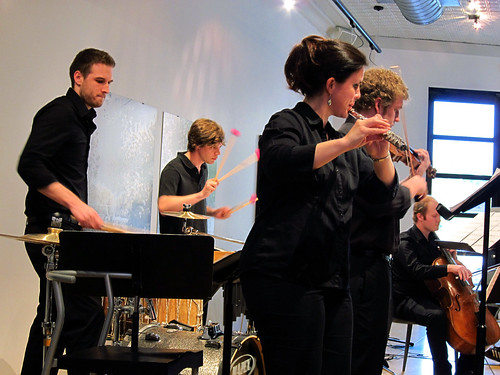
Tuesday’s Indeterminacies program at Zeitgeist Gallery was another scintillating evening of art, music and discussion. Surrounded by works by local artists, Patrick DeGuira and Brent Stewart, Belmont University, composer Mark Volker presented three remarkably diverse pieces of music while philosopher/aesthetician, Erin Bradfield, led a fascinating colloquy with the audience and musicians about what they heard.

The first piece was written expressly for the Pulse New Music Ensemble, a group of young musicians committed to performing music by living composers (“composers with a pulse”), and it was appropriately titled, “Pulse.” Actually, it was performed twice: once without introduction and again after a discussion about the composer’s inspiration, the audience’s reception and how they intersected. Mr. Volker explained how the dramatic percussion intro was inspired by Japanese Taiko drumming but that he allowed the ensemble sections to express other influences, not just modern “classical music” but also rock and soul and whatever else moved him—including an emphatic “HUH!” interjected during pregnant silences. Indeed, much of it reminded me of the exuberant, irreverent synthesis of Frank Zappa’s “serious” compositions with its complexly grooving rhythms, brightly pantonal, intricately interleaved melodies and prominent mallet percussion. Mr. Volker also spoke of how a C-major chord may sound bland and banal in the usual context, but becomes exotic and strangely beautiful when it arises within a modernist, “atonal” language—and it’s true. The second time through seemed to be invigorated by the exchange with the audience, the hyper-complicated rhythms and melodies executed with a genuinely rock-ish excitement and verve. While the first take may have been more technically precise (and had that unrepeatable sense of surprise), the second was more immediate and compelling—and those “HUHs” and “C-major chords” did indeed feel powerfully expressive and unifying.

The second work shifted gears, with Mr. Volker picking up the nylon-stringed classical guitar to accompany his wife, mezzo soprano Alyssa Sullivan Volker, in a four-part song cycle based on “Non Omnis Moriar” by the Mexican poet, Manuel Gutierrez Najera (1859-1895). Now, I have to admit up front I am shamefully monolingual, baffled by poetry and have an inordinate aversion to “operatic” singing so I am behind the Eightball when commenting on this kind of stuff. But I realize this is my own failing— and I’m working on rectifying it. Even so, the composition won me over with its rich harmonic density and the inventiveness and sensitivity of Mr. Volker’s guitar accompaniment. During the discussion, he pointed out how the restlessly shifting meters of the piece were based upon the rhythm of the words as spoken or recited, which gives the pieces a flowing yet irregular pace. More personally, he revealed that the poem had helped him to overcome a fear of death with its promise of immortality through art. The title is from Horace (Carmina 3.30) and can be translated from the Latin as, “I Shall Not Completely Die” and in the poem, Guiterrez Najera says farewell to a friend but comforts himself by asserting: “Something of my elusive spirit/shall within the line’s diaphanous urn/by Poetry be piously preserved.” Interestingly, some stanzas (sung in Spanish) overlap in the third and fourth songs, set in contrasting moods as if to physically demonstrate the ability of art to make the poet’s words—and the poet himself—eternal.

The evening concluded with “Deep Winter,” a work for flute and computer-generated music which showed yet another facet of Mr. Volker’s wide-ranging creativity. He spoke of the technological challenges inherent with electro-acoustic music and his desire to move beyond the passive “instrument with tape accompaniment” approach and working with software incorporating score following and real-time instrument tracking, enabling the computer to interact with the performer directly and instantaneously. In practice, it made for some startling precise effects which would otherwise be impossible such as dramatic tuttis and interlocking melodic flurries. I was reminded of Mark Snyder’s remarks at last month’s Indeterminacies program about having to remove these interactive elements from his pieces because of their unreliability and the potential for disaster as a solo performer (which is completely understandable). But with Mr. Volker monitoring the laptop’s behavior, the performance of “Deep Winter” on Tuesday was flawless—and a technological marvel. The work is an homage to the interminable seasons of his youth growing up in Buffalo, New York where, as a child, the bitter cold and mountains of snow were both terrifying and magical and it vividly conveys the bleak grandeur of a winter landscape.

Sadly, time ran out before Mr. Volker could play the shiny, red electric guitar perched tantalizingly over in the corner of the room—but that’s OK. It would have been a shame to cut off discussion just to cram in another piece. Fortunately, I was able to pick up Mr. Volker’s CD on Centaur entitled, Elemental Forces, which contains a studio rendition of “Deep Winter” along with two very different compositions for chamber ensemble and a suite for pipe organ (!). It’s an excellent disc and further showcases the remarkable diversity of this talented young composer.

Indeterminacies will continue in the fall with Andrew Raffo Dewar on October 11 and John Latartara on November 8. In the meantime, podcasts of previous events are available at Theatre Intangible, where you can also read an informative interview with the series organizers: architect, Lesley Beeman, and gallery curator, Lain York. The Indeterminacies series are must-see events—and more than just concerts of “new music.” As Mr. Beeman points out:

[t]he difference is that with Indeterminacies the audience is considered integral to the event from its conception. We never think of the presentation and the Q&A as separate events. When you come to Indeterminacies, expect to participate. Come prepared to fully engage with the program and with your fellow attendees…because there will be a quiz.


Well, maybe there won’t exactly be a quiz, but don’t be surprised if you’re called upon to answer a question or offer an observation—or coaxed into a dialogue with your neighbor. It’s what makes these events so stimulating and unpredictable. See you there!

May 6, 2011

“Indeterminacies” Final Event Next Tuesday, May 10

Zeitgeist Gallery 2011-05-06


Lizzy and I have really enjoyed the “Indeterminacies” series of events at Zeitgeist Gallery (I previously wrote about them here and here) and we are looking forward to attending the final concert of the season on May 10. Hosted by esteemed local architect, L. Lesley Beeman, Jr., the “Indeterminacies” series seeks to do something more than just put on concerts of “new music.” The gallery (the back of which is home to Manuel Zeitlin Architects) is an intimate, yet open and airy space, flanked by two enormous picture windows and hosts tastefully curated exhibits of provocative and exquisite contemporary art. On the second Tuesday of each month in the Spring and Fall, Mr. Beeman invites composers to present their work—and also invites a local moderator to initiate a discussion with the artist and the audience. The composer must be brave, willing to come out from behind the score, so to speak, and confront the audience directly. The ensuing dialogue is often quite illuminating and it’s a rare and delightful opportunity for an attendee at a concert of modern music to interact with composers and musicians (and the moderators) in a comfortable yet artistically stimulating environment. Unlike the rarified, distancing formalism of a “classical music” concert, each event is unique—indeterminate—and always thought-provoking.

Tuesday’s program will feature works by composer Mark Volker, Coordinator of Composition and Assistant Professor of Music at Belmont University. Mr. Volker will present several works, including a new piece for two percussionists, flute, violin, and cello; a set of songs for voice and guitar; a piece for flute entitled, “Deep Winter” and a recent work for electric guitar, interactive electronics and dance. For the latter, Mr. Volker intends to play a video of the dance component during the performance. Sounds like a wonderfully varied and interesting set! The moderator will be Erin Bradfield, a Ph.D. candidate in the philosophy department at Vanderbilt University. Her work in aesthetics “focuses on the moment when you are confronted with a wholly unfamiliar, yet profoundly affecting work of art.” I am sure Ms. Bradfield’s scholarly, philosophical background will inspire a thoughtful discussion on music, art and life—and provide the kind of deep insight into the music a mere concert could never provide.

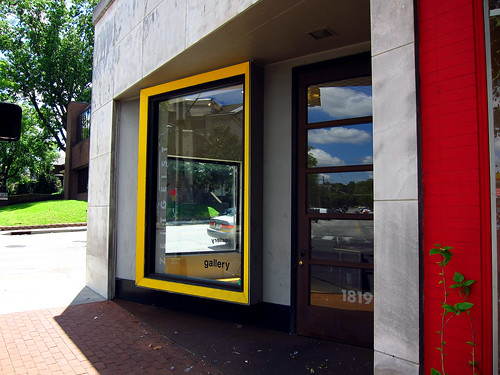
The event begins at 6:00pm and admission is free. Zeitgeist Gallery is located at 1819 21st Avenue South, Nashville, Tennessee 37212. I hope you to see you there!

April 16, 2011

Playlist Week of 4-16-11

Mark Snyder - Zeitgeist 2011-04-12c

* Hespèrion XXI (Savall): Le Royaume Oublié: La Tragédie Cathare (Alia Vox 3SACD)
* Holloway/Mortensen/ter Linden: Garrison Church, Copenhagen 4-08-08 (FM 2CDR)
* Mozart: Clarinet Concerto (Academy of Ancient Music/Hogwood) (L’Oiseau-Lyre LP)
* Joe Morris/John Voigt/Tom Plsek: MVP: LSD: The Graphic Scores of Lowell Skinner Davidson (Riti CD)
* Myra Melford + Be Bread: Saalfelden, Austria 8-27-10 (FM CDR)
* Sylvie Courvoisier/Mark Feldman Quartet: Nevers, France 11-12-10 (FM CDR)
* Material: Intonarumori (Axiom/Palm CD)†/‡
* Grateful Dead: County Coliseum, El Paso, TX 11-23-73 (SBD 4CDR)
* Grateful Dead: Music Hall, Cleveland, OH 3-03-81 (SBD 3CDR)†/‡
* Grateful Dead: Soldier Field, Chicago, IL 6-22-91 (SBD 3CDR)†/‡
* Bob Dylan: Time Out Of Mind (Columbia 2LP)
* Tom Waits: Foreign Affairs (Asylum LP)
* Big Star: #1 Record (Ardent/Classic LP)
* Steely Dan: Aja (ABC/Geffen/Cisco LP)
* Phil Collins: Face Value (Atlantic/Audio Fidelity CD)
* Steve Winwood: Arc Of A Diver (Island LP)
* Tears For Fears: The Hurting (Mercury LP)
* Tears For Fears: Songs From The Big Chair (Mercury LP)
* Minutemen: Double Nickels On The Dime (SST 2LP)
* Jim O’Rourke: Insignificance (Drag City LP)
* Pernice Brothers: World Won’t End (Ashmont CD)
* Pernice Brothers: Australia 2002 (Ashmont/Spunk CDEP)
* Those Bastard Souls: Debt & Departure (V2 CD)
* Stereolab: Emperor Tomato Ketchup (Elektra CD)
* Guided By Voices: Do The Collapse (TVT LP)
* Lifeguards: Waving At The Astronauts (Serious Business LP)
* Mars Classroom: The New Theory Of Everything (Happy Jack Rock Records LP)
* Radiohead: The King Of Limbs (TBD/Ticker Tape CD)
* Animal Collective: Spirit They’re Gone, Spirit They’ve Vanished (Fat Cat CD)
* Animal Collective: Campfire Songs (Paw Tracks CD)
* Animal Collective: Here Comes The Indian (Paw Tracks CD)
* Panda Bear: Person Pitch (Paw Tracks CD)
* Panda Bear: Tomboy (Paw Tracks CD)
* Broken Bells: Broken Bells (Columbia CD)
* Broken Bells: Meyrin Fields EP (Columbia CDEP)

†=iPod
‡=car


Commentary:

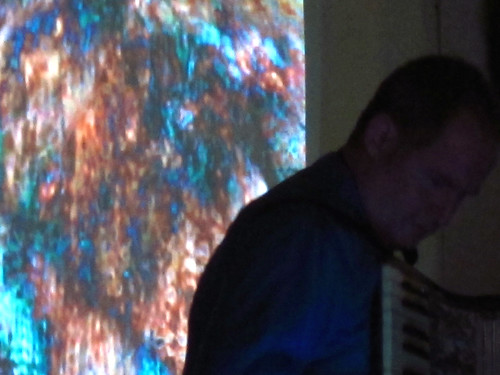
We so enjoyed last month’s Indeterminacies program at Zeitgesit Art Gallery, Lizzy and I decided to return on April 12 for another evening of electro-acoustic music, this time by University of North Alabama professor, Mark Snyder. An academically trained composer, classical instrumentalist—and former rock drummer—Mr. Snyder brings a wide-ranging musicality to what might be simplistically labeled “ambient music.” Lushly evocative electronic soundscapes were accompanied by long, slowly morphing, melodies played by Snyder himself on tuba, clarinet or accordion, humanizing the computer-generated textures. Reinforcing the immersive quality of the music, abstract—almost psychedelic—videos were projected against two walls of the gallery. But rather than merely creating a blissed-out, multi-media assemblage, all three elements (computer, instrument and video) were carefully arrayed to create enigmatic yet compellingly synergistic audio-visual narratives, demonstrating considerable compositional sophistication and skill. Moreover, the works were inextricably tied to their performance: a recording could not possibly capture the experience (although we did pick up the DVD, Alluvium).

Snyder himself was thoughtful and, at times, quite funny during the discussion portions (admirably led by local musician/critic, Jonathan Marx) and he was refreshingly frank regarding his musical inspirations and goals. Audience members were invited to ask questions and were effectively drawn out by Marx to describe their thoughts and feelings regarding each piece. It was fascinating to participate and listen to what people had to say—and a rare opportunity for concert attendees to express themselves and provide direct feedback to the artists. Interactivity and boundary-dissolving is a key part of what the Indeterminacies series seeks to accomplish and they succeed in creating a stimulating yet comfortable environment where the unexpected can happen. We’re definitely looking forward to next month’s program featuring Belmont University composer, Mark Volker.

+++

Today, of course, was Record Store Day but, sadly, I did not attend. It’s been a long week and, after ferocious storms rolled through yesterday, today was a cold, gray and rainy day and I just didn’t feel like going outside. Besides, I wasn’t really interested in any of the special, hyper-limited edition releases and figured it wasn’t worth getting up early and fighting the crowds of ravenous record collectors. Well, for me, every Tuesday is Record Store Day. That’s the day new releases come out, and I always make a point of checking out Grimey’s on my lunch hour or after work and, as regular readers of my playlist can plainly see, I buy a lot of records (this week was Panda Bear's long-awaited solo album, Tomboy, which prompted an Animal Collective orgy). Even so, Record Store Day 2011 was probably a fabulous party—despite the weather. Oh well, maybe next year.

+++

RE: the playlist. Lots of pop! What can I say? I needed comfort music this week.

December 29, 2010

Street Art


Street Art 01, originally uploaded by Rodger Coleman.

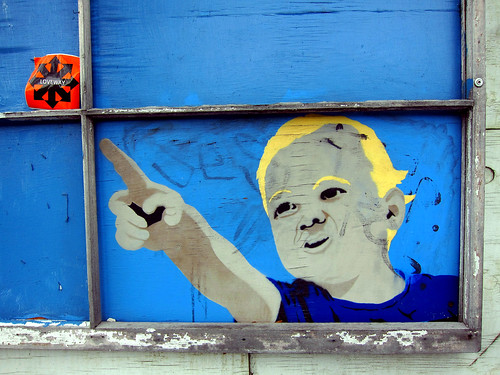
I had the pleasure of meeting my beautiful wife for lunch this afternoon and, although it was a dreary day, I brought my new camera downtown and took a few photos. I'm glad I did. I had never before noticed this piece of urban street art, painted on a boarded up window of an abandoned building on Commerce Street--but, today, the drawing's disarming simplicity and vibrant colors immediately caught my eye. I was stopped in my tracks! Perhaps it was the weather or the post-holiday blues--whatever--I was touched by the enigmatic, childish glee so vividly expressed in this piece. Thank you to the anonymous artists for ennobling this derelict structure and brightening a grey winter day.

December 1, 2010

Alex Ross: “Why Do We Hate Modern Classical Music?”

New Yorker music critic, Alex Ross, recently pondered the question, "Why Do We Hate Modern Music?" in The Guardian and I think his conclusions are very convincing. Mr. Ross is one of my favorite writers on music this brief essay demonstrates why. With graceful reasonableness and friendly readability, he eloquently demolishes all the old canards that seek to prove “modern” music is unlistenable (i.e. dubious research showing that infants “prefer” tonality to dissonance, audiences can't sit still, etc.) and suggests that it is the regressive institutions of so-called “classical music” that have instilled this hatred modern music:


The core problem is, I suspect, neither physiological nor sociological. Rather, modern composers have fallen victim to a long-smouldering indifference that is intimately linked to classical music's idolatrous relationship with the past. Even before 1900, people were attending concerts in the expectation that they would be massaged by the lovely sounds of bygone days. ("New works do not succeed in Leipzig," a critic said of the premiere of Brahms's First Piano Concerto in 1859.)

The music profession became focused on the manic polishing of a display of masterpieces.
Ross then goes on to show that a handful of orchestras and cultural organizations have found some success—and, perhaps more importantly, younger audiences—with programs featuring such “difficult” modern composers such as, Varése, Xenakis, Stockhausen and Ligeti. Mr. Ross loves the 18th and 19th century "standard repertoire" as much as anyone, but also sees music as a living art, not just polished museum pieces. His tastes range from Mozart to Schoenberg to Sonic Youth and beyond and would like to see "classical" music be treated like all the other arts, like painting, literature, film, and dance. In his view (and mine) music should be a world where anything can happen instead of the same old thing night after night.


What must fall away is the notion of classical music as a reliable conduit for consoling beauty – a kind of spa treatment for tired souls. Such an attitude undercuts not only 20th-century composers but also the classics it purports to cherish. Imagine Beethoven's rage if he had been told that one day his music would be piped into railway stations to calm commuters and drive away delinquents. Listeners who become accustomed to Berg and Ligeti will find new dimensions in Mozart and Beethoven. So, too, will performers. For too long, we have placed the classical masters in a gilded cage. It is time to let them out.

I couldn’t agree more. Go ahead, read the whole thing. It’s brilliant. His new book, Listen to This (FSG), a collection of essays and journalism, is also highly recommended as is his magisterial history of modernism in music, The Rest Is Noise: Listening to the Twentieth Century (FSG, 2007). Reading Alex Ross will make you want to listen to the music he writes about, even if you think you hate it. Give it a try!

October 8, 2010

October 1: Storm King to Cochecton


Storm King 02, originally uploaded by Rodger Coleman.

FRI OCT 1: We managed to sleep through the thunderstorms that ravaged the area overnight. The blinking alarm clock indicated power outage and rain was pounding on the windows. We turned on The Weather Channel to see what was going on: flash flooding all up the coast with the New York/Newark airports shut down and thousands of people stranded. That could have been us! We were grateful to be safe and sound, but the weather outside of our comfy hotel room was exceptionally grim: dark, windy and inclemently warm and muggy. Tropical, indeed. Were we really going to go wander around Storm King in this?? We examined the hotel handout regarding area attractions and contemplated our options. FDR’s Hyde Park mansion was not too far away and there are a number of other historic houses around there, but it’s not really our thing to tromp around someone else’s home. What we came here to do was look at art before heading out to Cochecton for the wedding festivities. Instead of making a decision, we went out for breakfast at the good old I-84 Diner for a real stick-to-the-ribs meal. It was going to be an adventure, no matter what; better bulk up.

I sat staring out the window of the diner at the plumes of water spraying off the I-84 overpass as oversize speeding vehicles traversed the obviously sizable and dangerous puddles above. My flood-related PTSD kicked in with my coffee and I panicked about having to drive in such hazardous conditions. We glumly ate our eggs and potatoes. Meanwhile, it did seem as if it maybe wasn’t raining so hard. “It’s getting brighter,” I said (alluding to an old family joke I don’t have the time to go into here). Lizzy smiled at me and I began to feel better. She reassured me the worst of the storm was supposed to be rapidly moving up the coast to Boston and they were merely predicting “showers” for this area in the afternoon—and, besides, we were headed west, away from the storm.

“We both have umbrellas, why don’t we just go and make the best of it?” she suggested.

Lizzy had a point. And she looked so beautiful making it.

“OK. Let’s go.”

We programed the GPS for the street address in Mountainville we obtained from Mr. Google and hit the road.

Despite a misunderstanding between me and Ms. Garmin, she got us to Storm King about an hour later. In fact, I’m not sure I could have found it without her. The appropriately named Storm King really is out in the middle of nowhere, in stunningly beautiful countryside: surrounded by mountains, the stormclouds created a dramatic backdrop to the colorful, monumental art. Miraculously, it was not raining when we arrived. As we wandered towards the visitor’s center, admiring the David Smith sculptures, we immediately encountered a super-friendly and enthusiastic docent:

“Oh, you’ve come at the perfect time! It’s not raining, and there’s nobody here and this place is so amazing and you’re going to love it!” she exclaimed.

Well, alright! I asked if she knew where the “sound sculpture” was, being the only particular piece I vaguely wanted to see.

“Oh, the Mark Di Suvero ‘Quartet’! Yes, that’s right down here in the South Fields. I’m not sure if the mallet is still there; last I heard it was missing. But that would be a wonderful route for you to take, out to the Maya Lin and back around up Museum Hill and the North Fields. You could have lunch at the café—it will be great! Now, come look at this new acquisition…!”

After such a warm welcome, we eagerly embarked on our journey. Now (again) I have to admit my almost-philistine aversion (this time) to a lot of modern sculpture. Like ballet or opera or poetry, sculpture is one of those artistic realms that simply feel alien to me. I lack the vocabulary to discriminate. I can appreciate it, but I have a hard time loving it. But on this day, as we gazed across the South Fields, freshly mowed with the enshrouded mountains in the distance, dappled with green, yellow and organge foliage, the monumental sculptures scattered across the landscape, some rusted and dark, others painted a vivid red, all of creation, God and Man's, seemed engaged in deep dialog. It was a stunningly beautiful tableau and the distant sculptures beckoned, made me want to look, to see. I thought back to my experience of the massive Richard Serra pieces crammed into seemingly tiny rooms at Dia:Beacon and had a tiny epiphany. Ah, yes, sculpture is in three dimensions! Duh! Maybe I was having a breakthrough on the sculpture front. The experience was truly awesome, and I don’t say that in the glib and flippant way the word is usually tossed around these days. Art is my religion and Storm King is High Church.

As we descended into the South Fields, we really felt like we had the whole place to ourselves. It was like our own personal dreamworld. It was damp and warm to be sure, but not soggy and unpleasant, even on the grass. The mallet was indeed neatly placed inside Di Suvero’s “Beethoven’s Quartet” and I duly but cautiously struck the silvery metal structure. It emitted rich, gong-like tones which echoed across the valley. Wow! I took numerous photographs (many of which can be seen on my Flickr Photostream) and savored every minute of our leisurely stroll around the grounds. It was one of the most sublime art experiences I’ve ever been privileged to enjoy. While many of the sculptures would have left me scratching my head in the rarified atmosphere of an institutionalized museum, here, amidst the wild and rural background, they seemed poignantly dignified, defiant of the elements, and proudly modern: humanism at its best.

Just as I remarked, “Hey, not a drop of rain,” it started to sprinkle. And by the time we got to the café, it was really coming down. I couldn’t help but feel disappointed. There was much more to be seen, but it had become decidedly unpleasant. Other tourists sought shelter with us and commiserated. As we made our way back to the museum building, I continued trying to take photographs one-handed under my umbrella. It was not very much fun, but I’m glad I did as it really brings it back, the works themselves unperturbed by the elements, indifferent to my greedy presence. We toured the museum building (a converted 1930s Norman chateau), with its fascinating historical exhibit supplemented with some of the more fragile works by David Smith and Louise Bourgeois that had to be removed from the grounds due to the elements and vandalism. There was another room on the third floor devoted to the unique preservation challenges posed by this rural sculpture park: some works have to be periodically disassembled and restored or else they would disintegrate altogether. These modernist masterpieces may appear forbiddingly autonomous, but they depend of the loving care of humble curators to retain their mysterious power. As we drove away, we felt sated, having experienced a substantial part of Storm King despite the most adverse circumstances.

As we continued west, we could see the clouds parting on the horizon and by the time we got to Yasgur’s Farm, the sun was shining brightly in a clear, blue sky. Ms. Garmin had become cryptically silent, but the screen still seemed to register every time State Route This became County Road That, which was at least reassuring. She woke up just in time to tell us to turn right on Skinner’s Falls Road and guided us to the quaint Lothian House, a Victorian B&B where we would spend the rest of the weekend, along with the bride and groom’s family and friends. After the rehearsal, we all had pizza and beer and got to know each other, more guests arriving as the night wore on. It was a lot of fun, culminating in a trivia contest about the happy couple (handily won by the mothers, of course). Our room was nicknamed “The Governor’s Room,” after the furniture, which was formerly owned by the governor of Tennessee, circa. 1890. How appropriate!

Tomorrow was the big day! We are so happy for Scott and Rose and we were so glad to get to share in their wedding celebration. More on that tomorrow.

October 7, 2010

September 30: Dia:Beacon


Dia - Beacon 04, originally uploaded by Rodger Coleman.

THU SEP 30: We had to get up at the ungodly hour of 3:00 AM to catch our six o’clock flight from Nashville to Newark. We had checked the weather reports for New York the night before and it looked particularly grim. Tropical Storm Nicole was crawling up the coast, dumping ridiculous amounts of rain along the way. After the flood we experienced here in May, I am extremely skittish about heavy rains and I have to admit we seriously contemplated canceling our trip. But we really wanted to attend Scott and Rose’s wedding, especially because we had been advocating this union ever since we met her! Besides, it would seem grievously wimpy to let a little rain get in the way: it’s not like they were predicting snow and ice, fer crissakes. So we forged ahead.


Despite the agony of getting up in the middle of the night, it was a good thing we left when we did. Our flight was on time and although the descent into Newark was extremely bumpy (it felt at times like were were going to fall out of the sky!), we arrived around 9:00 AM EST. It was dark and rainy, but not the kind of torrential downpour I was expecting. So far so good. We decided to rent a GPS with the car (a decent little Hyundai) and thank goodness we did. While “Ms. Garmin” inexplicably took us on a tour of downtown Newark, she always got us to our various destinations, including some very out of the way places that would have been difficult to find with just a map. Well worth the ten bucks she cost. The rain was steady but not too heavy all the way to Beacon, New York, where we stopped at Dia:Beacon, a museum of contemporary art housed in a reclaimed Nabisco box-printing plant on the Hudson River that opened in 2003. We made decent time and arrived a little before 11:00 AM EST.

To be honest, a lot of this kind of art leaves me cold. I like to think of myself as radically open-minded and committedly avant garde, but a lot of “conceptual” art fails to impress me. Nevertheless, Lizzy’s enthusiasm for Dan Flavin’s fluorescent lighting sculptures (for instance) makes me question my own biases. In any event, the space is magnificent, with vast open spaces, exposed red brick, beautifully battered wood floors and angled skylights filling the rooms with the soft natural light of a cloudy day. Each set of galleries is devoted to a single artist, so one is immersed an oeuvre and allowed to dive deep into their psyches and obessions. The monumental Sol Lewitt wall drawings and the numerous “white paintings” of Robert Ryman were especially revelatory (and aesthetically pleasing to me). Additionally, the several massive Richard Serra sculptures created an oppressively claustrophobic atmosphere, as if they had been rudely shoved into space several sizes too small (but otherwise enormous), eliciting an intensely visceral response that would otherwise (for me) dissipate in the open air, where his torqued steel works are usually displayed. Sadly, the rain was really coming down and we were unable to explore the grounds and gardens (designed by Robert Irwin). Instead, we had a remarkably delicious lunch at the museum café. We were stunned to realize that we had traveled all the way from Nashville and pretty thoroughly experienced Dia:Beacon—and it was only 12:30 our time! For a couple of homebodies, this seemed completely insane.

We made our way in the rain to our hotel in Fishkill, where we took a much-needed nap before dinner. The hotel was conveniently located right next to the I-84 Diner, a genuine 1950s diner, all chrome, glass and neon. I really wanted to take a photograph of it glittering in the rain, but it was just too miserable out and I didn’t want to risk wrecking my camera. Dumb. It would have made for a great picture! The ambience and food were everything you could hope from such a place and it left us sated and sleepy. However, the weather was only getting worse and worse. We were glad we made it thus far, but what was tomorrow going to bring? Storm King is an outdoor sculpture park, after all. Plus we had a two-hour drive into the Catskills ahead of us either way. We turned on the TV to distract us from any such worries and drifted off to sleep.

August 28, 2010

Playlist Week of 8-28-10

* Buxtehude: Sonatas, Op.1 (Holloway/Mortensen/ter Linden) (Naxos CD†
* Buxtehude: Sonatas, Op.2 (Holloway/Mortensen/ter Linden) (Naxos CD)†
* Buxtehude: Seven Sonatas (Holloway/Mortensen/ter Linden) (Naxos CD)†
* J.S. Bach: Magnificat, etc. (Collegium Vocale, et al./Herreweghe) (Harmonia Mundi CD)
* J.S. Bach: Violin Sonatas (Manze/Egarr/ter Linden) (Harmonia Mundi 2CD)†
* J.S. Bach: Goldberg Variations and Canons (Egarr) (Harmonia Mundi 2CD)†
* Rebel: Violin Sonatas (Manze/Egarr/ter Linden) (Harmonia Mundi CD)†
* Schoenberg: Pierrot Lunaire, Op.21, etc. (Ens. InterContemporain/Shäfer/Boulez) (DG CD)
* Schoenberg: Suite, Op.29, etc. (Ens. InterContemporain/Boulez) (Sony Classical CD)
* Schoenberg: The Piano Music (Pollini) (DG CD)
* Oliver Nelson: The Blues and The Abstract Truth (Impulse! CD)
* Miles Davis & John Coltrane: The Complete Columbia Recordings (d.1-5) (Columbia 6CD)
* John Coltrane: Live at Birdland (Impulse! CD)
* Roy Haynes Quartet: Out of the Afternoon (Impulse! CD)
* Elvin Jones/Jimmy Garrison Sextet: Illumination! (Impulse! CD)
* Sun Ra: The Mystery Board (11-2 or 3-1972) (SBD/boot 2CDR)
* Anthony Braxton: 9 Compositions (Iridium) 2006 (d.8) (Firehouse 12 9CD+DVD)
* Mary Halvorson Trio: Dragon’s Head (Firehouse 12 CD)
* Mary Halvorson, et al.: Calling All Portraits (Skycap CD)
* Matthew Shipp: Harmony and Abyss (Thirsty Ear CD)
* The Blue Series Continuum: GoodandEvil Sessions (Thirsty Ear CD)
* The Blue Series Continuum: The Sorcerer Sessions (Thirsty Ear CD)
* Antipop Consortium: Antipop Consortium vs. Matthew Shipp (Thirsty Ear CD)
* El-P Featuring the Blue Series Continuum: High Water (Thirsty Ear CD)
* Pat Metheny Group: Quartet (Geffen CD)†
* Bob Dylan: Highway 61 Revisited (mono) (Columbia/Sundazed LP)
* Bob Dylan: Blonde On Blonde (mono) (Columbia/Sundazed 2LP)
* The Beatles: Beatles for Sale (stereo) (2009 remaster) (Apple/EMI CD)
* The Beatles: Rubber Soul (stereo) (2009 remaster) (Apple/EMI CD)
* The Beatles: Revolver (stereo) (2009 remaster) (Apple/EMI CD)
* Rolling Stones: “Handsome Girls” (live July 1978) (d.1-3) (SBD/boot 4CDR)‡
* Van Morrison: Astral Weeks (Warner Bros./Rhino LP)
* Grateful Dead: Carousel Ballroom, San Francisco, CA 3-31-68 (SBD CDR)
* Grateful Dead: Road Trips, Vol.3, No.3 (Fillmore East 5-05-70) (d.1) (GD/Rhino 3+1CD)
* Grateful Dead: Dick’s Picks, Vol.14 (Boston 11-30 and 12-02-73) (GD 4 CD)‡
* Soft Machine: The Soft Machine (ABC/Sundazed LP)
* Soft Machine: Volume Two (ABC/Sundazed LP)
* Soft Machine: Third (Columbia 2LP)
* Genesis: Foxtrot (Charisma – UK LP)
* Genesis: Selling England By the Pound (Charisma LP)
* The Flaming Lips, et al.: Play The Dark Side of the Moon (Warner Bros. CD)
* Robert Pollard: Moses On a Snail (GBV, Inc. CD)
* Circus Devils: Mother Skinny (Happy Jack Rock Records LP)

†=iPod
‡=car

Commentary:

Your letter gave me great pleasure indeed, above all because you are one of the extremely rare kind of people who are of such importance to our musical culture. I mean: it is not the professional musician, the musician who lives by his art, who is needed to keep musical culture going; it is the amateur, and it always has been the amateur who has really promoted and encouraged art. This is all the more gratifying since your profession is one that claims much of your time; and what is astonishing is the way you have come to know my music—I am thinking of piano pieces and scores that are really very difficult to grasp, difficult to read, difficult to decipher, and which demand great knowledge of various aspects of music. I am extremely delighted at having discovered such as musician as you.

It makes me extremely proud to have received such a letter particularly from you, and for me it will remain one of a few letters that have given me the greatest pleasure in my musical career.

-- Arnold Schoenberg: Letter to Jacques Martet, 6 January 1950 (Letters (ed. by Erwin Stein), University of California Press, 1987, p.279).

+++

I planned to tell you what painting meant—means—to me. In fact, it was the same to me as making music. To me it was a way of expressing myself, of presenting emotions, ideas, and then other feelings, and this is perhaps the way to understand these paintings—or not to understand them. … I expressed myself in the same manner as I did in music…[A]s a painter I was absolutely an amateur. I had no theoretical training and only a little esthetic training—this only from general education but not from an education which pertained to painting. In music, it was different [NB: Schoenberg was an autodidact]…They would probably have suffered the same fate as I have suffered. They would have been attacked and scolded, and I don’t know what else I should say: I mean the same would happen to them what happened to my music. They would have been understood or not understood.

-- Arnold Schoenberg: Interview with Halsey Stevens (1949) (quoted in The Visions of Arnold Schönberg: The Painting Years, Hatje Cantz Verlag, 2002, pp.91, 185).

+++

We see that in every painting of Schönberg, the inner wish of the artist speaks in the form which best befits it. Just as with his music (inasmuch as I a layman may affirm), Schönberg also in his painting renounces the superfluous (therefore the harmful) and proceeds along a direct path to the essential (therefore to the necessary). He leaves alone, unnoticed, all embellishments and artistic detail…I should most like to call Schönberg’s art the painting of essence.

-- Wassily Kandinsky: “Die Bilder” (1912) (Id., p.182).

+++

Once, in the army, I was asked if I was really the composer Arnold Schoenberg. “Somebody has to be,” I said, “and nobody else wanted to, so I took it on, myself.”

-- Arnold Schoenberg: Letter of Thanks to Those Who Sent Their Good Wishes on the Occasion of Schoenberg’s 75th Birthday, 16 September 1949 (Letters, p.290).

+++

Image: Arnold Schoenberg: Green Self-Portrait, 1910. Oil on wood 33 x 24 cm. (from The Visions of Arnold Schoenberg, p.100).

May 10, 2010

Playlist Week of 5-03-10 through 5-10-10

* J.S. Bach: The Works for Lute (Kirchhoff) (d.1) (Sony Classical 2CD)
* Vivaldi: Cello Sonatas (ter Linden/Mortensen) (d.1) (Brilliant Classics 2CD)
* Herbie Nichols: The Complete Blue Note Recordings (d.1) (Blue Note 3CD)
* Grant Green: Idle Moments (Blue Note CD)
* Sam Rivers: The Complete Blue Note Sam Rivers Sessions (Blue Note/Mosaic 5LP)
* Herbie Hancock: Man-Child (Columbia/MFSL CD)
* The Brothers Johnson: Look Out for #1 (A&M CD)
* The Beatles: Please Please Me (2009 mono remaster) (Apple/EMI CD)
* The Beatles: With the Beatles (2009 mono remaster) (Apple/EMI CD)
* Bob Dylan: Love and Theft (Columbia SACD)
* Jerry Garcia Band: Lunt-Fontanne Theatre, NYC 10-31-87 (d.1-2,4) (Pure Jerry 4CD)
* Van Morrison: Veedon Fleece (Polydor CD)
* Van Morrison: Common One (Warner Bros. CD)
* Van Morrison: Inarticulate Speech of the Heart (Warner Bros. CD)
* Rickie Lee Jones: Pirates (Warner Bros./MFSL SACD)
* BR5-49: Live from Robert’s (Arista CDEP)
* BR5-49: BR5-49 (Arista CD)
* Beck: Sea Change (Geffen/MFSL CD)
* Boston Spaceships: Brown Submarine (GBV, Inc. CD)

Commentary:

It’s a short playlist this week -- not only because of last weekend’s flooding, but also because we made a quick to a trip to Kansas City to see my mom for Mother’s Day. Every time we go out there we try to get to the Nelson-Atkins Museum of Art, which houses one of the country’s great collections (photograph). This time we took my sister and slowly made our way chronologically through the museum and it was interesting to stop and look closely at works I normally would zip right past (e.g. most anything pre-20th Century). Molly has recently developed an interest in art and we thought it would be useful to make a historical survey so as to see the development of art practice through the ages and (perhaps) provide her with some context for some of the weirdo abstract art that we love so much. I don’t know how successful we were on that front, but it was a lot of fun! There are more photos from the museum on my Flickr photostream, if you’re interested.