July 29, 2012

Sun Ra Sunday


Suhn Rall & Frienz from yotte on Vimeo
.
Sun Ra & Friends (IAI video)

This forty-minute videotape was recorded live at Axis-In-Soho in downtown New York, sometime in early July, 1977 and was briefly available from Improvising Artists,Inc. (as V004) in 1981 (Campbell & Trent pp.237-238). Simply titled Sun Ra & Friends, the concert includes some solo piano pieces as well as some small ensembles with John Gilmore on tenor saxophone, Danny Davis on flute, Ahmed Abdullah on trumpet and June Tyson and Eddie Thomas on vocals. The trippy colorization effects not only look dated and cheesy, they nearly obliterate the raw footage, making it almost unwatchable today. Still, there is some nice music here, including a way-out duet with Gilmore and casual, concise takes of “When There Is No Sun,” “Gone With The Wind,” and “The Mystery Of Two” as well as a preview of “A Different Kind Of Blues,” beautifully sung by Tyson.

Big thanks to reader yotte, for sharing a link to this video, as well as Solo Piano (IAI V003), which has now been posted over at last week’s review of St. Louis Blues. It seems unlikely these things will ever receive a legitimate digital release, so check ‘em out while you can.

July 28, 2012

Playlist Week of 7-28-12

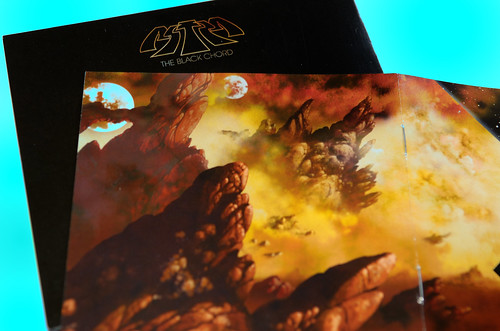
Astra - The Black Chord

* Buxtehude: Seven Sonatas, Op.1 (Holloway/Mortensen/ter Linden) (CPO/Naxos CD)
* J.S. Bach: Violin Sonatas (Manze/Egarr/ter Lindedn) (Harmonia Mundi 2CD)
* De Falla, Albeniz, et al.: Spain (Chicago Symphony/Reiner/Price) (RCA-Victor SACD)
* Sun Ra: St. Louis Blues: Solo Piano, Volume 2 (Improvising Artists, Inc. CD/video)
* Sun Ra: Axis-In-Soho, New York, NY July, 1977 (Improvising Artists, Inc. video sdtrk CDR/video)
* Anthony Braxton: GTM (Iridium) Vol.2, Set 2 (New Braxton House FLAC>CDR)
* Derek Bailey & The Ruins: Tohjinbo (Parachute CD)
* Derek Bailey & The Ruins: Saisoro (Tzadik CD)
* Tom Rainey Trio: Camino Cielo Echo (Intakt CD)
* Ingrid Laubrock Sleepthief: The Madness Of Crowds (Intakt CD)
* Paradoxical Frog (Kris Davis/Ingrid Laubrock/Tyshawn Sorey): Paradoxical Frog (Clean Feed CD)
* Herbie Hancock: Feets Don’t Fail Me Now (Columbia LP)
* Herbie Hancock: Monster (Columbia LP)
* Herbie Hancock: Mr. Hands (Columbia LP)
* Grateful Dead: Five Seasons Center, Cedar Rapids, IA 7-04-84 (selections) (SBD 3CDR)
* Emerson Lake & Palmer: Tarkus (Island LP)
* Camel: Camel (MCA/EMI CD)
* U2: Achtung Baby (Deluxe Edition) (Island/Universal 2CD)
* U2: Zooropa (Island CD)†
* Guided By Voices: Class Clown Spots A UFO (GBV, Inc. LP)
* Beck: “I Just Started To Hate Some People Today”/”Blue Randy” (Third Man 7”)
* Steven Wilson: Insurgentes (KScope CD/DVD)
* Opeth: Blackwater Park (Music For Nations/KOCH CD)†
* Opeth: Ghost Reveries (Roadrunner HDCD/DVD)†
* Opeth: Watershed (Roadrunner CD/DVD)
* Opeth: Heritage (Roadrunner CD/DVD)†
* Katatonia: The Great Cold Distance (Peaceville CD)†/‡
* Evoken: Atra Mors (Profound Lore MP3)†
* Agalloch: Pale Folklore (The End CD)
* Agalloch: The Mantle (The End CD)†
* Agalloch: The Grey EP (Agalloch/Bandcamp FLAC)
* Agalloch: Ashes Against The Grain (The End CD)†
* Agalloch: The White EP (Agalloch/Bandcamp FLAC)
* Agalloch: Marrow Of The Spirit (Profound Lore CD)†
* Agalloch: “Faustian Echoes” (Agalloch/Bandcamp FLAC)
* Baroness: Red Album (Relapse CD)†/‡
* Baroness: Blue Record (Relapse 2-45RPM LP)
* Baroness: Yellow & Green (Relapse 2-LP)
* OM: Advaitic Songs (Drag City 2-45RPM LP)
* Animal Collective: Sung Tongs (Fat Cat CD)
* Akron/Family II: The Cosmic Birth And Journey Of Shinju TNT (Dead Oceans 2LP)
* Pelican: Australasia (Hydra Head 2-45RPM LP)
* Pelican: The Fire in Our Throats Will Beckon The Thaw (Hydra Head CD)†
* Pelican: What We All Come To Need (Southern Lord CD)(†)
* Pelican: Ataraxia/Taraxis (Southern Lord EP)
* White Hills: White Hills (Thrill Jockey CD)†
* White Hills: H-p1 (Thrill Jockey 2LP)
* White Hills: Live At Roadburn 2011 (Roadburn/Burning World LP)
* White Hills: Frying On This Rock (Thrill Jockey LP)
* Astra: The Weirding (Rise Above/Metal Blade CD)
* Astra: The Black Chord (Rise Above/Metal Blade CD)
* Dusted: Total Dust (Polyvinyl MP3/CD)(†/‡)

†=iPod
‡=car

Commentary:

Epic songs made up of intricate, polymetric guitar riffs, thunderous bass, and myriad Moogs, Mellotrons, pianos and organs – is it King Crimson or Yes circa. 1972? No, it’s Astra on their new album, The Black Chord, where progressive rock still reigns supreme. To say that this stuff is derivative is an understatement. But these San Diego kids wear their influences so enthusiastically—and with nary a trace of smirking irony—well; you can’t help but be charmed by their retro musical obsessions. Amazingly, Astra manages to do something more than just an ironic pastiche: the songs are singularly compelling and they flow together into a cohesive album—just like the “good old days.” Moreover, the band sounds tighter and more disciplined than on their audacious, double-LP debut, The Weirding (2009), and the production is cleaner and richer, giving The Black Chord a more polished surface befitting this kind of symphonic prog.This is the real deal, perfectly crafted and executed. If you love ‘70s prog, space-rock, jazz fusion and the other “cosmic music” of the era, you’ll love this—and wonder how such a thing could have been made in 2012. 

July 22, 2012

Sun Ra Sunday


Sun Ra: St. Louis Blues: Solo Piano, Volume 2 (Improvising Artists, Inc. CD)

On July 3, 1977, Sun Ra shared a bill with Paul Bley at Axis-In-Soho as part of the Newport in New York Festival, which was recorded by Bley’s Improvising Artists label. A portion of Sun Ra’s set was released on LP in 1978 as St. Louis Blues: Solo Piano, Volume 2 (IAI 37.38.58) and reissued on CD in 1993 (IAI 123858) (Campbell & Trent pp.236-237). If Solo Piano, Volume 1 was an introspective studio album, Sun Ra is in an expansive, playful mood in front of a live audience. As Szwed points out in his biography, “Bley was surprised to see that once he was alone on stage, ‘Sonny was a ham who liked to clown and surprise the audience’” (Szwed p.343) and there is a bit of that to be found here.

Ra’s passagework is startlingly virtuosic, displaying an astonishing independence of fingers and hands and extreme sensitivity of touch, although it sometimes comes across a bit empty and showy. “Ohosnisixaeht” is a rhapsodic blues with impressively fleet soloing, but the music wanders rather than gets anywhere. W.C. Handy’s “St. Louis Blues” is better, updated with a complex, polytonal arrangement. The simple “Three Little Words,” a 1930s showtune by Harry Ruby and Bert Kalmar is given an over-the-top reinterpretation that borders on corny, full of melodramatic glissandos and skittering block chords but always returning to that sweet, sweet swing. Side one closes with a short, romantic rendition of “Honeysuckle Rose” that alternates between rubato schmaltz and breezy ragtime.

Side two is more interesting, containing three originals that show off Sun Ra’s compositional skills as well as his brilliant keyboard work. “Sky and Sun” is onomatopoeic: drifting chords represent the sky and twinkling figures in the uppermost register represent the sun. This track is really quite evocative and it sounds he could do this sort of stuff all day long. Ra summons up an entire Arkestra on “I Am We Are,” from rumbling bass notes, scraping “strange strings” and  exquisitely voiced harmonies to outrageous, free-jazz scree, with moments of two-fisted aggression a la Cecil Taylor—a tour de force and probably the best thing on the album. “Thoughts On Thoth” ends the album with a slow space groove, articulated with remarkably fluid right-hand flourishes. It’s a brilliant display, but feels a little perfunctory to me.

Apparently, Improvising Artists released a 40-minute video of this concert (IAI V003), which replaces “Ohosnisixaeht” with another rendition of “Sometimes I Feel Like A Motherless Child” (the studio version can be heard on Volume 1) and contains some other minor editing differences from the LP (see Campbell & Trent p.237). This video was only sporadically available in the 1980s and while “bootleg” versions circulate, I have not seen a copy. And here is an tantalizing rumor: “According to Fred Conrad, the concert ended with “When There Is No Sun,” on which Ra was joined by  June Tyson (voc) and John Gilmore (voc). It is not known whether this piece was recorded” (Id.).

UPDATE:

Thanks to reader, Yotte, for this link to the IAI video of this concert:

Suhn Rawl Sew Low Pie Ano '77 from yotte on Vimeo.

July 21, 2012

Playlist Week of 7-21-12

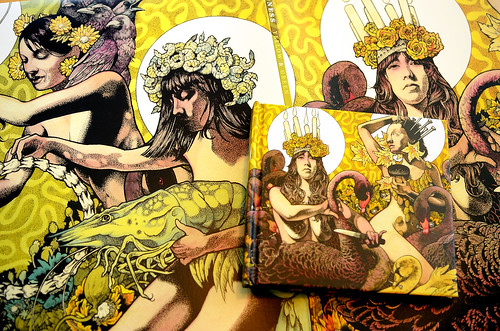
Baroness - Yellow & Green

* Jordi Savall & Rolf Lislevand: Cadogan Hall, London, England 8-18-08 (FM CDR
* Purcell: Fantasias For The Viols (1680) (Hesperion XX/Savall) (Alia Vox SACD)
* Dusapin: Quatuors à cordes & Trios (æon 2CD)
* Sun Ra: Solo Piano, Volume 1 (Improvising Artists CD)
* Sun Ra: St. Louis Blues: Solo Piano, Vol.2 (Improvising Artists, Inc. CD)
* Henry Threadgill Zooid: Tomorrow Sunny/The Revelry, Spp (Pi CD)
* Derek Bailey: Guitar, Bass And Drums (Avant CD)
* Gram Parsons: GP (Reprise/Mobile Fidelity SACD)
* Gram Parsons: Grievous Angel (Reprise/Mobile Fidelity SACD)
* Grateful Dead: History Of The Grateful Dead, Vol.1 (Bear’s Choice) (Warner Bros./Audio Fidelity LP)
* Deep Purple: Shades Of Deep Purple (EMI/Odeon LP)
* Deep Purple: Deep Purple (Tetragramaton LP)
* Deep Purple: In Rock (Warner Bros. LP)
* Deep Purple: Machine Head (Warner Bros. LP)
* Deep Purple: Burn (Warner Bros. LP)
* Van Der Graaf Generator: The Least Could Do Is Wave To Each Other (Charisma/4MWB LP)
* Van Der Graaf Generator: H To He Who Am The Only One (Charisma/4MWB LP)
* Van Der Graaf Generator: Pawn Hearts (Charisma/4MWB LP)
* Roxy Music: Avalon (Virgin HDCD)
* Can: The Lost Tapes 1968-1975 (selections) (Spoon/Mute 3CD)†/‡
* Porcupine Tree: Stupid Dream (KScope CD/DVD)
* Porcupine Tree: Lightbulb Sun (KScope CD/DVD)
* Porcupine Tree: Recordings (KScope CD)
* Porcupine Tree: In Absentia (Lava/Atlantic CD)†
* Porcupine Tree: Deadwing (Lava/Atlantic CD)†
* Porcupine Tree: Fear Of A Blank Planet (Atlantic CD)
* Porcupine Tree: Nil Recurring (KScope CDEP)
* Porcupine Tree: The Incident (Roadrunner CD)
* Storm Corrosion: Storm Corrosion (Roadrunner CD/BD)
* Anathema: We’re Here Because We’re Here (KScope CD/DVD)†
* Anathema: Weather Systems (The End CD)(†)
* Evoken: Atra Mors (Profound Lore MP3)†/‡
* Baroness: Blue Record (Relapse CD)
* Baroness: Yellow & Green (Relapse 2CD/2LP)
* White Hills: White Hills (Thrill Jockey LP)
* White Hills: H-p1 (Thrill Jockey 2LP)
* White Hills: Frying On This Rock (Thrill Jockey LP)
* Astra: The Weirding (Rise Above/Metal Blade CD)
* Astra: The Black Chord (Rise Above/Metal Blade CD)
* Dusted: Total Dust (Polyvinyl MP3)†/‡

†=iPod
‡=car

Commentary:

Now that I have lived with the new Baroness record for several days (and I have listened to it every day since Tuesday—sometimes twice), I have to comment further on my “published” review over at Spectrum Culture. I pretty much agree with everything I said, but I would amplify it thusly: 
  • Despite its faults, this is a four-star record, surely one my favorite records of 2012 so far. I hate giving numerical ratings to records to begin with (something I’ve never even attempted on the blog), but surely my middling score had more to do with my frustration over not being able to hear it properly than with the music as such. 
  • The vinyl absolutely slays the CD in terms of sound quality, even though my copy has a fair amount of surface noise. Don’t get me wrong, the CD sounds fine—I  don’t hear any nasty digital compression artifacts or anything like that—but the LP beats it in just about every way: dynamics, tonality, high-frequency extension and, most surprisingly, bass response. This thing just kicks ass, despite the clicks and pops—and maybe a super-deep cleaning will take of that. 
  • Perhaps I didn’t stress just how different Yellow & Green sounds from everything else in their discography—not even the slicker stuff on Blue Record would remotely prepare you for what they’re doing here. Some fans are crying “sell-out”—but I have to ask: “To whom?” Not you obviously! And the rest of the world has no idea they even exist. Such a radical change in sound and approach does not always work out to mainstream success, no matter how pure the motive—or how good the music. Baroness should be commended just for stretching so far so fast. There are no half-measures on Yellow & Green; they are committed to this material, even when they are overreaching. 
  • I said nothing about the continuing color theme and John Baizley’s Mucha-meets-Pushead cover art—an obvious hook that I’ve heretofore avoided. Well, it’s all part of that punky, DIY thing and makes for brilliant branding: each Baroness record has a unique yet unifying look that is very cool—but only in that teenage boy kind of way. Now that the primary colors have been covered—and one mixture—one does has to wonder how far they can take this trope. What next, Orange? Purple? Rumor has it this is their last record for Relapse—so it wouldn’t surprise me if their next record takes on a whole different graphic design (for a major label). But who knows? Given their history, their next record will come out sometime in 2016; we’ll find out then. 
  • “Sea Lungs” may be another bit of “by-the-numbers arena rock,” but, damn, that chorus is catchy. It’s been running through my head all week.                                               

I excised over a thousand words from my original review (a long digression on the “metal ghetto”) and that stuff may be re-worked someday, but my point was that Baroness had broken out in a big way—yet because the world-at-large sees them as a metal band, they will likely fail as a crossover and, moreover, their core audience will be disappointed. This has to be a frustrating situation for a forward-thinking band like Baroness. If you like rock music—and think it can continue to reinvent itself—check out Yellow & Green. It’s a great record. Then, who knows? Maybe you’ll work your way backwards to the Red Album and become an overgrown metal-head just like me.

July 20, 2012

RE: "Live/Dead" @ Spectrum Culture


This month's "List Inconsequential" over at Spectrum Culture is "Great Live Albums." You can read my tossed-off 200-word blurb about Live/Dead here. There is some sharp writing (and good taste) over thereI am honored to have been asked to take part.

July 17, 2012

Baroness Review @ Spectrum Culture


My review of the new Baroness double-album, Yellow & Green, is now posted at Spectrum Culture. You can read it here.

This one was kind of hard, especially since I am a fan of the band. The promised pre-release download never materialized (due to an apparent “leak”) and the promo website eventually stopped letting me listen. Gee, thanks, guys! Fortunately, NPR was streaming the whole thing at “First Listen” all last week but, let’s face it, a lossy, low bitrate internet stream sounds like crap no matter how you try to listen to it—especially when gaps are inserted between tracks that are supposed to flow together seamlessly, as on Yellow & Green. Good grief! All this angst and paranoia over downloads and “leaks” is understandable but completely wrong-headed, in my opinion. When will the labels/artists finally realize that a crappy mp3 is worth exactly nothing? 

The album officially came out today, so I went to my favorite local record store and bought it—as I was planning to do anyway. I’m spinning the vinyl right now, ogling the twelve-inch artwork and studying the lyric sheets while I rip the CDs to my iPod. It sounds great! I stand by my review but it might have been a bit more positive—and expansive—had I been provided an opportunity to really hear the thing. I guess that's how it goes for a “rock critic.” Ha ha!

July 16, 2012

Spectrum Culture

About a month ago I was contacted by David Harris, Editor-in-Chief at Spectrum Culture, regarding the possibility of my writing about music for their website. This came as quite a surprise to me; apparently, they read my blog and liked my writing enough to ask me to participate--how could I say no?

Well, my first piece was posted today: a (rave) review of Chris Forsyth's solo-electric guitar CD, Kenzo Deluxe (out on Northern Spy Records).You can read it here.

If you've noticed the blog content has been sort of thin lately, this development is partly to blame. I'm not used to writing on demand, with deadlines and editors and all that (at least outside the law office), so this is all new to me. It's funny: I did not seek this out--I never set out to be a writer, it just sort of happened--but I see it as an opportunity to take my writing to another level. I hope to keep the blog going as well, with the usual playlist on Saturdays and (occasional) Sun Ra Sundays, but it will definitely be a challenge!

Anyway, there's some exciting stuff in the pipeline. I'll let you know when they run!

July 15, 2012

Sun Ra Sunday


Sun Ra: Solo Piano, Volume 1 (Improvising Artists CD)

Better known for his electronic experiments, Sun Ra never really got his due as a pianist, even though he was an obviously gifted player with deep roots in the jazz tradition. Prior to 1977, the only solo piano albums Sonny had ever recorded were the impossibly obscure El Saturn LPs, Monorails & Satellites Volumes 1 & 2, released in a minuscule editions a decade earlier—but the recondite material and low-fi sound offered a mere glimpse into Sonny’s wide-ranging keyboard technique. As we've seen, however, extended piano breaks were cropping up during live performances in the late-‘70s, if an instrument was available to him. (For an excellent example, take a listen to the brilliantly virtuosic introduction to “Take The A-Train” found Live At Montreux recorded on July 9, 1976). Of course, insiders knew what he what Sun Ra was capable of: 
Though many recognized him as capable of playing bombastically, and of using the piano for color, few thought of his as a major player. But Paul Bley, one of the two or three leading pianists of free jazz, believed Sonny was a great piano player, so great that he didn’t need a band. If anything, he felt, the band was a cover for his insecurity. Early in 1977 Bley convinced Sonny to do a series of piano duo performances with him in New York and Europe and to record for Bley’s new audio and video company, Improvising Artists (Szwed p.343). 
On May 20, Sonny entered Manhattan’s Generation Sound Studios to record Solo Piano, Volume 1, which would be released later in the year as IAI 37.38.50 (RJ-7419 in Japan). It was eventually reissued on compact disc in 1992 as IAI 123850 but is now out of print (see Campbell & Trent p.236). The first in a series of solo piano recordings made in during the year, Volume 1 is also the most satisfying.

Alone in the studio, Sonny is in a reflective mood, ruminating on a handful of original compositions and choice covers. “Sometimes I Feel Like a Motherless Child” is given a hauntingly abstract reading, alternating between enervated, polytonal passagework and serene, floating chords. The following “Cosmo Rhythmatic” continues this rhapsodic, orchestral approach while “Yesterdays” is played mostly straight, with an occasionally bubbly ragtime feel that fittingly evokes Sun Ra’s early days on the south side of Chicago. On “Romance of Two Planets” Ra stacks up unstable blocks of vertical harmonies amidst flurries of repeated melodic figures, rumbling bass notes and sharply dissonant tone clusters—the most “out-there” piece on the album. Meanwhile, the impressionistic “Irregular Galaxy” sounds like a sketch for potential Arkestra number with its weirdly swinging chord progression and intricately intertwined counter-melodies. Finally, “To A Friend” demonstrates Sun Ra’s peculiarly inventive take on the blues: a two-chord vamp over which he elaborates in seemingly endless variation, sometimes in several keys simultaneously.  As Szwed points out, “those who had known him for years understood that his origins were in the blues and assumed that side of his playing: ‘Sun Ra could play the blues for twenty four hours without repeating a phrase’ they claimed” (p.343). Even at seven-plus minutes, “To A Friend” is but a brief example of Sun Ra’s genius in this regard.

A flurry of solo concerts followed in the wake of Solo Piano, Volume 1, some of which were documented. And while the live audiences obviously energized Sonny, making for some exciting performances, the introspective, meditative quality of Volume 1 is special, a truly unique—and therefore essential—item in Sun Ra’s immense discography.

July 14, 2012

Playlist Week of 7-14-12

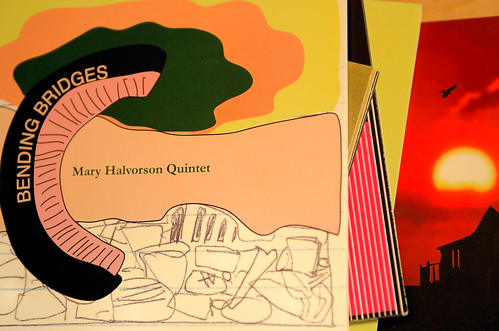
Hary Halvorson - Bending Bridges

* Hesperion XXI (Savall): Helmut-List-Halle, Graz, Austria 7-17-07 (FM CDR)
* Hesperion XXI (Savall): Concert Noble, Brussels, Belgium 7-21-07 (FM 2CDR)
* Vivaldi: Concertos For The Emperor (English Concert/Manze) (Harmonia Mundi SACD)
* Mary Halvorson Quintet: Bending Bridges (Firehouse 12 CD)
* Mary Halvorson & Jessica Pavone: Departure Of Reason (Thirsty Ear CD)
* The Thirteenth Assembly: Station Direct (Important CD)
* Taylor Ho Bynum Sextet: Apparent Distance (Firehouse 12 CD)
* Aych: As The Crow Flies (Relative Pitch CD)
* Chris Forsyth: Kenzo Deluxe (Northern Spy CD)
* The Who: Quadrophenia (Track 2LP)
* Jeff Beck: Truth (Epic/Sundazed LP)
* Grateful Dead: In The Dark (Arista/Mobile Fidelity LP)
* Grateful Dead: Madison Square Garden, New York, NY 9-15-87 (selections) (SBD 2CDR)
* Frank Zappa: “I Don’t Want To Get Drafted”/”Ancient Armaments” (Zappa/Polygram 12”)
* Frank Zappa: Tinseltown Rebellion (Barking Pumpkin 2LP)
* The Red Crayola: The Parable Of Arable Land (stereo) (Int’l Artists/Charly 2CD)
* Soft Machine: Third (Columbia 2LP)
* Soft Machine: Fourth (Columbia LP)
* Deep Purple: Shades Of Deep Purple (EMI/Odeon LP)
* Deep Purple: In Rock (Warner Bros. LP)
* Black Sabbath: Sabbath Bloody Sabbath (Warner Bros./Rhino LP)
* Elvis Costello & The Attractions: Imperial Bedroom (Columbia/Mobile Fidelity LP)
* Thurston Moore: Trees Outside The Academy (Ecstatic Peace! CD)†
* Thurston Moore: Demolished Thoughts (Matador CD)†
* Sleep: Dopesmoker (Southern Lord 2LP)
* Steven Wilson: Grace For Drowning (KScope BD)
* Storm Corrosion: Storm Corrosion (Roadrunner CD/BD)
* The Mars Volta: Noctourniquet (Warner Bros. 2LP)
* Anathema: We’re Here Because We’re Here (KScope CD/DVD)†
* Baroness: Red Album (Relapse CD)†/‡
* Baroness: Blue Record (Relapse CD)†/‡
* Baroness: Yellow & Green (Relapse)
* Pelican: The Fire In Our Throats Will Beckon The Thaw (Hydra Head CD)†
* Pelican: What We All Come To Need (Southern Lord CD)(†/‡)
* White Hills: H-p1 (Thrill Jockey CD)
* White Hills: Frying On This Rock (Thrill Jockey LP)
* Astra: The Weirding (Rise Above/Metal Blade CD)
* Astra: The Black Chord (Rise Above/Metal Blade CD)

†=iPod
‡=car

Commentary:

I’ve written before about how much I love Mary Halvorson (see here, here, here and here)—I am probably her biggest fan. I’ve described her as a “complete guitarist,” that is to say someone who knows all the right notes and, more importantly, understands the transformative power of electricity. Even more amazing, she is also a brilliant jazz composer, as can be heard on her new CD, Bending Bridges (Firehouse 12). Featuring her quintet with Jonathan Finlayson on trumpet, Jon Irabagon on alto saxophone, John Hébert on bass and Ches Smith on drums, the music ranges from post-Blue Note bop to angular art rock—often in the same piece. This band has been playing together for a while now and it shows: everyone sounds relaxed and the sometimes tricky arrangements are expertly executed. If I have any complaint it is that Halvorson is a bit too generous with the solo space and only really lets loose herself on a few tracks. Moreover, drum solos are almost never a good idea in my opinion, no matter how great the drummer, and there’s not one, but three of them here, which only contributes to the CD’s overlong seventy-minute duration. But these are minor quibbles since the compositions and playing are all first-rate—and I’ll take any opportunity to hear Ms. Halvorson play the guitar.

Fortunately, there has been ample chances to do so over the past several months, since she has appeared on a bunch of other records under a variety of monikers. The Thirteenth Assembly is a long-running collective with her musical peers, violist Jessica Pavone, brass master Taylor Ho Bynum and drummer Tomas Fujiwara, each sharing equal compositional duties. Their most recent CD, Station Direct (Important), is another genre-hopping gem, happily moving from abstract squiggles to post-jazz grooving to outright Bo Diddley beats. Her fourth duo album with Pavone, Departure of Reason (Thirsty Ear), is another set of carefully crafted art- songs and instrumentals, perhaps the most cohesive (and well-recorded) CD yet from them. Then there’s As The Crow Flies (Relative Pitch), by a conglomeration calling itself Aych, an out-jazz blow-out with Bynum again and Jim Hobbs on saxophone. It is certainly energetic and (mostly) free but it feels a little ad hoc and rootless to me. Nevertheless, Halvorson sounds totally self-assured and provides the glue that keeps the horns from flying apart. She also appears on Apparent Distance (Firehouse 12), a suite of meditative chamber jazz by the Taylor Ho Bynum Sextet and on Tomas Fujiwara & The Hook Up’s new one, The Air Is Different (482 Music). Finally, you can also hear her work with Anthony Braxton on many of the FLAC downloads available at the Tri-Centric Foundation, all of which are mind-blowingly great.

Yes, Mary Halvorson has been busy! Rumor has it she has reconvened her punky rock band, PEOPLE, for a new record for I & Ear titled 3XaWoman due out later this year and supposedly a new Ingrid Laubrock Anti-House CD is in the can. I'm looking forward to hearing more.

July 7, 2012

Playlist Week of 7-07-12

Nice Ride

* Hesperion XXI, et al. (Savall): Hispania & Japan: Dialogues (Alia Vox SACD)
* Grant Green: Idle Moments (Blue Note CD)
* Herbie Hancock: “Blow Up” (Original Soundtrack) (MGM/4 Men With Beards LP)
* Herbie Hancock: Secrets (Columbia LP)
* Herbie Hancock: Sunlight (Columbia LP)
* Grateful Dead: Dick’s Picks Vol.25 (5-11-78) (selections) (GDP 4HDCD)
* Affinity: Affinity (Vertigo/Lilith 2LP/CD)
* Kylesa: To Walk A Middle Course (Prosthetic/Alternative Tentacles LP)
* Opeth: Morningrise (Candlelight CD)†
* Opeth: My Arms, Your Hearse (Candlelight CD)†
* Opeth: Still Life (Peaceville/Icarus CD)†/‡
* Opeth: Blackwater Park (Music For Nations/KOCH CD)†/‡
* Opeth: Deliverance (Music For Nations/KOCH CD)†/‡
* Opeth: Damnation (Music For Nations/KOCH CD)†/‡
* Opeth: Heritage (Roadrunner CD/DVD)†/‡
* Anathema: Weather Systems (The End 2LP)
* Baroness: Yellow & Green (Relapse)
* Pelican: Australasia (Hydra Head 2-45RPM LP)
* Pelican: The Fire In Our Throats Will Beckon The Thaw (Hydra Head CD)†
* Pelican: What We All Come To Need (Southern Lord CD)†
* Chris Fosyth: Kenzo Deluxe (Northern Spy CD)
* Astra: The Weirding (Rise Above/Metal Blade CD)
* Astra: The Black Chord (Rise Above/Metal Blade CD)

†=iPod
‡=car

Commentary:

Short playlist this week! We traveled to Northern California to visit Lizzy’s family and the only music I listened to was on the plane (briefly) or in the car driving up the coast to The Sea Ranch. I made that drive several years ago in a minivan (!) and, since it was going to be just the two of us, I insisted we rent a nice car this time—a very nice car, as it turned out: a (slightly dinged-up) Mercedes C300. Now that might sound extravagant but, let me tell you: it’s a treacherous, three-hour drive up CA Route 1, a narrow, two-lane road with hairpin turns, gut-wrenching switchbacks and terrifying views of the ocean plunging five-hundred feet below—besides, it was only about a hundred bucks more than a Toyota Camry, so why not enjoy the ride?

Having never driven a Mercedes before (I'm actually a Honda kinda guy), I was mystified by the needlessly complicated technology; a simple thing like adjusting the seat was extraordinarily difficult (here's a tip: you only get five minutes from the time the door closes). I spent at least twenty minutes sitting in the airport parking lot just trying to figure out how to play music from my iPod—and totally failed. The owner’s manual was completely useless! What the hell? Am I stupid? We hit the road listening to “Chill” on Sirius while I pondered the problem. I eventually figured out how to change the channel to “Classic Vinyl.” Much better. Okay, now we’re getting somewhere. A bit later, I pulled over. Let’s see if this works: press this button, turn this knob—and voila! iPod! We cranked up some Opeth and kept motoring. Other than the stupidly quirky audio system, the car drove like a dream—and it made a potentially scary trip into a most pleasurable joyride. Well worth it.

ANYWAY, it was a fabulous trip; so quiet and peaceful, contemplating the water and the edge of the world. We had gorgeous weather, sunny and sixty-five degrees—a much needed relief from the horrendous heat-wave we’re having here in Nashville. It is such a beautiful yet desolatelandscape, so different from the mid-Atlantic region—and it was teeming with wildlife! We saw several different kinds of seabirds, Western blue jays, zillions of barn swallows, gaggles of wild turkeys, lots and lots of deer—we even saw a gray fox amble across the back porch one evening. Of course, I took a bunch of photographs and you can check them out on my Flickr Photostream, if you’re interested in seeing the place. Ultimately, it was a true blessing to get to be with family I had not seen in a very long time—I think they had come to doubt my very existence!

So, not much writing on the blog these days—but don’t worry: there are some exciting things coming up on the horizon. Stay tuned.

July 1, 2012

Sun Ra Sunday


FAST FADING ECHOES

they taught me to share all I had
with them
I did
and I got nothing in return
one day I found that because I did,
I died
then another tomorrow they never told
me of
came with the abruptness of a fiery gun
and spoke of cosmic equations
the equations of sound similarity
a secret code of eternal elasticity
clear only to those meant to live beyond
the law of earth
who must choose to understand the
meaning of the
death insurance
of cosmic surety
and use it as a shield against the
pretenders
of the fast-fading
echoes
of the damned
yesterdays

--Sun Ra

June 30, 2012

Playlist Week of 6-30-12

Hotter 'n Hell

* J.S. Bach: Sonatas For Flute & Harpsichord (Beaucoudray/Christie) (Harmonia Mundi CD)
* Telemann: Suiten (English Concert/Pinnock) (Archiv Produktion CD)
* Holloway/ter Linden/Mortensen: Garrison Church, Copenhagen 4-08-08 (FM 2CDR)
* Stockhausen: Kontakte (Tenney/Winant) (Ecstatic Peace! CD)
* Stockhausen: Mantra (Mikashoff/Bevan/Ørsted) (New Albion CD)
* Pat Metheny Group: We Live Here (Geffen CD)
* Grateful Dead: Berkeley Community Theatre, Berkeley, CA 4-19-86 (SBD 2CDR)
* The Thirteenth Floor Elevators: The Psychedelic Sounds of… (International Artists/Charly CD)
* The Thirteenth Floor Elevators: Easter Everywhere (International Artists/Charly CD)
* The Band: Music From Big Pink (Capitol/Mobile Fidelity LP)
* Black Sabbath: Black Sabbath (Warner Bros./Rhino LP)
* Black Sabbath: Paranoid (Warner Bros./Rhino LP)
* Deep Purple: Burn (Warner Bros. LP)
* Yes: Relayer (Atlantic/Rhino CD)
* Yes: Going For The One (Atlantic/Rhino CD)
* Camel: (Music Inspired By) The Snow Goose (Decca/EMI CD)
* David Bowie: The Rise And Fall Of Ziggy Stardust And The Spiders From Mars (Bowie/EMI LP/DVD)
* Talking Heads: Remain In Light (Sire/Warner Bros. DVD-A)
* Talk Talk: The Colour Of Spring (EMI LP/DVD)
* Talk Talk: Spirit Of Eden (EMI LP/DVD)
* Talk Talk: Laughing Stock (Polydor CD)†
* Tortoise: Tortoise (Thrill Jockey CD)†/‡
* Chris Forsyth: Kenzo Deluxe (Northern Spy FLAC)
* Opeth: Orchid (Candlelight CD)†/‡
* Katatonia: Last Fair Deal Gone Down (10th Anniversary Edition) (Peaceville CD/CDEP)†
* Katatonia: Viva Emptiness (Peaceville CD)†
* Katatonia: The Great Cold Distance (Peaceville CD)†
* Anathema: Weather Systems (The End CD)†
* Agalloch: The Mantle (The End CD)†/‡
* Agalloch: Ashes Against The Grain (The End CD)†
* Mastodon: Crack The Skye (Reprise 2-45RPM LP)
* Mastodon: The Hunter (Reprise 2-45RPM LP)
* Baroness: Red Album (Relapse CD)
* Baroness: Blue Record (Relapse CD)
* Earth: Angels Of Darkness, Demons Of Light I (Southern Lord CD)
* Earth: Angels Of Darkness, Demons Of Light II (Southern Lord CD)
* Pelican: Australasia (Hydra Head 2-45RPM LP)
* Pelican: The Fire In Our Throats Will Beckon The Thaw (Hydra Head CD)
* Pelican: What We All Come To Need (Southern Lord CD)(†)
* Pelican: Ataraxia/Taraxis (Southern Lord EP)
* White Hills: White Hills (Thrill Jockey CD)
* White Hills: H-p1 (Thrill Jocket CD)†
* White Hills: Frying On This Rock (Thrill Jockey LP)
* The Black Keys: Brothers (Nonesuch 2LP)
* Astra: The Weirding (Rise Above/Metal Blade CD)
* Astra: The Black Chord (Rise Above/Metal Blade CD)
  
†=iPod
‡=car

Commentary:

It’s hotter ‘n hell here in Nashville—I think my brain has melted…

June 24, 2012

Sun Ra Sunday


Sun Ra & His Arkestra: The Empty Foxhole Café, Philadelphia, PA 4-29-77 (AUD 2CDR)

Taking its name from the 1967 album by Ornette Coleman, The Empty Foxhole Café was a student-run venue at the University of Pennsylvania, located in the basement of St. Mary’s Church at 39th & Locust Streets, at the time a particularly run-down area of Philadelphia. It housed an actual theater with a large stage, nice acoustics and student volunteers would serve natural foods between sets—hey, it was the ‘Seventies! Weekends were mostly reserved for avant-garde artists such as Cecil Taylor, Archie Shepp and The Art Ensemble of Chicago, who are all known to have performed there. The Arkestra made an appearance at The Empty Foxhole on April 29, 1977 and a two-hour audience recording circulates amongst collectors (see Campbell & Trent, p.234).

As usual with these things, sound quality is problematic, to say the least. Once again, Sun Ra’s searing electric organ dominates all the other instruments—but however good (or bad) the original (monophonic) tape might have sounded, what we have here is many cassette generations removed, with severe wow-and flutter issues and, most egregiously, a Dolby mismatch or two, resulting in elevated hiss and distortion that was clearly not present on the original recording. To make matters worse, this horribly degraded tape was then sloppily transferred to digital, evidenced by audible clicks and digital distortion present throughout, getting progressively worse and worse as it goes along. Ouch! That said, there is, as usual, some great (and not so great) music buried beneath all the noise—you just have to struggle to hear it.

The set opens with another “Strange Strings”-styled improvisation with kora, thumb-pianos, log drums and other myriad percussion instruments rattling away but it’s sadly impossible to make out exactly what’s going on. And it goes on for quite a while, moving through a variety of rhythmic feels while Vincent Chancey provides some lugubrious French horn and someone (probably Richard “Radu” Williams) (Id.) taking a rare bass solo. Just as the crowd becomes audibly restless, the horns split the sonic universe with a raucous space chord and one of the Space Ethnic Voices starts singing, “Make Way For the Sunshine.” But then June Tyson comes in with “(The World Is Waiting) For The Sunrise” and the two songs are sung at the same time in weird, polytonal counterpoint—very interesting! After Sonny’s big entrance, Danny Ray Thompson takes up the bari-sax riff for “Discipline 27” and it’s another hot rendition with an extended freakout section, Marshall Allen and Danny Davis duking it out on altos and Craig Harris going his own way on trombone. So far, so good.

Then Sonny moves to the Rocksichord for “How Am I To Know?” but his stomp-box phase-shifter is shorting out: it crackles, pops and cuts off and on of its own accord. The Arkestra carries on, though, with Rusty Morgan singing lead (Id.) and Gilmore taking a splendidly idiomatic solo that gets a nice round of applause. But Ra is clearly frustrated with the Rocksichord and abandons it altogether to join in the singing, only to let the song sort of peter out. Oh well. “Love In Outerspace” is the usual thing: a bit tedious at over fourteen minutes, but no doubt a delightful visual spectacle. The next thirty minutes are devoted to the big-band classics, “Lightnin’,” “Yeah Man!,” “Take The ‘A’-Train,” “Honeysuckle Rose” and “Red Room” and it’s an oddly uneven performance. John Gilmore displays his stunning virtuosity on the B-flat clarinet (a/k/a “The Misery Stick”) on “Yeah Man!” and delivers a typically rousing tenor saxophone solo on Fats Waller’s “Honeysuckle Rose”—yet he seems bored with “Take The ‘A’-Train” and unusually breathless on “Red Room.” We do get to hear the laconic Akh Tal Ebah take a rare trumpet solo on “Take The ‘A’-Train” while Ahmed Abdullah, is elsewhere his usual showy self. But by and large, this is not the Arkestra at its best: the ensembles are ragged and the band sounds unsure of the arrangements at times. It doesn’t help matters much that the sound quality is so terrible, no doubt clouding my opinion of the musicyour mileage may vary.

Moving on: Allen and Ra duet on an untitled ballad, possibly through-composed: similar in feel to “Taking a Chance on Chancey” and other French horn duets we’ve heard, Sonny is outlining definite harmonies while Allen freely extrapolates on alto saxophone—whatever it is, it’s just lovely. “King Porter Stomp” brings us back to the Swing Era and Gilmore sounds more inspired here, taking a small motivic figure introduced by Harris’s trombone solo and running with it. “The Mayan Temples” settles into a gentle, spacey groove with flutes on top and Ra taking a pleasantly ruminative electronic solo—but the recording is marred by numerous technical difficulties, including an inconvenient tape flip and a faulty microphone cable. And so it goes…”Outer Spaceways Incorporated” is resurrected and reimagined as a weirdly asymmetric, mid-tempo swinger with a complexly hocketed vocal arrangement and Sonny pontificating amidst an increasingly enervating din. Whoah! I’m not sure if we’ve heard this arrangement before (or if we’ll hear it again), but it is an unusually refreshing take on this sometimes overdone singalong.

Finally, we get “The Shadow World,” which is always welcome. And, as usual, it’s a barn-burner: fast and tight with frenzied horns and pummeling percussion. Ra takes one of his patented “mad scientist” organ solos where he sounds like he has three hands, summoning up an astonishing variety of otherworldly textures, from percussive, high-pitched tinkling to swooning portamentos to roaring whirlwinds of low-register noise—all at the same time. This is Ra at his most outrageous — yet he is firmly in control of every nuance possible from his crude electronic keyboards. A string of horn solos follows, both accompanied and a cappella, with James Jacson delivering another lengthy and impressive display instrumental facility on the difficult and unwieldy bassoon—but then Harris destroys the mood with an overly cute, bluesy pastiche on trombone. He manages to elicit some bemused chuckles from the audience but our recordist is clearly not impressed; running short on tape, he shuts off the machine until mid-way through Gilmore’s solo. Although Gilmore sounds great, the effect is ruined and—to add insult to injury—horrific digital distortion starts to creep in, completely overwhelming everything by the return of the head. Ugh. The tape mercifully ends there.

So, here we have another crummy “bootleg” with enough tidbits of interesting music to be worthwhile only to the most fanatical Sun Ra collector. One wishes the original master tape would resurface and be given a fresh transfer as it would sound a lot better than this inferior facsimile. Given what we currently have, most listeners will find the sound quality utterly repellent and should not even bother hunting it down — the rest of you know who you are.

June 23, 2012

Playlist Week of 6-23-12

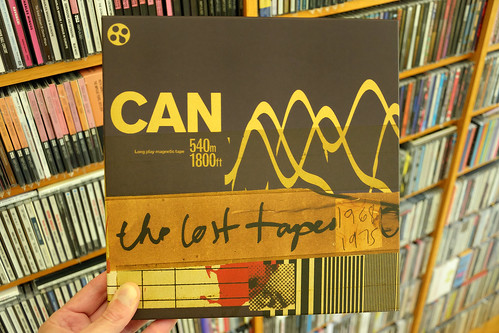
Can - The Lost Tapes

* Corelli: Trio Sonatas (English Concert/Pinnock, et al.) (Archiv Produktion CD)
* Geminiani: Concerti Grossi (After Corelli, Op.5) (AAM/Manze) (d.1) (Harmonia Mundi 2CD)
* Geminiani: Cello Sonatas, Op.5 (ter Linden/Mortensen) (Brilliant Classics CD)
* Venice Baroque Orchestra (Marcon/Carmignola): Concerto Veneziano (Archiv Produktion CD)
* Venice Baroque Orchestra (Marcon/Carmignola): Concerto Italiano (Archiv Produktion CD)
* Stravinsky: Piano Works (Sangiorgio) (Collins Classics CD)
* Sun Ra: Empty Foxhole Café, Philadelphia, PA 4-29-77 (AUD 2CDR)
* Sun Ra: Solo Piano, Volume 1 (Improvising Artists, Inc. CD)
* Sun Ra: St. Louis Blues: Solo Piano, Volume 2 (Improvising Artists, Inc. CD)
* Sun Ra: WKCR Studios, Philadelphia, PA 7-08-77 (FM CDR)
* Anthony Braxton Septet +1: GTM (Iridium) 2007 Vol.2 Set 1 (New Braxton House FLAC>CDR)
* Mary Halvorson Quintet: Saturn Sings (Firehouse 12 CD)
* Mary Halvorson Quintet: Bending Bridges (Firehouse 12 CD)
* Tomas Fujiwara & The Hook Up: The Air Is Different (482 Music CD)
* Earl Klugh: Finger Paintings (Blue Note/Mobile Fidelity LP)
* George Benson: Weekend In L.A. (Warner Bros. 2LP)
* Elixer: Hegalian Zone (ION CD)†/‡
* Sly & The Family Stone: There’s A Riot Going On (Epic/Sundazed LP
* Sly & The Family Stone: Fresh (Epic/Sundazed LP)
* Grateful Dead: Memorial Coliseum, Portland, OR 5-19-74 (selections) (SBD 3CDR)
* The Band: Music From Big Pink (Capitol/Mobile Fidelity LP)
* Deep Purple: Machine Head (Warner Bros. LP)
* Can: Ege Bamyasi (Spoon/Mute SACD)
* Can: Future Days (Spoon/Mute SACD)
* Can: The Lost Tapes 1968-1975 (Spoon/Mute 3CD)
* Can: Canobits (d.1-3) (SBD/boot 4CDR)
* My Bloody Valentine: EP’s 1988-1991 (d.1) (Sony 2CD)†/‡
* Animal Collective: Merriweather Post Pavilion (Domino 2LP)
* Akron/Family: Set ‘Em Wild, Set ‘Em Free (Dead Oceans 2LP)
* Anathema: We’re Here Because We’re Here (KScope CD/DVD)†
* Anathema: Weather Systems (The End 2LP/CD)(†)
* Mike Scheidt: Stay Awake (Thrill Jockey LP)
* White Hills: H-p1 (Thrill Jockey CD)(†)
* White Hills: Frying On This Rock (Thrill Jockey LP)
* Pelican: What We All Come To Need (Southern Lord CD)(†/‡)
* Pelican: Ataraxia/Taraxis (Southern Lord EP)
* Astra: The Black Chord (Rise Above/Metal Blade CD)(†/‡)

†=iPod
‡=car

Commentary: 

The German band, Can, has always been one of those bands that more people have heard of than actually heard. Like the old bon mot about the Velvet Underground, not many people bought Can’s records at the time of their release but every one of them formed their own band. Their influence has been pervasive since the 1970s and can be heard in everything from Miles Davis’s On The Corner-era recordings to New Wave and punk rock bands like the Talking Heads, the Fall, Sonic Youth, et al.—not to mention the whole ambient/electronica scene and its offshoots. Then there are the so-called “post-rock” bands like Radiohead, Tortoise, Animal Collective and their ilk, who obviously spent a lot of time studying Can’s classic albums during their formative years. Can were “post-rock” long before anyone coined the term and those records sound as fresh today as they did back in the ‘70s—the problem has always been trying to find them. Poorly served during the nascent CD-era, it wasn’t until the definitive SACD remasters of 2004-2006 that their catalog has been widely available—and now, with the release of The Lost Tapes 1968-1975, a truly complete picture of the Can’s music and methodology can be discerned.

Founding members, keyboardist Irmin Schmidt and bassist Holger Czukay, were former students of ultra-modernist composer Karlheinz Stockhausen and deeply immersed in the avant-garde classical world centered in Darmstadt, West Germany—but the burgeoning rock, funk and free-jazz scenes of the late-60s “corrupted” them; in a 2004 interview, Schmidt stated: 
I wanted to do something in which all contemporary music becomes one thing. Contemporary music in Europe especially, the new music was classical music, was Boulez, Stockhausen and all that. I studied all that, I studied Stockhausen but nobody talked about rock music like Sly Stone, James Brown or the Velvet Underground as being contemporary music. Then there was jazz and all these elements were our contemporary music, it was new. It was, in a way, much newer than the new classical music which claimed to be 'the new music’ (quoted (with broken link) on Wikipedia). 
With the addition of out-jazz drummer Jaki Liebezeit and Czukay’s 19-year-old student, Michael Karoli on guitar, the band (originally called Inner Space) enlisted their friend, Malcolm Mooney, as vocalist. Mooney  an African-American sculptor then living in Munich, immediately suggested changing their name to The Can (later shorted to just Can) and together they set about recording material for their first album.  Mooney was prolifically creative but mentally unstable—at times dangerously confrontational—and his paranoiac rantings defined their early, Velvet Underground-meets-James Brown aesthetic. But after experiencing a complete nervous breakdown in late-1969, Mooney returned to the United States at the advice of his psychiatrist and was replaced by Damo Suzuki, a Japanese musician Czukay and Liebezeit found busking outside a local café. It was with Suzuki that Can would refine their polyglot musical style and record their most highly revered albums, Tago Mago (1971), Ege Bamyasi (1972) and Future Days (1973). After Suzuki’s abrupt departure to marry his girlfriend (and become a Jehovah’s Witness), Can soldiered on as quartet with Karoli and Schmidt assuming vocal duties. Their subsequent albums were inconsistent but Can continued to be a formidable live band, even as Czukay started drifting away, gradually replaced by former Traffic band-members Rosko Gee and Rebop Kwaku Baah on bass and percussion. The band finally called it quits in 1979, only to reunite with Mooney and Czukay for a disco-infused album (Rite Time) and a few concerts in 1989. In the meantime, Can’s reputation as a genre-defining band has only continued to grow.

Eschewing conventional song structures, Can’s music was built up out of hours of improvisation and rudimentary overdubbing—amazingly, their classic albums were made without the benefit of modern multitrack technology, relying instead on a pair of humble 2-track stereo reel-to-reel machines and “bouncing” tracks into order to make room for additional overdubs. These recordings were then meticulously edited together (using a razor blade and splicing tape) to compile the finished song, a collage technique borrowed from Stockhausen’s electronic music and musique concrète. Propelled by Liebezeits’s powerfully motoric drumming, Can’s music could be both dreamily hypnotic and teeth-grindingly intense at the same time. Mooney tended to worriedly repeat a phrase to scarily absurd lengths while the more ethereal Suzuki would croon, shout or whisper, the mostly unintelligible, multilingual lyrics subsumed into the overall sound-world. In concert, the band pursued “spontaneous compositions,” long, spacey jams that would occasionally yield to familiar songs and riffs, only to erupt into bouts of ferociously skronky noise. But forget about verse-chorus-verse structures—this wildly experimental music is all about texture. No wonder the band never had any hit records! But they did find some financial success scoring soundtracks for film and television, a couple of which scraped the bottom of the charts in their native country.

Given their unorthodox working methods (and a penchant for recording every gig), many reels of tape were accumulated during the course of their career and much speculation about their contents has ensued over the years, fueled by a series of bootleg releases purportedly sourced directly from the Can archives. Aside from Unlimited Edition, a double-LP compilation of outtakes and rarities released in 1976 and Delay 1968, their posthumous, previously unreleased first album (originally titled, Prepared To Meet Thy Pnoom), not much has seen the light of day. In 1999, the super-limited edition Can Box was released, containing two DVDs, two live CDs and a book—but it is now way out of print and impossible to find. The DVDs, however, were reissued in 2004 (as The Can DVD) and is still available (and highly recommended). It seemed that was the end of it until 2007, when the contents of Can’s studio in Cologne were transferred to the Rock ‘n’ Pop Museum in Gronau—all except for the tapes, which were moved to the basement of Schmidt’s flat in Cologne. At the prompting of his son-in-law, producer Jono Podmore, the reluctant Schmidt was finally convinced to sort through it all. “This archive was a travesty of archival organization,” says Schmidt in his liner notes to The Lost Tapes: 
We always recorded everything. But in the early years we didn’t have money to buy so many new tapes, so we would often re-record over them, months and sometimes years later. We would keep the bits that we considered worth keeping and recorded over the rest. Thereby we ended up with lots of isolated fragments from different periods. Not easy to make sense of and find chronological connections within this mess. 
In February 2009, the tapes were taken to Sonopress in Gutersloh where they were cleaned, restored and transferred to the digital domain, a process that took over a year to complete, yielding about fifty hours of music. Of this, three CDs worth were edited and compiled, with deliberations between Schmidt and Podmore about the track list and running order continuing up until the final mastering in February 2012. Finally released on June 19, The Lost Tapes is a treasure trove of spectacular, previously unreleased Can music from the peak period of their career.

Packaged in a nifty ten-inch square container made to look like an old reel-to-reel tape box, The Lost Tapes boasts not only seven unheard studio tracks with Mooney (and eight with Suzuki), but a bunch of film soundtracks, some cool ambient instrumentals and five incendiary live recordings from 1972-75. Some of the material shows the genesis and development of such classic tracks as “Mother Sky,” “Vitamin C,” and “Spoon,” offering a fascinating glimpse into their working methods in the studio. Interestingly, some of these songs began as film soundtracks which were later reconfigured for later albums. Ultimately, The Lost Tapes will probably only appeal to the hardcore Can freak—but that shouldn’t stop the merely curious from picking it up. Sure, their seminal albums are essential; but unlike most archival releases, The Lost Tapes wouldn’t be a bad place to begin for a newbie—it’s just that good! 

TheSpectator once wrote about Can in 1973: “If you consider yourself in any sense involved with modern music, you cannot overlook them”—and that statement is a true today as it was back then. The Lost Tapes is a crucial document of one of rock music’s most visionary and influential bands and should not be missed. The sticker on the shrink wrap says, “limited edition”—I don’t know what that means exactly, but I’d recommend grabbing it before it disappears for good. Over three hours of primo Can plus a lavishly illustrated book all for less than thirty bucks—heck, you can hardly go wrong!

June 17, 2012

Sun Ra Sunday


Sun Ra & His Arkestra: Smuckers, New York, NY 4-17-77 (AUD CDR)

A month later, we find the Arkestra back in New York, appearing at Smuckers on April 17, 1977 and, at least compared to the Showboat Lounge tape, this amateur recording is a hi-fi sonic spectacular! Recorded in stereo (still something of a rarity at the time), it has a pleasing ambience and excellent instrumental balance, with the drums and cymbals coming through crisp and clear but without being overwhelming. But this tape has its share of problems: the recording levels go up and down; there is considerable distortion when things get loud; and, about halfway through, the surreptitious recordist panics and tries to hide the microphone, causing the sound quality to deteriorate significantly. Oh well; that’s just the way it is with “bootlegs” from this era.  Also unlike the more accommodating Showboat Lounge, the economics of Manhattan nightclubs dictated a short, hour-long set with few surprises. All that said, this is a half-decent recording of the band on a pretty good night—plus there’s a special guest sitting in at this show, vibraphonist Walk Dickerson. Well, perhaps not that special (see below).

The set opens with a brief but ominous “Strange Strings”-styled improvisation before June Tyson comes in singing “(The World Is Waiting) For The Sunrise.” As the guys in the band join in the chorus, the words slowly morph into “The world is waiting for…Sun Ra” for Sonny’s grand entrance. A massive space chord signals Danny Ray Thompson to take up the big bari-sax riff of “Discipline 27” and it’s a barn-burner. Unfortunately, Ahmed Abdullah’s trumpet solo is so ear-piercingly loud it causes the recordist to fiddle with the input levels for a couple of minutes while the rest of the Arkestra moves into a deliciously skronky group improvisation, capped by Marshall Allen’s a cappella alto saxophone. This is a great version of this sometimes overplayed tune, albeit marred by severe technical problems with the recording. And so it goes...

Thankfully, the sound clears up a bit for “The Shadow World” and it’s another high-energy blowout with gobs of “mad scientist” organ work and a string of outrageous solos from Allen and Danny Davis on altos, Eloe Omoe on bass clarinet, James Jacson on bassoon, and, finally, John Gilmore on tenor. The music moves through a variety of feels across its eighteen-minute duration, from the frenetic opening ostinatos to a deep, dark funk jam to wild, free-jazz bashing. Jacson’s bassoon solo is perhaps his longest on record and an amazing display of virtuosity on this terribly awkward instrument and he gets a hearty round of applause from the audience. Who knew Jacson could play like that? The always impressive Gilmore is at his very best here, building an epic statement out of tiny cells of notes, effortlessly incorporating the entire range of extended techniques from impossible-sounding multiphonics to keening altissimo cries, all the while maintaining a coherent structure with a lyrical melodicism all his own. Yes, folks: it’s another incredible Gilmore solo! After the Akrestra returns with a super-tight reprise of the insanely complicated head, the audience is left in stunned disbelief. This is another fantastic rendition of a composition which could never be “overplayed” in my book—the highlight of the set, for sure.

“Enlightenment” cuts off after about thirty-five seconds—no great loss, I guess—and then we pick up in the middle of “Love In Outer Space,” the organ vamping away over a bed of percussion. Just as Sonny returns with the melody, it sounds to me like the microphone gets shoved under the table in an effort to avoid detection by the band or nightclub staff; in any event, the sound quality takes a severe nosedive from here on. “When There Is No Sun” is spiritedly sung, but suffers from muffled sound, as does “Lights On A Satellite,” which struggles to get into a groove, the tempo fluctuating wildly and, at one point, moving into a heavy-ish rock feel—but Sonny puts the kibosh on that pretty quick! Next up is an unknown title, possibly one of the “Discipline” series of compositions and it sounds vaguely familiar: strained, broken harmonies; braying horns; abstract drumming; dissonant, dramatic organ chords—but with weird, murmuring vocals. Very interesting. Then Walt Dickerson takes over with a long vibraphone solo—too long, if you ask me. Dickerson is a fine player, but he’s just noodling around here. It’s impossible to tell what else is happening on stage but sometimes it seems as if Dickerson just wants to stop playing—and Sonny won’t let him! It just goes on and on and, frankly, it gets to be quite boring—not something you can usually say about an Arkestra performance (aside from the drum solos). It doesn’t help that the sharp, metallic attack of the vibraphone causes painful amounts of distortion in the recording when he hits it hard—which is all too often. “Space Is The Place” ends the set with the typical carrying on, although notable for the inclusion of the baritone counter-melody in the head arrangement, a subtle but welcome variation to this concert mainstay. After an extended vocal segment, the Arkestra marches off the stage and that’s it.

No doubt there was a lot more music played on this night, but this is all we have: a flawed yet mostly listenable recording of one (almost) complete set, which starts off strong and then goes downhill. Committed Sun Ra fanatics will find this worthwhile for “The Shadow World” alone, but for others it is probably inessential.

June 16, 2012

Playlist Week of 6-16-12


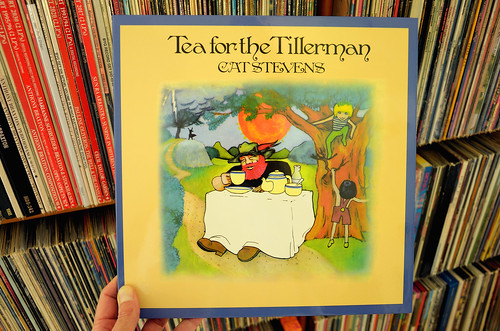
Cat Stevens - Tea For The Tillerman

* Telemann: The Complete Tafelmusik (d.2-4) (Freiburger Barockorchester) (Harmonia Mundi 4CD)
* Barraqué: Piano Sonata (Chen) (Telos CD)
* Duke Ellington & Coleman Hawkins: Duke Ellington Meets Coleman Hawkins (Impulse! CD)
* Duke Ellington & John Coltrane: Duke Ellington & John Coltrane (Impulse! CD)
* Miles Davis: The Complete On The Corner Sessions (d.3) (Columbia/Legacy 6CD)
* Sun Ra: Smuckers, New York, NY 4-17-77 (AUD CDR)
* McCoy Tyner: Nights Of Ballads & Blues (Impulse! CD)
* McCoy Tyner: Inception (Impulse! CD)
* Shakti With John McLaughlin: A Handful Of Beauty (Columbia LP)
* Ronnie Laws: Friends And Strangers (United Artists LP)
* Mary Halvorson Quintet: Bending Bridges (Firehouse 12 CD)
* Van Morrison: Astral Weeks (Warner Bros./Rhino LP)
* Grateful Dead: Capital Center, Landover, MD 9-02-88 (SBD 2CDR)
* Grateful Dead: The Horizon, Rosemont, IL 3-10-93 (selections) (SBD 3CDR)
* Grateful Dead: The Horizon, Rosemont, IL 3-11-93 (selections) (SBD 3CDR)
* Cat Stevens: Tea For The Tillerman (Island/Analogue Productions LP)
* David Bowie: The Rise And Fall Of Ziggy Stardust And The Spiders From Mars (EMI LP/DVD)
* Black Sabbath: Black Sabbath (Warner Bros./Rhino LP)
* Black Sabbath: Paranoid (Warner Bros./Rhino LP)
* Black Sabbath: Master Of Reality (Warner Bros./Rhino LP)
* Black Sabbath: Vol.4 (Warner Bros./Rhino LP)
* Black Sabbath: Sabbath Bloody Sabbath (Warner Bros./Rhino LP)
* Camel: Camel (MCA/EMI CD)†
* Camel: Mirage (Deram/EMI CD)†
* Fleetwood Mac: Rumours (Warner Bros. 2-45RPM LP)
* Patti Smith: Banga (Special Edition) (Columbia CD)
* Elvis Costello: Almost Blue (Columbia/Mobile Fidelity LP)
* Guided By Voices: Class Clown Spots A UFO (GBV, Inc. LP)
* Porcupine Tree: Stars Die: The Delerium Years 1991-1997 (KScope 2CD)(†/‡)
* Porcupine Tree: The Sky Moves Sideways (KScope 2CD)†/(‡)
* Porcupine Tree: Stupid Dream (KScope CD/DVD)
* Porcupine Tree: Lightbulb Sun (KScope CD/DVD)†/‡
* Steven Wilson: Insurgentes (KScope CD/DVD)
* Steven Wilson: Grace For Drowning (KScope BD)
* Opeth: Blackwater Park (Music For Nations/KOCH CD)†
* Opeth: Deliverance (Music For Nations/KOCH CD)†
* Opeth: Damnation (Music For Nations/KOCH CD)†
* Anathema: We’re Here Because We’re Here (KScope CD)†
* Anathema: Weather Systems (The End CD)†/(‡)
* YOB: Illusion Of Motion (Metal Blade CD)†/(‡)
* Tortoise: It’s All Around You (Thrill Jockey LP)
* Tortoise: Beacons Of Ancestorship (Thrill Jockey LP)
* Ray LaMontagne: Trouble (RCA/Legacy LP)

†=iPod
‡=car

Commentary:

I’ve been complaining a lot about sound quality on my blog lately and it makes me feel bad in a way. I do not want to be one of those audiophile snobs who takes the all the fun out of listening to music. The truth is: some of my formative musical memories are listening to a crummy AM radio in the basement of my parents’ house—so I know full well that the power of music transcends its medium. But once exposed to good sound, whether at friends’ homes growing up or, later, in recording studios and at numerous Grateful Dead concerts (the epitome of high-quality live sound reinforcement, regardless of what you might think of the music), it became harder and harder to accept bad sound—especially in my own home where I have some measure of control.

I lived with decidedly mid-fi equipment for many years, but it was sufficient to hear the difference between a good recording and a bad one. And I fully understand there is plenty of great, important music in the canon of recorded music that just doesn’t sound that good, whether they are the primitive gramophone recordings of the early 20th century, Sun Ra’s experimental Saturn LPs, The Velvet Underground’s seminal records, or the deliberately low-fi albums by Guided By Voices and Pavement. In these exceptional cases, the sonic anomalies contribute to the listening experience—those records wouldn’t have the same impact if recorded in pristine high fidelity. But where the recording even pretends to be hi-fi, then the expectations are different. Digital distortion or heavy-handed compression/limiting can ruin an otherwise fine CD and the warble, clicks, pops and other surface noise of a shoddy (or damaged) vinyl pressing can destroy the illusion of musical reproduction, no matter how nice it might otherwise sound. Being an “audiophile” is a double-edged sword and perfection is forever out of reach. Nevertheless, I can enjoy listening to AAC rips to my iPod while driving my car or through high-quality in-ear monitors at work. Good sound is not about expensive playback equipment; it’s about what happens in your brain (and your soul) as you listen. But the source does matter.

Actually, we are living in an unprecedented era of audiophilia, driven, by all things, the archaic LP. No self-respecting act is without a vinyl release of their new album and these limited edition pressings often have superior masterings to their brickwalled CD counterparts—hipster cachet notwithstanding. Moreover, some of the major labels like Warner Bros./Rhino along with boutique companies like Mobile Fidelity Sound Lab and Music Matters are producing superlative reissues of classic albums that in most cases betters the minty-est original in every way, from pressing, packaging and, most importantly, sound quality. If you have a half-way decent turntable, we are living a second Golden Age of high fidelity and a record collector’s dream come true. It seems a bit ridiculous to me that this Industrial Age technology remains the standard for hi-fi in the 21st Century, but there you go: I was promised flying cars and jet-packs; instead I get a needle dragged through a piece of plastic, same as it was in the 1970s—only better (and more expensive). Yay.

Chad Kassem has been a long-time player in the LP reissue game, going back to the dark ages of digital when he founded the audiophile mail-order company, Acoustic Sounds, Inc. in 1986. In 1991, Kassem established Analogue Productions, a record label specializing in limited edition, high-quality vinyl reissues of classic albums, now numbering some 450 titles. But the vinyl renaissance of recent years has overburdened the few remaining pressing plants (such as RTI and Pallas), resulting in production delays and inconsistent quality control. Taking matters into his own hands, Kassem has built his own plating and pressing facility in Salina, Kansas and matter-of-factly named it Quality Record Pressings (QRP), the goal being to make “the finest records the world has ever known.” To that end, three antique presses (manufactured by SMT, Toolex Alpha and Finebilt) have been re-built and retrofitted with innovative technology such as custom-made microprocessors and ultra-precise temperature controls in order to produce the most perfect LP possible. In addition, QRP has brought aboard the legendary Gary Salstrom to head up their in-house plating department to ensure flawless plates with which to manufacture their LPs. As their website points out: “Not every pressing plant has a plating department. And only one plant—QRP—has the best. Plating can affect everything from pre-echo and high-end loss to record profile and warping. Getting it right is essential.”

The first title to come off the press is Cat Stevens’s 1970 album, Tea For The Tillerman, a long-time audiophile favorite featuring some of his most enduring songs (many of which were featured in the 1971 film, Harold & Maude). Reviews have been uniformly ecstatic since its release last summer, so even though I’m not the biggest Cat Stevens fan in the world, I decided to pick up a copy at my favorite local record store. Wow! The reviewers were right: this thing is just stunningly great in every conceivable way. The original multi-textured gatefold jacket is faithfully reproduced and, as expected, the 200-gram vinyl is superbly well-crafted: my copy is perfectly concentric, flat as a pancake and completely noise-free. The late great George Marino mastered this edition at Sterling Sound utilizing the original analog tapes (long thought lost) and the dynamics and clarity are truly astonishing, like nothing I have ever heard before on a vinyl disc. The music leaps from the grooves from a deathly black background, the quiet bits rendered with tremendously involving low-level detail and the loud parts are astonishingly clean and almost overwhelmingly powerful. It is rare that I’m blown away by the sound quality of these kinds of über-expensive audiophile records, but from the moment I set the needle down, I was riveted to my chair, utterly dumbstruck by what I was hearing. Even if you’ve heard “Wild World” a thousand times, I can guarantee you’ve never heard it sound like this!

George Marino passed away on June 4 after a long battle with lung cancer but this edition of Tea For The Tillerman will undoubtedly stand as the crowning achievement of his illustrious career. This LP is truly reference quality and I’d love to hear it played back on a state-of-the-art turntable rig—I bet it would be completely mind-blowing!  Well worth the thirty-dollar asking price and sure to be sought after by vinylphiles for years to come, making it a likely good investment to boot. If you like this record even a little bit (and have a functioning turntable), I don’t see how you can go wrong picking up the Analogue Productions edition and hearing for yourself just how good an LP can sound.

+++

Another recent release worth mentioning is EMI’s 40th Anniversary edition of David Bowie’s 1972 “concept album," The Rise and Fall Of Ziggy Stardust and The Spiders From Mars. Re-mastered from the analog tapes by original engineer, Ken Scott, the vinyl sounds wonderful, worlds away from the crummy Dynaflex version you’re probably used to—plus it includes an audio-only DVD containing the original mix in 24bit/96kHz high-resolution digital, a 24bit/48kHz stereo/5.1 remix by Scott, and four contemporaneous bonus tracks. This is a trend I like a lot: the best of both worlds, analog and high-res digital, all in an attractive (and reasonably priced) package. I hadn’t heard this record in many years and, listening to it again, I was struck by how provocative and modern it still sounds, precipitating glam, metal, punk and beyond while retaining the suave songwriting and hook-laden pop moves that made him a superstar. I wasn’t that impressed with the remix, which is a little too neat and clean, the edges filed down to a bland smoothness but the original mix is un-castrated and presented here in its definitive edition. Highly recommended.