June 16, 2012

Playlist Week of 6-16-12


Cat Stevens - Tea For The Tillerman

* Telemann: The Complete Tafelmusik (d.2-4) (Freiburger Barockorchester) (Harmonia Mundi 4CD)
* Barraqué: Piano Sonata (Chen) (Telos CD)
* Duke Ellington & Coleman Hawkins: Duke Ellington Meets Coleman Hawkins (Impulse! CD)
* Duke Ellington & John Coltrane: Duke Ellington & John Coltrane (Impulse! CD)
* Miles Davis: The Complete On The Corner Sessions (d.3) (Columbia/Legacy 6CD)
* Sun Ra: Smuckers, New York, NY 4-17-77 (AUD CDR)
* McCoy Tyner: Nights Of Ballads & Blues (Impulse! CD)
* McCoy Tyner: Inception (Impulse! CD)
* Shakti With John McLaughlin: A Handful Of Beauty (Columbia LP)
* Ronnie Laws: Friends And Strangers (United Artists LP)
* Mary Halvorson Quintet: Bending Bridges (Firehouse 12 CD)
* Van Morrison: Astral Weeks (Warner Bros./Rhino LP)
* Grateful Dead: Capital Center, Landover, MD 9-02-88 (SBD 2CDR)
* Grateful Dead: The Horizon, Rosemont, IL 3-10-93 (selections) (SBD 3CDR)
* Grateful Dead: The Horizon, Rosemont, IL 3-11-93 (selections) (SBD 3CDR)
* Cat Stevens: Tea For The Tillerman (Island/Analogue Productions LP)
* David Bowie: The Rise And Fall Of Ziggy Stardust And The Spiders From Mars (EMI LP/DVD)
* Black Sabbath: Black Sabbath (Warner Bros./Rhino LP)
* Black Sabbath: Paranoid (Warner Bros./Rhino LP)
* Black Sabbath: Master Of Reality (Warner Bros./Rhino LP)
* Black Sabbath: Vol.4 (Warner Bros./Rhino LP)
* Black Sabbath: Sabbath Bloody Sabbath (Warner Bros./Rhino LP)
* Camel: Camel (MCA/EMI CD)†
* Camel: Mirage (Deram/EMI CD)†
* Fleetwood Mac: Rumours (Warner Bros. 2-45RPM LP)
* Patti Smith: Banga (Special Edition) (Columbia CD)
* Elvis Costello: Almost Blue (Columbia/Mobile Fidelity LP)
* Guided By Voices: Class Clown Spots A UFO (GBV, Inc. LP)
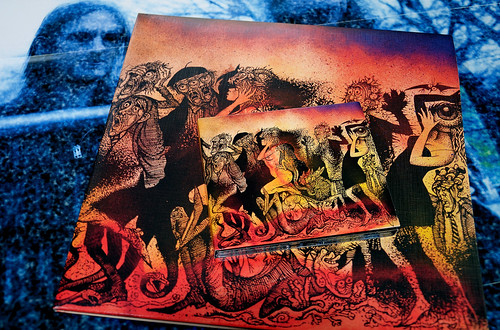
* Porcupine Tree: Stars Die: The Delerium Years 1991-1997 (KScope 2CD)(†/‡)
* Porcupine Tree: The Sky Moves Sideways (KScope 2CD)†/(‡)
* Porcupine Tree: Stupid Dream (KScope CD/DVD)
* Porcupine Tree: Lightbulb Sun (KScope CD/DVD)†/‡
* Steven Wilson: Insurgentes (KScope CD/DVD)
* Steven Wilson: Grace For Drowning (KScope BD)
* Opeth: Blackwater Park (Music For Nations/KOCH CD)†
* Opeth: Deliverance (Music For Nations/KOCH CD)†
* Opeth: Damnation (Music For Nations/KOCH CD)†
* Anathema: We’re Here Because We’re Here (KScope CD)†
* Anathema: Weather Systems (The End CD)†/(‡)
* YOB: Illusion Of Motion (Metal Blade CD)†/(‡)
* Tortoise: It’s All Around You (Thrill Jockey LP)
* Tortoise: Beacons Of Ancestorship (Thrill Jockey LP)
* Ray LaMontagne: Trouble (RCA/Legacy LP)

†=iPod
‡=car

Commentary:

I’ve been complaining a lot about sound quality on my blog lately and it makes me feel bad in a way. I do not want to be one of those audiophile snobs who takes the all the fun out of listening to music. The truth is: some of my formative musical memories are listening to a crummy AM radio in the basement of my parents’ house—so I know full well that the power of music transcends its medium. But once exposed to good sound, whether at friends’ homes growing up or, later, in recording studios and at numerous Grateful Dead concerts (the epitome of high-quality live sound reinforcement, regardless of what you might think of the music), it became harder and harder to accept bad sound—especially in my own home where I have some measure of control.

I lived with decidedly mid-fi equipment for many years, but it was sufficient to hear the difference between a good recording and a bad one. And I fully understand there is plenty of great, important music in the canon of recorded music that just doesn’t sound that good, whether they are the primitive gramophone recordings of the early 20th century, Sun Ra’s experimental Saturn LPs, The Velvet Underground’s seminal records, or the deliberately low-fi albums by Guided By Voices and Pavement. In these exceptional cases, the sonic anomalies contribute to the listening experience—those records wouldn’t have the same impact if recorded in pristine high fidelity. But where the recording even pretends to be hi-fi, then the expectations are different. Digital distortion or heavy-handed compression/limiting can ruin an otherwise fine CD and the warble, clicks, pops and other surface noise of a shoddy (or damaged) vinyl pressing can destroy the illusion of musical reproduction, no matter how nice it might otherwise sound. Being an “audiophile” is a double-edged sword and perfection is forever out of reach. Nevertheless, I can enjoy listening to AAC rips to my iPod while driving my car or through high-quality in-ear monitors at work. Good sound is not about expensive playback equipment; it’s about what happens in your brain (and your soul) as you listen. But the source does matter.

Actually, we are living in an unprecedented era of audiophilia, driven, by all things, the archaic LP. No self-respecting act is without a vinyl release of their new album and these limited edition pressings often have superior masterings to their brickwalled CD counterparts—hipster cachet notwithstanding. Moreover, some of the major labels like Warner Bros./Rhino along with boutique companies like Mobile Fidelity Sound Lab and Music Matters are producing superlative reissues of classic albums that in most cases betters the minty-est original in every way, from pressing, packaging and, most importantly, sound quality. If you have a half-way decent turntable, we are living a second Golden Age of high fidelity and a record collector’s dream come true. It seems a bit ridiculous to me that this Industrial Age technology remains the standard for hi-fi in the 21st Century, but there you go: I was promised flying cars and jet-packs; instead I get a needle dragged through a piece of plastic, same as it was in the 1970s—only better (and more expensive). Yay.

Chad Kassem has been a long-time player in the LP reissue game, going back to the dark ages of digital when he founded the audiophile mail-order company, Acoustic Sounds, Inc. in 1986. In 1991, Kassem established Analogue Productions, a record label specializing in limited edition, high-quality vinyl reissues of classic albums, now numbering some 450 titles. But the vinyl renaissance of recent years has overburdened the few remaining pressing plants (such as RTI and Pallas), resulting in production delays and inconsistent quality control. Taking matters into his own hands, Kassem has built his own plating and pressing facility in Salina, Kansas and matter-of-factly named it Quality Record Pressings (QRP), the goal being to make “the finest records the world has ever known.” To that end, three antique presses (manufactured by SMT, Toolex Alpha and Finebilt) have been re-built and retrofitted with innovative technology such as custom-made microprocessors and ultra-precise temperature controls in order to produce the most perfect LP possible. In addition, QRP has brought aboard the legendary Gary Salstrom to head up their in-house plating department to ensure flawless plates with which to manufacture their LPs. As their website points out: “Not every pressing plant has a plating department. And only one plant—QRP—has the best. Plating can affect everything from pre-echo and high-end loss to record profile and warping. Getting it right is essential.”

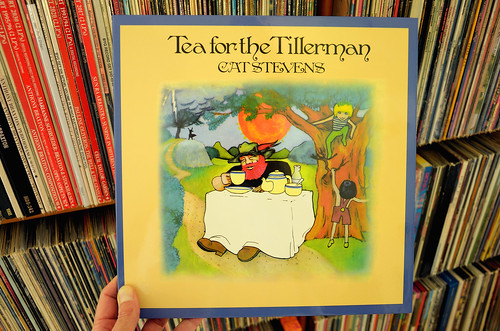
The first title to come off the press is Cat Stevens’s 1970 album, Tea For The Tillerman, a long-time audiophile favorite featuring some of his most enduring songs (many of which were featured in the 1971 film, Harold & Maude). Reviews have been uniformly ecstatic since its release last summer, so even though I’m not the biggest Cat Stevens fan in the world, I decided to pick up a copy at my favorite local record store. Wow! The reviewers were right: this thing is just stunningly great in every conceivable way. The original multi-textured gatefold jacket is faithfully reproduced and, as expected, the 200-gram vinyl is superbly well-crafted: my copy is perfectly concentric, flat as a pancake and completely noise-free. The late great George Marino mastered this edition at Sterling Sound utilizing the original analog tapes (long thought lost) and the dynamics and clarity are truly astonishing, like nothing I have ever heard before on a vinyl disc. The music leaps from the grooves from a deathly black background, the quiet bits rendered with tremendously involving low-level detail and the loud parts are astonishingly clean and almost overwhelmingly powerful. It is rare that I’m blown away by the sound quality of these kinds of über-expensive audiophile records, but from the moment I set the needle down, I was riveted to my chair, utterly dumbstruck by what I was hearing. Even if you’ve heard “Wild World” a thousand times, I can guarantee you’ve never heard it sound like this!

George Marino passed away on June 4 after a long battle with lung cancer but this edition of Tea For The Tillerman will undoubtedly stand as the crowning achievement of his illustrious career. This LP is truly reference quality and I’d love to hear it played back on a state-of-the-art turntable rig—I bet it would be completely mind-blowing!  Well worth the thirty-dollar asking price and sure to be sought after by vinylphiles for years to come, making it a likely good investment to boot. If you like this record even a little bit (and have a functioning turntable), I don’t see how you can go wrong picking up the Analogue Productions edition and hearing for yourself just how good an LP can sound.

+++

Another recent release worth mentioning is EMI’s 40th Anniversary edition of David Bowie’s 1972 “concept album," The Rise and Fall Of Ziggy Stardust and The Spiders From Mars. Re-mastered from the analog tapes by original engineer, Ken Scott, the vinyl sounds wonderful, worlds away from the crummy Dynaflex version you’re probably used to—plus it includes an audio-only DVD containing the original mix in 24bit/96kHz high-resolution digital, a 24bit/48kHz stereo/5.1 remix by Scott, and four contemporaneous bonus tracks. This is a trend I like a lot: the best of both worlds, analog and high-res digital, all in an attractive (and reasonably priced) package. I hadn’t heard this record in many years and, listening to it again, I was struck by how provocative and modern it still sounds, precipitating glam, metal, punk and beyond while retaining the suave songwriting and hook-laden pop moves that made him a superstar. I wasn’t that impressed with the remix, which is a little too neat and clean, the edges filed down to a bland smoothness but the original mix is un-castrated and presented here in its definitive edition. Highly recommended.   

June 10, 2012

Sun Ra Sunday


Sun Ra & His Arkestra: Showboat Lounge, Silver Spring, MD 3-18-77 (AUD 2CDR)

On March 18, 1977 the Arkestra appeared at the Showboat Lounge in Silver Spring Maryland and a 150-minute audience tape circulates amongst the most fanatical Sun Ra collectors. Interestingly, this venue would quickly become one of Ra’s favorites: “[A]ccording to John Gilmore, Ra wrote several compositions meant to be played only at that location, including one titled, “Silver Spring” which was revived by the Arkestra in 1996” (Campbell & Trent. p.233). It would appear at least one of the things Sonny liked about the Showboat was that he was given free rein to play as long as he wanted. Take a look at the setlist: 
Disc 1: 1. //The Shadow World (5:15); 2. [unidentified title] (6:06); 3. Space Is The Place (12:12); 4. I’ll Never Be The Same (3:36); 5. Yeah, Man! (3:17); 6. King Porter Stomp (3:51); 7. The Mayan Temples (9:03); 8. Images (9:40); 9. Face The Music (5:06); 10. The Mystery Of Two (6:42). 
 Disc 2: 1.  Bye Bye Blackbird (2:36); 2. Watusi (21:31); 3. [unidentified title//] (3:24); 4. [//unidentified title]// (percussion only) (:33); 5. //Destination Unknown (1:25); 6. Journey To Saturn (9:26); 7. [unidentified title] (Rocksichord & French horn) (6:59); 8. The Satellites Are Spinning (2:04); 9. On Sound Infinity Spheres (4:30); 10. Embraceable You (6:33); 11. Greetings from the 21st Century/We Travel The Spaceways (2:53); 12. Love In Outer Space (8:58); 13. The Shadow World// (3:41).
This constitutes part of the first set and a mere fragment of the second—it sure looks juicy, doesn’t it? Well, be forewarned: the sound quality of this amateur recording is truly abysmal. To be fair, the circulating copy is probably pretty close to the original (mono) master tape since there is very little hiss or wow-and-flutter and, occasionally, it sounds… okay. So, it has that going for it. The problem is that the (decidedly lo-fi) microphone has been placed right up next to Sonny’s amplifier so the organ is much, much louder than anything else on stage—and when he steps on the gas and that amp starts to distort, you will think your own speakers are being shredded right before your very ears. It is most unpleasant to listen to, despite the otherwise high quality of the performance. 

Indeed, there is some incredible music buried under the noise: the old-timey big-band numbers are given relaxed, authoritative readings and Gilmore does his inimitable thing on “The Shadow World,” “Images,” “The Mystery of Two” and, most impressively, on “Embraceable You.” Pat Patrick takes the lead on baritone sax on a truly bizarre ballad composition (disc 1, track 2) and picks up the alto for a gorgeous rendition of “I’ll Never Be The Same.” But what’s most interesting are all those unknown titles such as the above ballad, the tangy “Discipline”-styled piece (disc 2, track 3) or the phase-shifty Rocksichord and French horn duet (disc 2, track 7), with Vincent Chancey sounding more assured than ever on that unwieldy instrument. It is always fascinating to hear “new” Sun Ra compositions, even if the sound quality sucks.

And, boy howdy, does the sound quality suck. Only the most hardcore Sun Ra fan will want to sit through this in order to mine any nuggets of musical gold that can be found. Even so, I keep coming back to those “unheard” compositions and find myself wishing the rest of the second set had been recorded; no doubt there were more “new” Sun Ra works to be found there, perhaps written especially for the venue. I guess that makes me hardcore. The rest of you should stay far, far away.

June 9, 2012

Playlist Week of 6-09-12

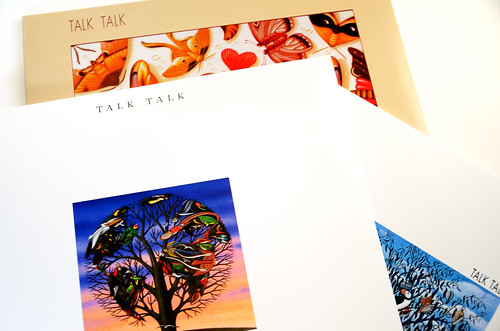
Talk Talk

* Telemann: The Complete Tafelmusik (Freiburger Barockorchester) (d.1) (Harmonia Mundi 4CD)
* Revueltas: “The Night Of The Maya” (New Philharmonia Orchestra (Mata), et al.) (Catalyst CD)
* Messiaen: Des Canyons Aux Etoiles… (Orch. Phil. De Radio France/Chung) (DG 2CD)
* Duke Ellington & Johnny Hodges: Back To Back (Verve/Classic LP)
* Duke Ellington & Jonny Hodges: Side By Side (Verve/Classic LP)
* Charles Mingus Sextet with Eric Dolphy: Cornell 1964 (Blue Note 2CD)
* Sun Ra: Showboat Lounge, Silver Spring, MD 3-18-77 (AUD 2CDR)
* Sun Ra: Smuckers, New York, NY 4-17-77 (AUD CDR)
* Herbie Hancock: Directstep (CBS/Sony CD)
* Herbie Hancock: Future Shock (Columbia/Legacy HDCD)
* People (Mary Halvorson & Kevin Shea): People (I And Ear LP)
* Mary Halvorson Quintet: Bending Bridges (Firehouse 12 CD)
* Willie Nelson: Heroes (Legacy/Sony HDCD)
* The Beatles: Beatles For Sale (2009 stereo) (Apple/EMI CD)
* The Beatles: Magical Mystery Tour (2009 stereo) (Apple/EMI CD)
* The Beatles: Past Masters (d.2) (Apple/EMI CD)
* Grateful Dead: Grateful Dead [a/k/a Skull & Roses] (Warner Bros./Mobile Fidelity 2LP)
* David Crosby: If I Could Only Remember My Name… (Atlantic/Rhino LP)
* Deep Purple: Deep Purple (Tetragramaton LP)
* Black Sabbath: Sabbath Bloody Sabbath (Warner Bros./Rhino LP)
* Phil Collins: No Jacket Required (Atlantic/Audio Fidelity CD)
* Phil Collins: But Seriously…(Atlantic/Audio Fidelity CD)
* The Style Council: Internationalists (Geffen LP)
* Talk Talk: The Colour Of Spring (EMI LP/DVD)
* Talk Talk: Spirit Of Eden (EMI LP/DVD)
* Guided By Voices: Class Clown Spots A UFO (GBV, Inc. LP)
* Guided By Voices: “Jon The Croc”/”Breathing” (GBV, Inc. 7”)
* Guided By Voices: “Keep It In Motion” (GBV, Inc. 7”EP)
* Guided By Voices: “Class Clown Spots A UFO” (GBV, Inc. 7”EP)
* Wilco: Sky Blue Sky (Nonesuch 2LP)
* High On Fire: Death Is This Communion (Relapse CD)†/‡
* A Perfect Circle: Mer De Noms (Virgin CD)†
* A Perfect Circle: Thirteenth Step (Virgin CD)†
* Porcupine Tree: The Incident (d.1) (Roadrunner CD/CDEP)
* Opeth: Still Life (Special Edition) (Peaceville CD/DVD)
* Storm Corrosion: Storm Corrosion (Roadrunner CD/BD) (†)
* Katatonia: Last Fair Deal Gone Down (10th Anniversary Edition) (Peaceville CD/CDEP)†
* Katatonia: Viva Emptiness (Peaceville CD)†/‡
* Katatonia: The Great Cold Distance (Peaceville 2LP)
* Katatonia: Night Is The New Day (Peaceville CD)†
* Anathema: We’re Here Because We’re Here (KScope CD/DVD)
* Anathema: Weather Systems (The End CD)(†/‡)
* Mastodon: Remission (Relapse 2LP)
* Mastodon: Leviathan (Relapse CD)†
* Mastodon: Crack The Skye (Reprise 2-45RPM LP/CD)
* Agalloch: The Mantle (The End CD)†
* Agalloch: Ashes Against The Grain (The End CD)†

†=iPod
‡=car

Commentary:

One of the things I love about Opeth’s Mikael Åkerfeldt is that he is a rabid record-collector who constantly talks about his various musical obsessions. It is through his ravings about Camel that I discovered this overlooked British prog band—much to my great enjoyment. So during the run-up to Åkerfeldt’s collaboration with Steven Wilson, Storm Corrosion (which I wrote about a couple weeks ago), I was curious to see them cite such influences as Comus, Univers Zero, Van Der Graaf Generator and…Talk Talk. Huh? I could understand the obscure ‘70s psych/folk/prog stuff—but Talk Talk? I always thought of Talk Talk (if I thought of them at all) as just another blow-dried synth-pop band from the 1980s, like a third-rate Duran Duran—with good reason, of course. I was vaguely familiar with their hits, but didn’t really pay much attention. Hey, it’s not like I don’t have a taste for ‘80s synth-pop (as any careful examination of my playlists will amply demonstrate) but Talk Talk were completely off my radar. Intrigued, I knew I had to investigate.

As it turns out, Talk Talk did a rare and wonderful thing over the course of their brief career: they evolved. Their 1986 album, The Colour Of Spring, eschewed the “New Wave” stylings of their earlier albums, instead going for a more sophisticated orchestral pop sound and replacing (for the most part) the cheesy synthesizers with an expanded roster of live musicians. This provides a more organic feel to the music compared to most hit records from the era and The Colour Of Spring went on to become their biggest-selling album with “Life’s What You Make It” and “Living In Another World” cracking the Top 40 on both sides of the Atlantic. Despite its polished sheen, a bit of unexpected weirdness has crept into the arrangements, like the ramshackle kiddie choir on “Happiness Is Easy,” the spacey, two-chord mysticism of “April 5th” or the dissonant woodwinds and strings on the quietly haunting “Chameleon Day.” The single B-side, “It’s Getting Late In The Evening,” was even weirder: all expectant atmosphere punctuated by Mark Hollis’s introspective mumbling. It was a harbinger of what was to come.

Pleased with the sales of The Colour Of Spring, EMI gave the band carte blanche for their next album: with an unlimited budget and no firm release date, the band spent over year recording Spirit Of Eden. Rather than writing songs in advance, various combinations of instrumentalists were instructed to improvise for hours in the dark, oil lamps and incense burning to provide atmosphere. Snippets were then stitched together (utilizing primitive digital technology) to create two side-long suites of barely discrete “songs” which seamlessly flow together. Sounding nothing like what had come before, the album combined elements of rock, jazz, avant-garde classical and proto-ambient music into something unique in the world of mainstream pop music: a work of Art. It should come as no surprise that Spirit Of Eden received mostly scathing reviews upon its release in September 1988 and sold poorly. The band refused to tour behind it, stating the songs were impossible to perform live, thereby causing further tensions with the record label. Naturally, a string of lawsuits ensued with Talk Talk succeeding in voiding their contract with EMI. Their next (and final) album would be released on Polydor’s jazz imprint, Verve.

The cheekily titled Laughing Stock was recorded in the same manner as the previous one, but the process was far more chaotic and difficult: Hollis’s monomaniacal perfectionism ultimately took its toll, resulting in the dissolution of the band as the sessions wore on. But the resulting album was even more ambitious work than Spirit Of Eden, involving an enormous cast of players and endless hours of overdubbing and digital editing. Deep and heavy lyrical themes predominate such as religiosity, spiritual persecution and environmental apocalypse while the nearly formless, shape-shifting music reinforces the sense of existential crisis. Unsettled calm is shattered by bouts of vicious free-jazz scree as on “Taphead” while richly varied instrumental groupings mutate and dissolve into swaths of disconcerting noise and silence as on “Myrrhman” and “Stump.” Longer songs like “Ascension Day,” “After The Flood” and “New Grass” deploy hypnotic rhythms and spare accompaniment to evoke a state of ecstatic prayer—yet Hollis’s yearning vocals evidence a profound uncertainty. Critics in 1991 were kinder than in 1988, heralding the band’s artistic bravery but by then it was too late: the album stiffed, the band broke up and, aside from a minimalist solo album released in 1998, Mark Hollis disappeared from the music scene altogether.

In the interim, these records went on to become highly influential on the emergent “post-rock” scene in the ‘90s and beyond, with their wild dynamic swings, experimental structures and unusual instrumental textures supplanting conventional songwriting. Twenty years later, they still sound remarkably fresh and modern—quite unlike a lot of music from that era. If (like me) you thought Talk Talk was just a dumb Brit-pop band, think again.

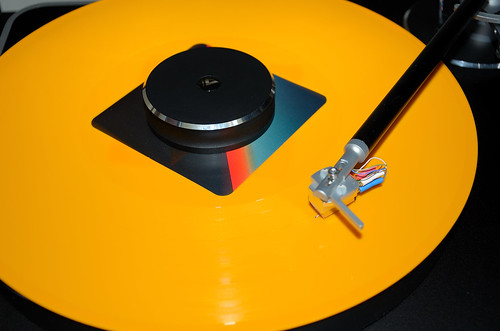
Conveniently, EMI has recently reissued The Colour Of Spring and Spirit Of Eden in deluxe vinyl editions, which also include a DVD containing the full album and related B-sides in high-resolution 24-bit/48kHz digital—a most welcome bonus. Only available as an import from the UK, they are pricey but supremely well done: the fit and finish of the 180-gram LPs is first-rate and the music sounds superb on both formats. Sadly, the same can’t quite be said about Ba Da Bing’s reissue of Laughing Stock: the otherwise glorious sound quality is obscured by the clicks, pops and swooshes emitted by the crappy red vinyl pressing (even after several cleanings). That wouldn’t be such a problem if the music wasn’t so subtle and quiet (or if they’d included a high-rez DVD) but it is (and they didn’t). However, the expanded double-LP set does contain two fascinating instrumental outtakes and (almost) makes for it: “Five -09,” a freaky bit of electronica, and “Piano,” which sounds more like the spectral stasis of Morton Feldman’s later compositions than any kind of pop song and makes a fitting coda to Talk Talk’s final, disturbing masterpiece. Great stuff! Thank you Mr. Åkerfeldt (and Mr. Wilson) for the tip! Now I’m passing it along to you…

June 3, 2012

Sun Ra Sunday


Sun Ra ‘77

1977 was a busy year for Sonny.

On January 6, the Arkestra appeared at the Famous Ballroom in Baltimore, Maryland again under the auspices of the Left Bank Jazz Society. No recording exists, but “[a]ccording to a review by Ken Buford, reprinted in the Baltimore Jazz Scene 1977, the program included ‘Along Came Ra,’ ‘Calling Planet Earth,’ ‘When There Is No Sun’ and ‘Space Is The Place’ along with blues, swing numbers, an ‘outer space dirge,’ and a flute duet” (Campbell & Trent p.230). Then, at the last possible minute, Sun Ra was asked to participate in FASTEC 77, a four-week-long “World Black and African Festival of the Arts and Culture” in Lagos, Nigeria scheduled to begin at the beginning of February. Performers from sixty-two different countries were invited, all representative of the Pan-African diaspora, with Sun Ra’s Arkestra representing black Americans. It was contentious from the outset: 
With only a few days’ notice and no money up front, the band thought it was ridiculous to even consider it, but Sonny was adamant: “Your ancestors came into America without a cent. How much money do you have?” When one of the musicians answered fifty cents, he said, “That’s fifty cents more than your ancestors had.” They were going.
 Sun Ra noticed that very few musicians had been invited to the festival—a mistake, he thought—and he assumed that having been asked at the last minute meant that music had been an afterthought, and that “only those who weren’t tied up to the white man could make it.” Still, he said it was important for them to help destroy the African’s stereotype of the American black man. From the moment of their arrival he was in a combative mood. When a Nigerian at the airport called out, “Welcome home, Sun Ra,” Sonny answered, “Home? Your people sold mine. This is no longer my home!” At each performance the artists displayed flags from their own countries; but when Sun Ra got on stage he raised a purple and black banner that he called “the flag of death.” He was annoyed that they were only allowed to play at the festival twice, and it was made worse when the Arkestra played overtime as usual and a large number of people left to catch the last buses back from the hall: misunderstanding their exit for rejection, Sonny saw it as typical of blacks to not respect one another. But at their second performance the lighting man was so impressed by the music that he lowered the lights after they left the stage and refused to turn them back on as the Miriam Makeba set began: “The Master has spoken!” he proclaimed. Sonny interceded and insisted that she, too, was an artist, and should be treated with respect.
 Over the four weeks, there was time to visit outside the city, to hear local music and to play for Africans and see them dancing to the Arkestra’s music at informal performances. The band was invited to visit the flamboyant and politically rebellious Fela Anikulapo-Kuti at his house and nightclub where he was staging a counter-FASTEC, but Sonny thought it unwise and told the band not to go—a decision which he said was justified later when Fela’s place was attacked and burned down by troops of the Nigerian army. The trip ended on a bitter note when the Arkestra was not allowed to march in the final grand parade because Ra would not agree to give the raised fist salute of Black Power. Then afterwards, when National Public Radio reported on the festival, one woman interviewed said his music didn’t represent black people in the United States.
 After the festival was over they returned by way of Egypt, and this time traveled in that country more widely, and wound up playing for the multinational troops in the Sinai Peninsula (Szwed pp.341-342). 
According to Tommy Hunter, tapes exist from the African sojourn but are not available (Campbell & Trent p.231). By February 26, the Arkestra was back in the states and an audience recording from their performance in East Lansing, Michigan apparently circulates but I have not heard it. Additionally, live performances of two old-timey numbers, the Dixon-Henderson standard, “Bye Bye Blackbird,” and George Gershwin’s “Embraceable You,” were recorded around this time for a Saturn single that was never released. These tapes were later broadcast by WKCR-FM during their 1987 Sun Ra Festival but I don’t have a copy of this either. According to Prof. Campbell, the rendition of “Bye Bye Blackbird is “slow and dozy and, if one does not listen carefully, sounds like a straggler from Ra’s Discipline series” (Id.).

At this point, concert “bootlegs” begin to proliferate as Sun Ra’s reputation as a spectacular live performer  became more widely known and miniaturized recording technology (slowly) improved. And it is at this point where I had to take a break from the poor sound quality and somewhat repetitive setlists and give Sun Ra Sunday a rest for a little while. But the fact remains: Ra made a bunch of good-to-great albums in 1977, including several rare solo piano recitals, the classic Some Blues But Not The Kind That’s Blue (Saturn/Atavistic) and the first of the legendary Horo LPs. I’m actually very excited to get to these; so, having rested my ears, I’m ready to tackle the dodgy “bootlegs” in order to get to the good stuff. Not that there isn’t “good stuff” to be found on these amateur concert recordings—it just takes a whole lot more effort to discern.

Up next: a sprawling, two-and-half hour set recorded (badly) at the Showboat Lounge in Silver Spring, Maryland on March 18, 1977. I’ll take a listen so you don’t have to!

June 2, 2012

Playlist Week of 6-02-12

The Mars Volta - Vinyl

* Miles Davis: The Complete On The Corner Sessions (d.2) (Columbia/Legacy 6CD)
* Miles Davis: Pangaea (d.1) (CBS/Sony 2CD)
* Weather Report: Mysterious Traveler (Columbia LP)
* Weather Report: Black Market (Columbia LP)
* John Zorn’s Naked City: Naked City (Nonesuch/Elektra CD)
* UYA: Demo Tape (1989) (Cassette>CDR)
* Rodger Coleman & Sam Byrd: Unheard Voices (NuVoid CDR)
* Johnny Cash: Original Sun Singles ’55-’58 (Sun/Sundazed 2LP)
* George Harrison: All Things Must Pass (d.1)(GN/Capitol 2CD)
* George Harrison: Cloud 9 (Dark Horse/Capitol CD)
* Paul McCartney: Band On The Run (Capitol LP)
* Sir Douglas Quintet: The Mono Singles ’68-’72 (Mercury/Sundazed 2LP)
* Grateful Dead: Kaiser Convention Center, Oakland, CA 2-20-85 (SBD 2CDR)
* Pink Floyd: Animals (Pinkfloyd/EMI CD)
* Caravan: In The Land Of Grey And Pink (DVD) (Deram/Decca 2CD/DVD)
* Camel: Camel (MCA/Universal CD)
* Camel: Mirage (Deram/Universal CD)
* Camel: (Music Inspired By) The Snow Goose (Decca/Universal CD)
* Camel: Moonmadness (Decca/Universal CD)
* Peter Gabriel: Peter Gabriel 1 [a/k/a “Car”] (Atco LP)
* Phil Collins: Hello, I Must Be Going! (Atlantic/Audio Fidelity CD)
* Tom Petty: Wildflowers (Warner Bros. 2LP)
* The Style Council: My Ever Changing Moods (Geffen LP)
* Japan: Oil On Canvas (Virgin 2LP)
* Prefab Sprout: Two Wheels Good (Epic LP)
* Talk Talk: The Colour Of Spring (EMI LP/DVD)
* Talk Talk: Spirit Of Eden (Parlophone/EMI LP/DVD)
* Talk Talk: Laughing Stock (Polydor CD)
* Meat Puppets: Out My Way (SST EP)
* Sonic Youth: The Eternal (Matador 2LP)
* Robert Pollard: Mouseman Cloud (GBV, Inc. LP)
* Circus Devils: Capsized! (Happy Jack Rock Records LP)
* Wilco: Kicking Television: Live In Chicago (Nonesuch 4LP)
* The Mars Volta: Octahedron (Warner Bros. CD)†
* The Mars Volta: Noctourniquet (Warner Bros. 2LP)
* Porcupine Tree: The Sky Moves Sideways (KScope 2CD)
* Porcupine Tree: Signify/Insignificance (KScope 2CD) (†/‡)
* Storm Corrosion: Storm Corrosion (Roadrunner 2LP/CD/BD)
* Anathema: Weather Systems (The End Records CD) (†/‡)
* Kyuss: Blues For The Red Sun (Dali/Elektra CD)†
* Agalloch: Marrow Of The Spirit (Profound Lore 2LP)
* YOB: The Illusion Of Motion (Metal Blade CD)†
* The Black Keys: Brothers (Nonesuch 2LP)
* Broken Bells: Broken Bells (Columbia LP)
* Broken Bells: Meyrin Fields EP (Columbia EP)
  
†=iPod
‡=car

Commentary:

A few months ago, I wrote about Noctourniquet, the most recent album by The Mars Volta, and I ranted on at length about the horribly compressed sound of the CD, which renders this otherwise delightful music virtually unlistenable—at least for me. It sounds best in the car, where its near-total lack of dynamic range allows it to be always audible despite road-noise, even at interstate speeds. And that’s about the only place I can listen to it—but even there I keep reaching to turn down the volume. Blech! I speculated back in March that an LP version might sound better: because of the medium’s physical limitations, an LP could never be mastered as ear-bleedingly loud as the CD.

Well, the vinyl edition finally arrived this week and I decided to pick it up when I saw it at my favorite local record store. And, indeed, the two-LP set sounds much better than the compact disc in all the usual ways: far less compression and hard limiting, smoother textures and a warmer overall presentation and, as an added bonus, the pressings are flat and remarkably quiet for such weirdly-colored vinyl. Much unlike the execrable CD, you can crank it up nice and loud without giving yourself a headache. Hooray! The packaging is also super-deluxe with a thick-spine jacket, 3-D printed innersleeves (w/3-D glasses included) and an exclusive poster. A typically perverse touch is the square label on the discs which appears to be ready to knock your delicate stylus back across the record at the end of every side. Fear not! The last track has a silent “locked groove” which prevents the cartridge (and disc) from meeting its doom. Clearly a labor of love, the vinyl edition of Noctourniquet is an artistic triumph, both as a physical object and the music contained therein. Definitely worth every penny—and likely to increase in value when it inevitably goes out of print.

That’s all well and good. I love vinyl; I really do, despite its obvious imperfections. However, there is still no excuse for a CD to sound so bad. I have no doubt these LPs were cut from a digital master—so why do they sound so much better than the CD? I don’t know the precise answer to that question but I do believe it is symptomatic of the record industry’s larger problems. Sure, it’s great that the LP edition of Noctourniquet sounds as good as it does and, since I am a fanatical record collector, I’m as happy as anyone about the vinyl renaissance that seems to be burgeoning around us these days. But let’s face it: most people do not even have turntables and do not want to fiddle with an archaic and fragile medium like vinyl records. And I don’t blame them! It takes a lot of effort and not a little bit of expense to make an LP sound its best. Moreover, LPs are marketed these days as high-priced luxury goods which are out of reach of the average working stiff and just not worth it to even the most well-heeled. Only crazy people like me buy vinyl records! I’m happy to have these LPs, but most listeners will be stuck with a poor facsimile—which is a shame since this is probably The Mars Volta’s most accessible album to date and should be heard by everyone in all its sonic glory (such as it is). Like it or not, it’s a digital world and there is no prima facie reason it has to sound like crap!

 Just sayin’…

May 26, 2012

Playlist Week of 5-26-12


Storm Corrosion

* Hesperion XXI et al. (Savall): Le Royaume Oublié (d.1-2) (Alia Vox 3SACD)
* J.S. Bach: 7 Harpsichord Concertos (Academy of Ancient Music/Egarr) (Harmonia Mundi 2CD)†
* J.S. Bach: Suites For Violoncello (ter Linden) (Harmonia Mundi 2CD)
* Miles Davis: The Complete On the Corner Sessions (d.1) (Columbia/Legacy 6CD)
* John Coltrane: Coltrane Time (United Artists/Blue Note CD)
* Bobby Hutcherson: Conception: The Gift Of Love (Columbia LP)
* Lowell Davidson Trio: Lowell Davidson Trio (ESP-Disk’ CD)
* Elvis Presley: Elvis At Sun (RCA-Victor CD)
* Gram Parsons: GP (Reprise/Mobile Fidelity SACD)
* Grateful Dead: Cape Cod Coliseum, S. Yarmouth, MA 10-27-79 (d.1-2) (SBD 3CDR)
* The Jimi Hendrix Experience: Are You Experienced? (Experience Hendrix/Sony LP)
* The Jimi Hendrix Experience: Axis: Bold As Love (Experience Hendrix/Sony LP)
* The Jimi Hendrix Experience: Electric Ladyland (Experience Hendrix/Sony 2LP)
* Jimi Hendrix: First Rays Of The New Rising Sun (Experience Hendrix/Sony 2LP)
* Pink Floyd: Wish You Were Here (Limited Edition SACD) (EMI/Analogue Productions SACD)
* Black Sabbath: Master Of Reality (Warner Bros./Rhino LP)
* Black Sabbath: Vol.4 (Warner Bros./Rhino LP)
* Peter Gabriel: Plays Live (Charisma 2LP)
* Camel: Moonmadness (Gama/Janus LP)
* Camel: Rain Dances (Gama/Janus LP)
* Roxy Music: Avalon (Virgin HDCD)
* Tears For Fears: The Hurting (Mercury LP)
* Tears For Fears: Songs From The Big Chair (Mercury/Polygram LP)
* ABC: The Lexicon Of Love (Mercury/Polygram LP)
* Talk Talk: The Colour Of Spring (EMI LP/DVD)
* Talk Talk: Spirit Of Eden (Parlophone/EMI LP/DVD)
* Talk Talk: Laughing Stock (Polydor 2LP)
* Tracy Chapman: Tracy Chapman (Elektra LP)
* Buckethead: Colma (CyberOctave CD)
* Porcupine Tree: Deadwing (Lava/Atlantic CD)
* Steven Wilson: Insurgentes (KScope CD/DVD-A)
* Steven Wilson: Grace For Drowning (KScope 2CD)†
* Opeth: My Arms, Your Hearse (Candlelight CD)†/‡
* Opeth: Blackwater Park (Music For Nations/KOCH CD)†
* Opeth: Still Life (Special Edition) (Peaceville CD/DVD)
* Opeth: Deliverance (Music For Nations/KOCH CD)†
* Opeth: Ghost Reveries (Special Edition) (Roadrunner HDCD/DVD)
* Opeth: Watershed (Special Edition) (Roadrunner CD/DVD)(†)
* Opeth: Heritage (Roadrunner 2LP)
* Meshuggah: Destroy Erase Improve (Reloaded) (Nuclear Blast CD)†/‡
* Katatonia: Night Is The New Day (Peaceville CD)
* The Mars Volta: Tremulant EP (Gold Standard Labs/Universal CDEP)†
* The Mars Volta: De-Loused At The Comatorium (Gold Standard Labs/Universal CD)†
* The Mars Volta: Frances The Mute (Gold Standard Labs/Universal CD)†
* The Mars Volta: Amputechture (Gold Standard Labs/Universal CD)†
* The Mars Volta: The Bedlam In Goliath (Universal CD)†
* The Mars Volta: Noctourniquet (Warner Bros. CD)†/‡
* Fleet Foxes: Helplessness Blues (Sub Pop 2LP)

†=iPod
‡=car

Commentary:

Storm Corrosion, the long-awaited collaboration between Opeth’s Mikael Åkerfeldt and Steven Wilson (Porcupine Tree, et al.), has finally been released and it is not at all what you might expect, given its pedigree. Then again, if you had been paying attention to all the pre-release hype, you would have a rough idea of what they were up to: the deliberate antithesis of a “prog-metal supergroup”—the very thing everyone expected and, indeed, wanted from them. Obscure and incongruous bands like Comus, Popol Vuh, Univers Zero, David Crosby and Talk Talk were mooted as primary influences on the music, raising more than a few eyebrows. It was further revealed that the project grew out of a casual get-together at Wilson’s home in England back in 2010: several relaxing days spent record-shopping and nights spent drinking wine, watching movies and, sometimes, recording in the studio. Easy as pie. Wilson says Storm Corrosion is “the third part of a trilogy,” starting with his solo album, Grace For Drowning, and Opeth’s most recent record, Heritage. Accordingly, careful (or obsessed) listeners should have known exactly what to expect: some sort of psych-folk-prog monstrosity, overflowing with shimmering electric pianos, swooning Mellotrons—and a total absence of “death metal” vocals.

Yet Storm Corrosion manages to be more than the sum of their respective record collections, resulting in a remarkably fruitful collaboration between two distinctive musical personalities. Åkerfeldt’s intricate guitar work meshes easily with Wilson’s grand orchestrations—which is not that surprising given their history. But the overall mood is quiet and dark, grim and foreboding, only occasionally raising the emotional temperature with blasts of noise or almost (but not quite) rock-ish outbursts. Most of the singing is handled by Wilson, but Åkerfeldt’s unique and slightly skewed sensibility is pervasive throughout, tempering Wilson’s tendency towards grandiosity. Drums (played by PT’s Gavin Harrison) are nearly subliminal or wildly distorted,  just part of the richly atmospheric musical texture, which deploys strings, woodwinds and dense layers of vocal overdubs along with the guitars and keyboards. With nary a trace of post-modernist irony or naïve sentimentality, Storm Corrosion pursues its own take on old-fashioned progressive rock music with an earnestness and ambition that is frankly astonishing in this day and age. They could have taken the easy way out and given the fans exactly what they wanted but have instead delivered a difficult and eerily haunting record that many will likely find perplexing. But for the adventurous and open-eared, this is an album that will reward multiple start-to-finish listens.

As with most things Wilson-related, the limited edition vinyl and CD/Blu-Ray editions sold out well before the official release date on May 7 so I’m glad I did the pre-order thing. The two-LP set is gorgeously packaged, with a luxuriously textured gatefold jacket and giant-sized poster—and it came with an autographed lithograph of the cover. Cool! Unfortunately, my copy is a bit noisy (even after a couple of rounds on the Nitty Gritty record cleaning machine), which is particularly distracting given the quiet and contemplative nature of the music. Oh well; it is still a lovely object d’art. The Blu-Ray disc, on the other hand, more than makes up for the vinyl’s shortcomings: containing both surround-sound and stereo mixes in high-resolution digital, plus demos and instrumental versions, it sounds utterly fantastic. I wish more music was released on Blu-Ray as the sound quality can be stunningly good, right up there with the best analog—without all of its obvious faults. If you missed out on these special editions, rumor has it a repress is coming later this summer. Otherwise, the plain old CD sounds very good indeed.

See and hear for yourself with this evocative video for the opening track, “Drag Ropes,” which features Åkerfeldt on lead vocals. It will give you a pretty good idea of what these guys are up to. Enjoy—or not!

May 19, 2012

Playlist Week of 5-19-12


Opeth - Mikael Akerfeldt 2012-05-12a

* Eric Dolphy Quintet: Outward Bound (Prestige/OJC CD)
* Eric Dolphy: Out There (Prestige/OJC CD)
* Joe Henderson: Our Thing (Blue Note CD)
* Tony Williams: Life Time (Blue Note CD)
* Bobby Hutcherson: Dialogue (Blue Note CD)
* Grant Green: Street Of Dreams (Blue Note CD)
* George Benson: Weekend In L.A. (Warner Bros. 2LP)
* Bob Dylan & The Band: The Basement Tapes (Columbia/Mobile Fidelity 2LP)
* Grateful Dead: Terrapin Station (Arista/Analogue Productions LP)
* Grateful Dead: Reckoning (Arista/Analogue Productions 2LP)
* Fleetwood Mac: Penguin (Reprise LP)
* Stevie Nicks: Bella Donna (Modern/Atco LP)
* Deep Purple: Shades Of Deep Purple (EMI/Odeon LP)
* Black Sabbath: Sabbath Bloody Sabbath (Warner Bros./Rhino LP)
* Emerson Lake & Palmer: Trilogy (Cotillion/Atlantic LP)
* Emerson Lake & Palmer: Brain Salad Surgery (Manticore/Atlantic LP)
* Camel: A Live Record (Decca 2LP)
* Camel: Nude (Gama/Decca LP)
* Camel: The Single Factor (Gama/Passport LP)
* Tangerine Dream: Ricochet (Virgin LP)
* Tom Petty & The Heartbreakers: Into The Great Wide Open (MCA LP)
* Tom Petty: Full Moon Fever (MCA LP)
* Elvis Costello: Get Happy!!! (Columbia/Mobile Fidelity 2-45RPM LP)
* Elvis Costello: Almost Blue (Columbia/Mobile Fidelity LP)
* Meat Puppets: Meat Puppets (SST EP)
* Meat Puppets: Meat Puppets II (SST LP)
* Meat Puppets: Up On The Sun (SST LP)
* My Bloody Valentine: EP’s 1988-1991 (Sony 2CD)
* My Bloody Valentine: Isn’t Anything (Sony CD)
* My Bloody Valentine: Loveless (Sony 2CD)
* Guided By Voices: Alien Lanes (Matador LP)
* Kyuss: Blues For The Red Sun (Dali/Elektra/Warner Bros. CD)†
* Porcupine Tree: Stupid Dream (KScope CD/DVD)†/‡
* Porcupine Tree: Lightbulb Sun (KScope CD/DVD)†/‡
* Porcupine Tree: In Absentia (Lava/Atlantic CD)
* Storm Corrosion: Storm Corrosion (Roadrunner 2LP/CD/BD)
* Opeth: Still Life (Peaceville/Icarus CD)†
* Opeth: Blackwater Park (Music For Nations/KOCH CD)†(‡)
* Opeth: Blackwater Park (Legacy Edition) (Sony CD/DVD)
* Opeth: Deliverance (Music For Nations/KOCH CD)†
* Opeth: Damnation (Music For Nations/KOCH CD)†
* Opeth: Ghost Reveries (Roadrunner HDCD)†
* Opeth: Watershed (Roadrunner CD)†
* Opeth: Heritage (Deluxe Edition) (Roadrunner CD+DVD)(†/‡)
* Katatonia: Last Fair Deal Gone Down (10th Anniversary Edition) (Peaceville CD/CDEP)†
* Katatonia: Viva Emptiness (Peaceville CD)†
* Katatonia: The Great Cold Distance (Peaceville 2LP/CD)(†)
* Katatonia: Night Is The New Day (Peaceville CD)†
* YOB: The Illusion Of Motion (Metal BladeCD)(†/‡)
* Mastodon: Crack The Skye (Reprise 2-45RPM LP)
* Mastodon: Live At The Aragon (Reprise 2LP/DVD)
* Baroness: Red Album (Relapse CD)†/‡
* Baroness: Blue Record (Relapse CD)†/‡

†=iPod
‡=car

Commentary:

What a week! Part two of the “Mountains & Metal Tour 2012” was a total blast. On Friday, May 11, we drove down to Chattanooga (which meant crossing Lookout Mountain) and spent the afternoon at the Tennessee Aquarium, a beautiful state of the art facility which opened in 1992 along the Tennessee River. There are actually two aquariums, an "Ocean Journey" and "River Journey," offering equally in-depth explorations of both salt water and fresh water environments. In addition to fish, there is a lively butterfly pavilion and plenty of reptiles, penguins and other birds around to re-create diverse natural environments. There are no “killer whale” shows or jumping dolphins at the Tennessee Aquarium, just a series of meticulously maintained ecosystems to observe and contemplate. Truly, it is really one of the nicest aquariums I’ve ever seen. The most impressive exhibit, for me, was the several rooms of various jellyfish, quite possibly the trippiest of nature’s creatures:


Jellyfish 01

On Saturday we headed down to Atlanta for the final show of the "Heritage-Hunter Tour," featuring Opeth, Mastodon and Ghost. Unlike the historic Tennessee Theatre (where we saw them on April 16), the Masquerade Music Park is outdoors, general admission and located in a funky post-industrial area on the North side of downtown Atlanta. Being a Saturday, the crowd was a bit younger and a lot rowdier than in Knoxville—but that actually made it even more fun for an old fart like me. The music started about 7:00, so there was still plenty of bright sunlight around for Ghost’s set—and I was wondering if Papa Emeritus would melt or burst into flames or something. Now, that would have been cool! I guess they’re not so scary after all! Frankly, I find their music to be pedestrian at best and their whole schtick utterly ridiculous. Sure, it was mildly amusing, but I was glad when their blessedly short, thirty-five minute set came to an end.


Ghost 2012-05-12a

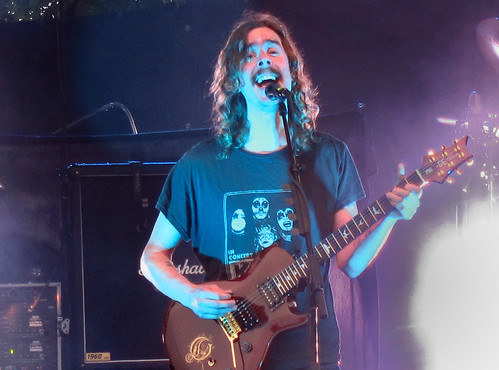
Opeth had canceled their appearance in Minneapolis on May 7 and rumors abounded of Mikael Åkerfeldt being in a car wreck and breaking his arm. Oh no!  As it turns out, he only bumped his head on Mastodon’s tour bus just before the show, but it was severe enough to require eight (!) staples at the emergency room. Now, that's what I call head-banging! Amazingly enough, he returned to finish the last couple of shows of the tour—what a trooper! He looked tired and seemed a little subdued (not a lot of witty banter on this night), but his singing and playing were spot on. In fact, the whole band sounded superb and I noticed some subtle changes to the arrangements had creeped into a couple of songs over the past month. Predictably, a mosh-pit broke out during “Demon of the Fall”—a first for Lizzy!—but, despite the surface display of aggression, it was all just harmless kid stuff. I’m too old for that kind of thing, but it looked like good clean fun. Regardless, the moshing and crowd-surfing certainly seemed to energize the band and they turned it up a notch in return, clearly enjoying themselves and the resulting spectacle. It was totally intense, totally heavy metal! I just adore this band!


Opeth 2012-05-12a

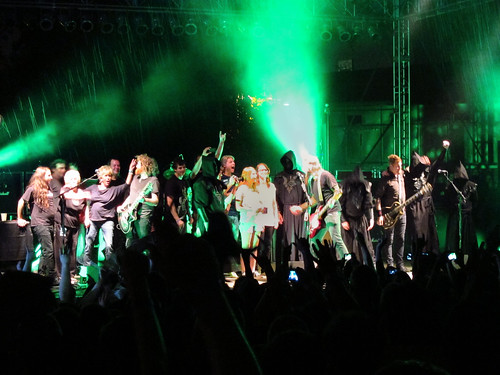
The hometown heroes, the mighty Mastodon, closed the evening and their relentlessly pummeling sound benefitted enormously from the outdoor acoustic. Unlike the distorted, smeared mess at the Tennessee Theatre, their sound was crisp and clear—I didn’t even need my earplugs! They tore through their set with extra enthusiasm and the crowd was obviously way into it, despite the soft rain that had begun to fall. Although singing may not be their strong suit, Mastodon’s instrumental virtuosity is undeniable and their performance that night was a stunningly impressive display. Being the last show of the tour, they brought out Opeth, Ghost, roadies, friends and families on stage for a rare encore: a big sing-along on “The Creature Lives.” It was really quite touching! You know, despite the trappings of evil and Satanism and all that stuff, the metal scene strikes me as remarkably wholesome:


Mastodon - Opeth - Ghost 2012-05-12 encore

Hopefully, Åkerfeldt is getting some much-needed rest and letting his head wound heal. Both Opeth and Mastodon will be playing the various European festivals throughout the summer—but according to this interview  with Frederik Akesson, Opeth will be returning to the U.S. in September with their buddies Katatonia for another headlining tour. If true, we are so there!

+++

Not surprisingly, I was too wiped out to make it to the Noa Noa thing  on Tuesday. I’m lame, I know. Maybe next time...

May 13, 2012

Avant-Garde Nashville


Believe it or not, there is a small but vibrant avant-garde music scene here in Nashville. It can be a little bit hard to find as the venues come and go and the mainstream press is largely indifferent. But there are all kinds of interesting things happening on the fringes of Nashville, including cracked electronics, experimental rock and free improvisation—you just have to know where to find it.

Well, let me hip you to a really exciting event: On Tuesday, May 15, Noa Noa will host trumpeter Peter Evans and saxophonist Travis LaPlante, both from New York, along with local saxophonist Craig Schenker in an evening of solo improvisation. Evans, of course, is a heavyweight player in the “out jazz” scene, touring the world and appearing on numerous recordings, including a solo trumpet CD, More Is More, released on Evan Parker’s psi label in 2006. LaPlante is a relative newcomer but his startlingly aggressive band, Little Women, made a highly acclaimed record for AUM Fidelity in 2010 and he has a new one out on Skirl titled, Heart Protector, an EP of solo saxophone pieces—the first vinyl release by this adventuresome label. 

Noa Noa is located at 620 Hamilton Avenue Nashville 37203 and the program begins at 7:00pm. This will be an evening of challenging and highly personal music and should not be missed!

See for yourself:


+++

As you might have noticed, Sun Ra Sunday is on a brief hiatus but will return...eventually.

May 12, 2012

Playlist Week of 5-12-12


* Olivier Latry: Midnight At Notre-Dame: Organ Transcriptions (DG SACD)
* Bartok: Concerto For Orchestra, etc. (Chicago Symphony/Reiner) (RCA-Victor SACD)
* Miles Davis:  Ascenseur Pour L’echafaud: Complete Recordings (Fontana/Polygram CD)
* Ella Fitzgerald: Sings Songs From Let No Man Write My Epitaph (Verve/Classic LP)
* Eric Dolphy: ‘Out To Lunch!’ (Blue Note/Music Matters 2-45RPM LP)
* Ornette Coleman & Prime Time: Dancing In Your Head (Horizon/A&M LP)
* Ornette Coleman & Prime Time: Body Meta (Artists House LP)
* Ornette Coleman & Prime Time: Of Human Feelings (Antilles LP)
* James Blood Ulmer: Tales Of Captain Black (Artists House LP)
* George Benson: Breezin’ (Warner Bros./Mobile Fidelity LP)
* Pat Metheny: New Chautauqua (ECM LP)
* Steve Tibbetts: Safe Journey (ECM LP)
* Stevie Wonder: Talking Book (Tamla/Motown LP)
* Stevie Wonder: Innervisions (Tamla/Motown LP)
* George Harrison: Early Takes Volume One (Universal CD)
* Grateful Dead: Dave’s Picks Bonus Disc 2012 (Landover, MD 7/29/74x) (GDP/Rhino HDCD)
* Grateful Dead: Dave’s Picks Vol.2: Dillon Stadium, Hartford, CT 7/31/74 (d.1-2) (GDP/Rhino 3HDCD)
* David Crosby: If I Could Only Remember My Name… (Atlantic/Rhino LP)
* The Soft Machine: The Soft Machine (ABC/Probe/Sundazed LP)
* The Soft Machine: Volume Two (ABC/Probe/Sundazed LP)
* Black Sabbath: Sabotage (Warner Bros./Rhino LP)
* Emerson Lake & Palmer: Tarkus (Island LP)
* Clear Light Symphony: Clear Light Symphony (Virgin LP)
* Camel: A Live Record (Gama/Decca 2LP)
* Fleetwood Mac: Fleetwood Mac (Reprise/Warner Bros. 2-45RPM LP)
* Phil Collins: …But Seriously (Atlantic/Audio Fidelity CD)
* Big Star: #1 Record (Ardent/Classic LP)
* Big Star: Radio City (Ardent/Classic LP)
* Wilco: The Whole Love (Nonesuch 2LP)
* Radiohead: Kid A (Capitol CD)
* Porcupine Tree: Stars Die: The Delerium Years 1991-1997 (KScope 2CD)†/‡
* Opeth: Orchid (Candlelight CD)†
* Opeth: Morningrise (Candlelight CD)†
* Opeth: My Arms, Your Hearse (Candlelight CD)†
* Opeth: Still Life (Peaceville/Icarus CD)†
* Opeth: Blackwater Park (Music For Nations/KOCH CD)†
* Opeth: Deliverance (Music For Nations/KOCH CD)
* Opeth: Damnation (Music For Nations/KOCH CD)†/‡
* Opeth: Ghost Reveries (Roadrunner HDCD)†
* Opeth: The Roundhouse Tapes (Peaceville 2CD)†
* Opeth: Watershed (Roadrunner CD)†
* Opeth: Heritage (Roadrunner 2LP)
* Agalloch: The Mantle (The End Records CD)†
* Agalloch: Ashes Against The Grain (The End Records CD)†
* Mastodon: Leviathan (Relapse CD)
* Mastodon: Blood Mountain (Reprise CD)†/‡
* Mastodon: Crack the Skye (Reprise CD)†/‡
* Mastodon: The Hunter (Reprise 2-45RPM LP)

†=iPod
‡= car

Commentary:

Gone fishing.

May 5, 2012

Playlist Week of 5-05-12

Clearaudio Concept

* Schmelzer, et al.: Unarum Fidium (Holloway/Assenbaum/Mortensen) (ECM CD)
* Biber: Mensa Sonora (Musica Antiqua Köln/Goebel) (Archive Produktion CD)
* Poulenc: Works For Piano (Parkin) (d.3) (Chandos 3CD)
* Miles Davis: Agharta (CBS-Sony 2CD)
* Herbie Hancock & Headhunters: Sendsaal, Bremen, W. Germany 11-06-74 (FM CDR)
* Stanley Clarke: School Days (Epic/Friday Music LP)
* Barre Phillips: Three Day Moon (ECM LP)
* Pat Metheny Group: Pat Metheny Group (ECM LP)
* Pat Metheny Group: The Way Up (Nonesuch CD)
* Steve Tibbetts: Big Map Idea (ECM CD)
* Mephista: Black Narcissus (Tzadik CD)
* Tom Rainey Trio: Camino Cielo Echo (Intakt CD)
* Aych (Hobbs/Halvorson/Bynum): As The Crow Flies (Relative Pitch CD)
* Peter Lang: Lycurgus The Wolf Driver (Flying Fish LP)
* The Beatles: Magical Mystery Tour (EMI/Capitol LP)
* Grateful Dead: Wake of The Flood (GDP/Mobile Fidelity LP)
* Jeff Beck Group: Jeff Beck Group (Epic LP)
* Deep Purple: Shades of Deep Purple (EMI/Odeon LP)
* Deep Purple: Deep Purple (Tetragrammaton LP)
* Black Sabbath: Master Of Reality (Warner Bros./Rhino LP)
* Black Sabbath: Sabbath, Bloody Sabbath (Warner Bros./Rhino LP)
* Yes: Fragile (Atlantic/Analogue Productions LP)
* Emerson Lake & Palmer: Emerson Lake & Palmer (Cotillion LP)
* Gentle Giant: Three Friends (Vertigo/Alucard CD)†
* Gentle Giant: Octopus (Vertigo/Alucard CD)†
* Gentle Giant: In A Glass House (Vertigo/Alucard CD)†
* Camel: Mirage (Gama/Janus LP)
* Camel: (Music Inspired By) The Snow Goose (Gama/Passport LP)
* Camel: Moonmadness (Gama/Janus LP)
* Camel: Rain Dances (Gama/Janus LP)
* Camel: Breathless (Gama/Arista LP)
* Supertramp: Breakfast In America (A&M LP)
* Patrick Woodroffe/Dave Greenslade: The Pentateuch Of The Cosmogony (Dragon’s World/EMI 2LP)
* Peter Gabriel: Plays Live (Charisma 2LP)
* Fleetwood Mac: Fleetwood Mac (Reprise/Warner Bros. 2-45RPM LP)
* Fleetwood Mac: Rumours (Reprise/Warner Bros. 2-45RPM LP)
* Steely Dan: Aja (ABC/Cisco LP)
* Elvis Costello: My Aim Is True (Columbia/Mobile Fidelity LP)
* Elvis Costello: This Year’s Model (Columbia/Mobile Fidelity LP)
* Thurston Moore: Demolished Thoughts (Matador 2LP)
* Lee Ranaldo: Between The Time And The Tides (Matador LP)
* Guided By Voices: “We Won’t Apologize[…]”/”The Unsinkable Fats Domino” (Matador 7”)
* Guided By Voices: “Doughnut For A Snowman” (GBV, Inc./Fire Records 7”EP)
* Guided By Voices: “Chocolate Boy”/”As The Girls Sing Downing” (GBV, Inc. 7”)
* Guided By Voices: “Keep It In Motion” (GBV, Inc. 7”EP
* Guided By Voices: “Jon The Croc”/”Breathing” (GBV, Inc. 7”)
* Robert Pollard: Mouseman Cloud (GBV, Inc. LP)
* Beck: Sea Change (Geffen/Mobile Fidelity 2LP/CD)
* Jim O’Rourke: Eureka (Drag City LP)
* Porcupine Tree: The Sky Moves Sideways (KScope 2CD)†
* Porcupine Tree: Stupid Dream (KScope CD/DVD)†/‡
* Porcupine Tree: Lightbulb Sun (KScope CD/DVD)†/‡
* Porcupine Tree: In Absentia (Lava/Atlantic CD)†/‡
* Opeth: Still Life (Peaceville/Icarus CD) †/‡
* Opeth: Blackwater Park (Music For Nations/KOCH CD)†
* Opeth: Heritage (Roadrunner 2LP)
* High On Fire: Death Is This Communion (Relapse CD)†
* Mastodon: Crack The Skye (Reprise 2-45RPM LP)
* Ray LaMontagne: Trouble (RCA/Legacy LP)

†=iPod
‡=car

Commentary:

Despite regular maintenance, my eighteen-year-old turntable, a low-end but trustworthy Thorens TD-260 Mk.IV, has been showing its age lately. It won’t get up to speed at the press of the button like it used to and requires a vigorous push on the platter just to get it going—and when it gets there it sometimes wavers, creating an audible wobble. Now, if you are at all sensitive to pitch fluctuations (as I am) this is simply intolerable and is just the kind of thing that makes me want to ditch the LP altogether. Despite its faults (and there are many), digital doesn’t have this particular problem: the music is always pitch-perfect—and no surface noise to boot!

But the truth is: I can’t live without a turntable. I love records too much—and I have a lot of them! Moreover, we are now living in a vinyl renaissance I would have never predicted: there are more high-quality “audiophile” LPs available now than perhaps ever before. In this dark era of harsh, dynamically squashed CDs and miserably lossy downloads, the LP remains the format of choice for folks who care about sound quality. Go figure. The music industry’s relationship with technology is needlessly fraught and completely retarded—but this has also been a boon to obsessive record collectors like me.

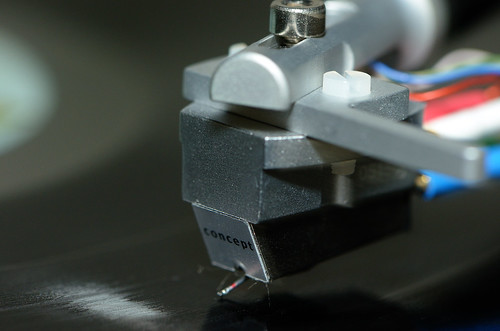
So, my old Thorens has been replaced with a Clearaudio Concept, the entry-level table from another highly-regarded German company, makers of a complete line of fine turntables, including the notorious Statement, which stands five feet tall and costs a whopping $150,000.00. That might sound completely ridiculous, but the relatively affordable Concept incorporates some of the cutting edge technology of its bigger brethren with a frictionless magnetic bearing on the elegantly designed carbon fiber tonearm, an ultra-dense acrylic platter and a hefty (yet tastefully diminutive) plinth. Available with a factory-mounted cartridge (either moving magnet or moving coil), the Concept is about as close to “plug-and-play” as you can get in the realm of high-end turntables—which is just what I needed.

Right out of the box, the combo sounded very nice and has only gotten better as the cartridge breaks in. Is it the last word in vinyl playback? Certainly not—and I look forward to tweaking it. But here’s the thing that blows my mind: I have been staying up way way too late spinning records well into the night and I never, ever do that with CDs. That tells you all you need to know about why I will always need a turntable—and why I am deleriously happy I am with the Clearaudio Concept.

Now, excuse me; I’m going to go put another record on.